In the year 2026/27, cotton city is in the midst of a triple resonance pattern of “shrunk supply + weather disturbance + demand resilience”. As xinjiang's spring spreads, lower production expectations land, folds the el niño fermentation, and the global pattern of cotton supply and demand is shifting to a tight trend, zheng yu is expected to start a moderate upswing, with a medium-term target price above $18,000 per ton, and investors can maintain a plethora of ideas and enter at the turnover。
The reduction of domestic cotton production has become a market consensus, with policy orientation combined with grass-roots landings, contributing to sustained supply-side contraction. In december 2025, the office of the leading group for the development of the cotton sector in xinjiang explicitly proposed a comprehensive reduction in the area under cotton cultivation, with the core aim of optimizing the supply structure and lowering the pressure on fiscal subsidies. Since the landing of the targeted price subsidy policy in 2014, long-term cotton prices have fallen below the approved target and the pressure on fiscal subsidies has continued to climb over the past three years, with the reduction of cultivation becoming normal for the prosecution。
In terms of landfall implementation, march-april 2026 marked a critical period of spring airing, and the ninjiang policy was refined quickly. The largest reduction occurred in the south territories, 312 across the south african core cotton-planting zone, and 84 per cent in the fields; in the state of baa, the groundwater super-mining area and the secondary cotton-cutting area were cut down, reaching 100,000 acres in the ploughing district; and in aksu and kashi, new waste-planted cotton plots were cleared last year. According to the ninjiang cotton reduction implementation programme, 2026/27, the target for cotton cultivation in xinjiang was about 36 million acres, which is more than 10 per cent below the actual 41 million-43 million acres in 2025。
In terms of production expectations, many authorities have predicted a significant decline in domestic cotton production. The united states department of agriculture (usda) predicts that china's cotton production will fall to 697 million tons, or 8. 6 per cent lower than the previous year; the cotton information network estimates that about 6947,000 tons of cotton production in xinjiang will decrease by 7. 1 per cent over the same period; and the report of the government of the xinjiang uighur autonomous region states that total cotton production in 2026 has stabilized at about 5. 6 million tons, or 9. 16 per cent below the same date. The combined assessment is that the overall decline in domestic cotton production will fall between 7 and 10 per cent and that the contraction of supply will provide a solid basis for the long-term rise in cotton prices。
At the level of regulation of reserves, on 16 march 2026, the national commission for development and development issued an advance import quota of 300,000 tons of cotton para-tax processing trade for the first five years of distribution, an increase of 100,000 tons over the previous two years, effectively reducing annual policy uncertainty. The current stock of cotton is about 3. 27 million tons, with a phased supply control capability, but if the current quota is released, the stock will be reduced to a low level and the supply-side control space will narrow。
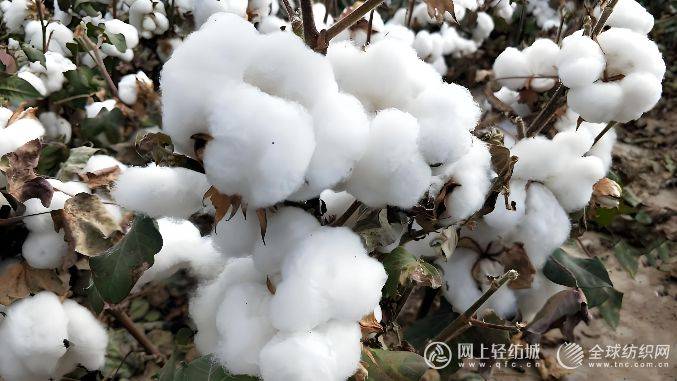
The global pattern of supply and demand for cotton is moving steadily towards tightening, superseding the el niÑo weather risk, and the reduction is expected to exceed the market benchmark projections. Combined with the usda baseline projections, global cotton production is expected to decline by 3. 2 per cent in 2026/27, consumption is projected to increase by 1. 2 per cent over the same period, stock is down by 5. 2 per cent at the end of the period and stock consumption is expected to fall from 63. 3 per cent to 59. 3 per cent。
Weather factors become key variables. Monitoring by international meteorological agencies shows that the nno3. 4 index continues to rise, with a significant increase in the probability of el niÑo formation. The national oceanic and atmospheric administration (noaa) of the united states predicted that el niÑo had a probability of formation of about 62 per cent in june-august 2026, and that it had a probability of developing into a powerful el niÑo event of one third in october-december. In retrospect history, global cotton production declined significantly and significantly in el niÑo, close to 20 per cent in 2015/16 over the same period, and if the current round is more intense than expected, the actual size of the reduction or breakthrough of the usda baseline projection。
In terms of the country of origin, the decline has become a trend. The united states usda forecasted a 2. 2 per cent decrease in harvest area and a 2. 3 per cent decrease in production, while the united states national cotton commission (ncc) projected a 3. 2 per cent decrease in the area to be cultivated on a year-on-year basis and an estimated total production of 2. 764 million tons, a decline of 8. 78 per cent on the year. The market focused on a report of intent to grow usda at the end of march, with high cost of superseding fertilizer and a reduction or further expansion of the actual area under cultivation. In brazil, the area under cultivation declined by 3. 2-6. 2 per cent over the same period, with the addition of monolithic production falling, to a total annual production of 3. 8 million tons, or 6. 7-9. 9 per cent over the same period. Cotton cultivation in australia decreased by 12 per cent over the same period, with a projected 6 per cent reduction in single production and a projected 1 million tons of cotton in 2025, a 17 per cent reduction over the same period。
Textile clothing needs to move into the path of mild recovery and consumption data continue to exceed expectations. The cumulative growth of 3. 2 per cent in the retail value of clothing, footwear and needle textiles in 2025 and the steady increase in the second half of the year; the cumulative increase of 10. 4 per cent in january-february 2026 against the same indicator, which significantly won the 2. 8 per cent increase in total retail sales of social consumer goods over the same period; and the cumulative increase of 18. 0 per cent in online retail sales of clothing-type goods over the same period, far exceeding market expectations. In the medium to long term, consumption promotion policies have continued to increase, the income of the population has steadily increased, and there is a basis for sustainable recovery in textiles。
At the export end, the same performance was evident, with our total textile exports reaching us$ 50. 45 billion in january-february 2026, an increase of 17. 6 per cent over the same period. Of this amount, $25. 57 billion was exported from textile yarns, fabrics and products, an increase of 20. 5 per cent over the same period, and $24. 870 billion was exported from clothing and clothing accessories, an increase of 14. 8 per cent over the same period. Despite the need to track the progress of the united states 301 survey and our survey of trade barriers to the united states, the cotton and textile industries have experienced multiple rounds of trade friction, and market digestive capacity has continued to increase and external marginal shocks are expected to weaken。
Taken together, the core driving logic of the global cotton market in 2026/27 is clear: first, the contraction of domestic supply, with the reduction of cotton area in xinjiang driving a 7-10 per cent decline in output over the same period, providing the core support for the rise in cotton prices; second, the scaling up of global weather risk and a reduction in production, with strong el niño or nearly 20 per cent in global production, and a higher-than-anticipated contraction of supply; and third, the persistence of demand-side resilience, with strong domestic revenue and export data for steved consumption and exports。
With regard to the price tempo, cotton prices are expected to start a steady upturn, accompanied by spring surges, a reduction in production expectations, and el niño risk fermentation. It is expected that the target price for the zheng master force contract will be over $18,000 per ton before and after september-october when the zheng cotton concentration is on the market. It is recommended that investors maintain a multi-pronged approach, with a focus on the three main variables of policy landing, el niño intensity evolution and sustainability of export recovery。