For the second time in six days, the financial stability and development committee of the state council is speaking out again。
On 5 september, the government of china informed the committee for the development of financial stability and development of the state council (hereinafter referred to as the finance committee) of a teleconference on the national financial situation and the exchange of experience in working life。
On 31 august, the committee had just convened its seventh meeting to study issues such as financial support for the real economy, deepening the reform of the financial system and strengthening the protection of legitimate interests of investors。
What information has been released and what requirements have been put forward this time
Set the current situation
As the state council's deliberative and coordinating body on issues of financial stability and reform and development, the view of the financial committee on the current economic and financial situation is of great concern and is often seen as a tone。
The previous seventh meeting of the financial committee had noted that the current economic situation in china was generally stable, that the financial system operated smoothly and healthy, and that risks were generally manageable。
This teleconference was further developed to assess the current state of economic and financial development in two ways。
On the one hand, it is not denied that there are pressures in complex situations:
• at present, the economic and financial situation, both domestic and foreign, is changing, and the downward pressure on the economy has increased. It is important to raise awareness of the dangers, improve the risks, take care of its own business and promote sound economic and financial performance。
On the other hand, more emphasis has been placed on facing the future:
• china's economic fundamentals have long been favourable, with high savings rates, a vibrant micro-basket, sound functioning of key financial institutions, adequate macro-policy instruments, sound regulatory mechanisms, extensive experience in risk prevention and mitigation, and full capacity, confidence and conditionality to overcome difficulties and challenges。
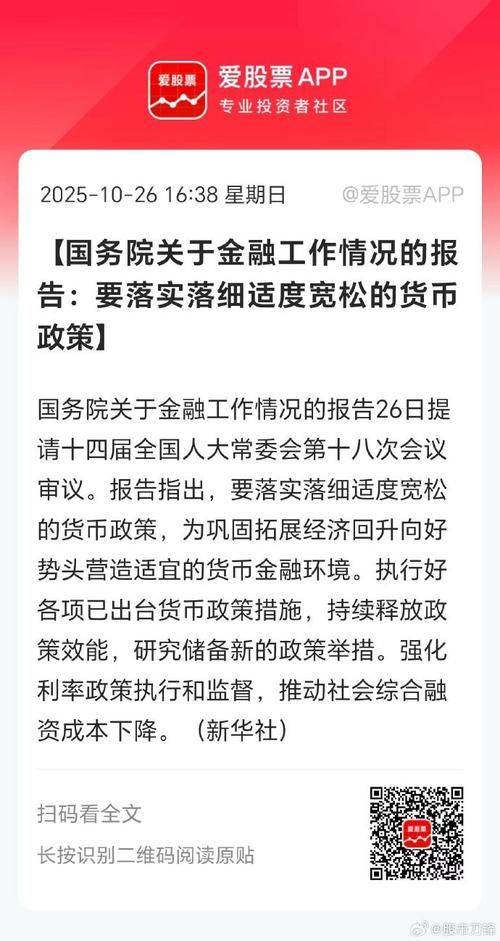
As can be seen, “front-mindedness, firm confidence” has become an important principle of good economic and financial performance in china。
The real economy
In addition to informing the national financial situation, another theme of the meeting was the exchange of work experience. For the three actors involved in finance - financial institutions, local governments and financial administrations - the meeting made separate requests。
With regard to financial institutions, the meeting called for greater accountability, a first-hand grasp of the real economy, a first-hand grasp of risks, overcoming pro-cyclical thinking, greater investment in credit for the real economy, particularly for small and medium-sized enterprises and private enterprises, and active credit support for enterprises with market, efficient, well-managed and financial constraints on their products, working in tandem with the real economy。
As can be seen from the above, “retardation” for the real economy remains the focus of financial efforts。
The chief researcher, china national bank, is of the view that the current concern of some financial institutions that economic downturns may lead to an increase in risk events has led to the emergence of “prudent lending” or even “loan lending”, which is not conducive to macroeconomic stability or to the bank's own risk preparedness. The meeting therefore emphasized the need for financial institutions to overcome pro-cyclical thinking and adopt counter-cyclical business thinking under counter-cyclical regulation policies。
At the same time, however, it was pointed out that such a countercyclical approach was not unprincipled and unconditional, so the committee also mentioned that financial institutions should increase credit support primarily for marketable and promising enterprises。
It is worth mentioning that, while emphasizing the need to return finance to the real economy of home-based services, the financial services commission has also given institutions two “comforts”:
- raising awareness of risk prevention
• improve corporate governance, strengthen internal management, strengthen incentives, encourage ownership, innovation and culture, and increase incentives for genuine support for the real economy。
While requiring financial institutions to focus on the real economy, msmes and msmes, accompanying policy measures have also become the focus of official attention。
At the seventh meeting of the financial committee, held a few days ago, it was emphasized that banks were encouraged to use more innovative tools to replenish capital through multiple channels, to implement genuinely the due diligence exemption clause, to effectively mobilize financial institution operators, to strongly support micro-enterprises and to increase overall support for the real economy。
The most recent meeting of the standing committee of the state council also mentioned the need for financial institutions to improve their assessment incentive mechanisms, increase financial resources for inclusive finance and increase financial support for the real economy, particularly micro-enterprises。
Risk protection
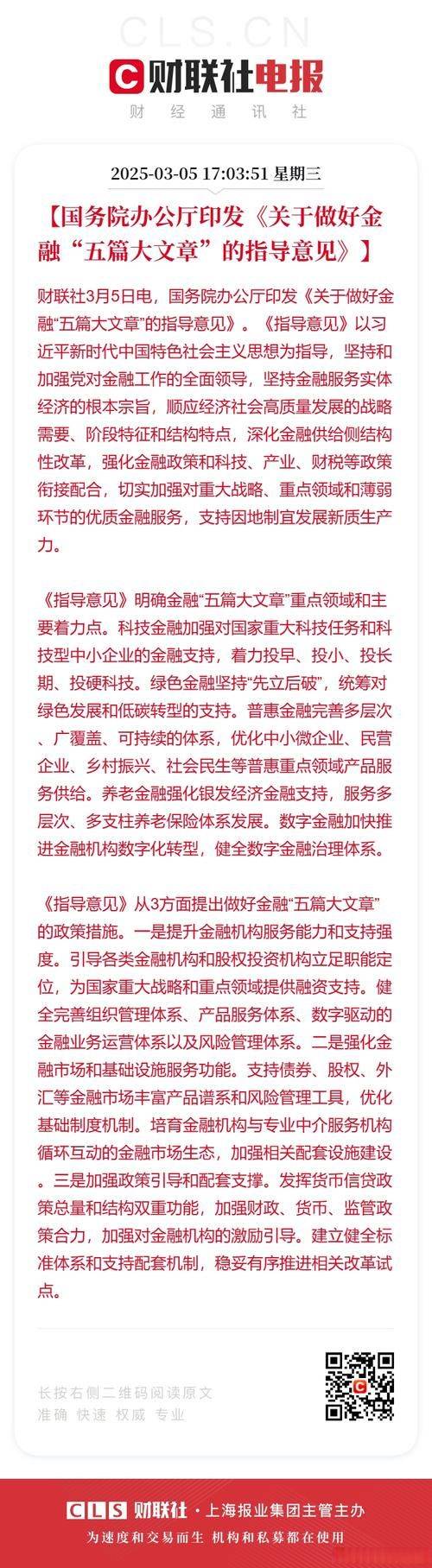
At the local government level, the focus of the committee is on risk prevention。
Local financial risks are currently generally manageable, but risk risks remain high in some focus areas and priority sectors. For example, illegal fund-raising and financial disruption are one of the highlights of the current financial landscape, and local financial risks arising from developments in financial science and technology are emerging。
The director of the central bank's monetary policy department, sun kuo-chung, has previously stated that financial regulatory resources have long been biased towards large, public and systemic financial institutions, based on limitations of size, cost, limited regulatory efficiency, etc., and do not fully match the requirements of multi-level financial supply and local financial risk control。
The king of sun cautions that failure to fully mobilize the subjective capacity of local financial regulatory bodies and make effective use of local financial regulatory resources can lead to relatively inadequate local financial regulatory capacity and weaken local financial regulation。
In response to the above, the meeting made three requests to local governments:
• strengthening responsibility for the management and preservation of local risks, raising political positions, establishing a strong sense of responsibility and responsibility, and maintaining a bottom line for the absence of regional financial risks
• effectively combating all types of illegal financial activity and preventing the occurrence of group incidents
• improving local financial oversight systems and establishing long-term mechanisms for risk management。
In the next financial phase, the question of how local governments can carry out these three tasks, and how to further limit their responsibility to regulate risks, needs to be considered。
Improving financial management
For financial administrations, the request for this meeting was more comprehensive. In general, the committee hopes that financial management will be further improved from a number of perspectives。
First, it works with various macro policies:
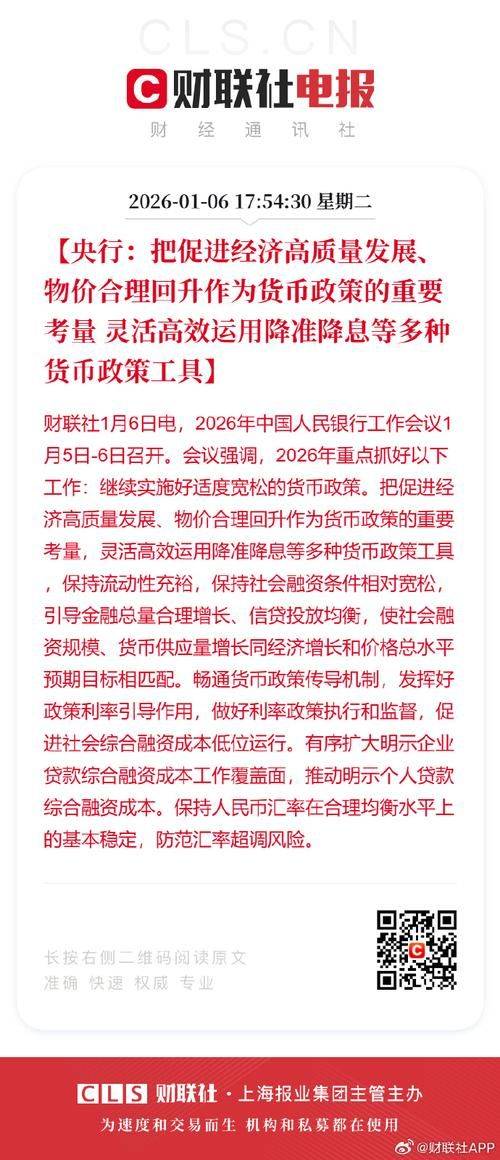
• strengthened regulatory responsibility, greater counter-cyclical regulation, a vigorous effort to channel monetary policy, greater coherence between financial and fiscal policies, and support for accelerated development in regions and areas that are willing to start business and have better development potential
• support banks' increased use of innovative capital instruments to replenish capital funds and induce financial institutions to increase medium- and long-term financing for manufacturing and private enterprises。
The market noted that official emphasis had been placed for some time on “adoption of monetary policy transmission mechanisms”. At the end of last year, the central bank offered to promote public enterprise financing through the three arrows of credit, bonds and equity financing support instruments. In august this year, the central bank also announced a change in the “ anchor” targeted at lending rates from the loan base rate to the lpr rate, which would improve the efficiency of the transmission of interest rates through mlf plus points。
The chief economist for sinoyama securities, li chai, predicts that more interest rate market reform policies may be introduced in the future. At the same time, the official tone of monetary policy since this year has been one that emphasizes sound monetary policy, maintains a strong policy stance and expects that the future will be dominated by structural easing, directing capital to the real economy as far as possible。
Second, hold the risk threshold:
- conservatively addressing local and structural stock risks
• accelerate the consolidation of the regulatory system and significantly increase the cost of violations。
The seventh meeting of the financial services commission also stated that it was important to protect the legitimate rights and interests of investors, improve the rule of law system in the capital markets, expedite the revision of relevant laws and regulations, strengthen legal accountability, significantly increase the cost of violations, rigorously investigate recent cases of fraud and offences, and create a sound market environment for the multiple demands of preserving the value of the people's wealth。
Action has been taken. According to media reports, the relevant head of the cvm met a day ago to elaborate on the overall programme of capital market reform. It refers to the adoption of amendments to the securities act in the course of this year to explore the establishment of a system of collective litigation for securities with chinese characteristics, to promote the revision of the penal code, to significantly increase the cost of illegal acts such as fraudulent issuances and false disclosure of information by listed companies, and to resolutely combat violations of the laws of misrepresentation and forgery。
Third, to create a favourable environment for high-quality development with reform and openness:
• deepening financial reforms and opening up, giving impetus to real economic development and putting in place open-ended initiatives to promote innovation and quality development。
From the introduction of the 11 articles on the expansion of financial liberalization to the promotion of interest rates on loans, china's financial reforms and openings have been moving in the recent past. Marketers believe that, in the current context of increased trade protectionism, the official move is aimed at creating a dividend for openness and enhancing capacity for fault tolerance in key areas. At the same time, it was further recognized that reform remained a policy focus and that it was expected that the dividends of the financial system would continue to be unleashed in the future. Wang eun bo