What's a vacuum? When we talk about that concept, many think about space。
The space environment is a vacuum compared to the earth's environment, but the vacuum is not a state without any matter, and even there are large amounts of dust, particles and high-energy particles in space. Before eating goose legs, you'd better learn about the physics. We already have an idea of vacuum。
The scientific definition of vacuum is broader: a gas space below a standard atmospheric pressure is called a vacuum. The vacuum is relative, there is no absolute vacuum
The achievement of a super-high vacuum has been an important link in experimental physics. In experimental physics, super-high vacuums can guarantee good insulation conditions to achieve very low temperatures; in tests, hyper-high vacuums can keep the sample surface clean and free of atom contamination in a given atmosphere, and detect the physical properties of the sample surface; at the same time, super-high vacuum environments can reduce the dispersion of gas molecules from electrons and plasma particles to ensure that experiments are conducted in the desired conditions。
How do we assess the beauty of the vacuum? A vacuum in a space can react with the number of molecules in space, and molecules form pressure in constant motion and collision. So the vacuum can be measured by pressure. The pressure units commonly used in the project include pascal, bar and torr, which are converted to 1 pa = 7. 5*103 torr. The excellent vacuum can be roughly divided into a rough vacuum: 105 ~102 pa, low vacuum: 102 ~ 10-1 pa, high vacuum: 10-1 ~ 10-6 pa, super-high vacuum: 10-6 ~ 10-9 pa。

In the atmosphere, atmospheric pressure is around 105 pascals. How can a vacuum of less than 10-1pa, which is often required in experiments, be achieved at a much lower pressure than the atmosphere? Laboratories often achieve super-high vacuums by means of mechanical pumps, molecular pumps and ion pumps。
Tilt mechanical pumps
Mechanical pumps are of a larger variety, including rotor, tablet and slide. Of these, the rotor-type mechanical pumps consist of parts such as beams, rotors, blades, springs, exhaust valves and pump oils, as shown in figure 1。
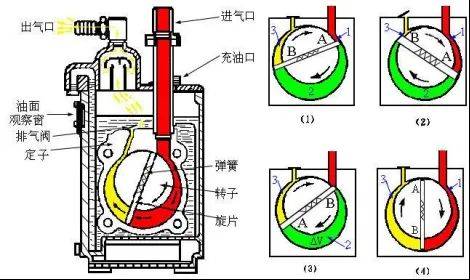
Figure 1. Structure of the spiral mechanical pumps
The blades of the spiral pump divide the lunar tooth space surrounding the rotor, pump cavity and the two caps into three spaces, which, as shown on the right side of figure 1, are connected by springs, with the end of the blade being attached to the wall of the mechanical pump。
When the rotor rotates in a single direction, the space 1 volume connected to the vent gradually increases, the pressure of the gas is reduced, the pump is inhaled and the mechanical pump is inhaled; the gas is compressed and driven to the vent when the rotor isolates space 2 from the vent; the space 3 volume connected to the vent is reduced and the gas is discharged. Mechanical pumps operate continuously, regularly inhaling gases from the side of the vent and draining the gases that have been inhaled from the vent for the purpose of increasing the vacuum。
We can imagine a scenario where we now have a vacuum cavity, space size v, pressure p0. The rotor rotates once and the size of space 1 is v when the first inhaling process is completed, at which point the environmental pressure p1 connected to space 1 is satisfied:
When the second pump is completed, the pressure of the pump cavity is very strong:
When the mechanical pump turns at m, after t-seconds, the rotor rotates and the pressure in the cavity is:
This ideal situation is established only in a poor vacuum。
However, due to the structural characteristics of the mechanical pumps themselves, they are only available for low vacuum conditions. Factors that affect the vacuum of mechanical pumps include dead space, the air confidentiality of the pumps themselves. Among them, the dead space for mechanical pumps is the main reason for limiting the limit vacuum:
Figure 2
As shown in figure 2, the space for mechanical pumps is not entirely ideal, and the rotors in the mechanical pumps correspond to the piping cavities, while there is still some space between the rotors and the cavity walls outside the cut point position. When the rotor passes through the vent, part of the air remains in this part of the space and is isolated from it. The gas in this part of the space cannot be fully excreted, but is linked to the vent as the rotor rotates, making it impossible to further reduce the vacuum, which is called dead space, as illustrated in figure 2。
Further on the basis of the mechanical pump due to the problem of the pump itself
Improved double and gas town pumps can achieve better results。
Double pump
The two-stage pump consists of a combination of two mechanical pumps, as shown in figure 3. The gas from the current stage pump is transferred through the gas channel to the subsequent level of mechanical pump (low vacuum pump), which in turn discharges the gas through compression into a two-stage pump. A two-stage pump structure can effectively reduce the impact of mechanical pump dead space on the vacuum, thus effectively increasing the maximum vacuum of mechanical pumps。
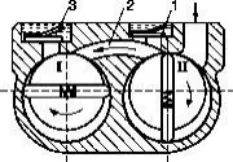
Figure 3. Diagram of double pump structure
Airpumps
The starting point for the design of the gas-pumps is that, in the actual experimental environment, the vacuum pump is often partially mixed with water vapour。
During the operation of the mechanical pump, the water vapour fraction pressure increases as the pump compresses the gas. When the total pressure of the compressed space has not reached the critical pressure of opening the vent valve, the water vapour fraction is saturated, and the water vapour is condensed into water, and the pressure is lowered so that the gas cannot be discharged。
When space increases, water vapour pressure decreases, and water condensed in a vacuum pump volatilises into water vapour and cannot be discharged. This has resulted in a reduced vacuum。
Thus, in order to reduce the impact of water vapour on the vacuum effect of mechanical pumps, the gas town pump designs a small hole close to the vent that is automatically open. Small holes are able to enter a small amount of dry air into venting space to increase pressure in compressed space and help open vents。
Molecular pumps
Molecular pumps are vacuum pumps that use high-speed rotation rotors to compress gas molecules, which drive gas molecules to be discharged from the cavity. Molecular pumps can achieve a higher vacuum than mechanical pumps and high vacuum conditions。
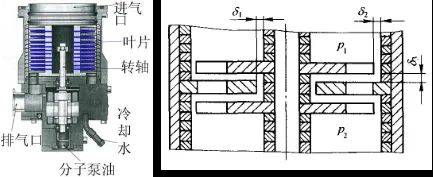
Figure 4. Map of molecular pumps
As shown in figure 4, the molecular pumps consist of pumps, motion wheel, still wheel, drive systems, etc. High-speed rotors can drive high-speed movement of the wheel, which collides with gas molecules, transmits the momentum to gas molecules, is transmitted to the lower leaf blades and is eventually removed from the front pump。
Molecular pumps pass the momentum by colliding with gaseous molecules through high-speed rotating molecular pumps. When concentrations of gas molecules in the vent are high, high-density gas molecules collide with the wheel, causing damage to the wheel. As a result, ensuring the proper functioning of the molecular pump requires an environmental pressure below a certain pressure, which is referred to as the activated pressure. In practical experiments, mechanical pumps are usually used simultaneously as front-stage vacuum pumps and molecular pumps as secondary pumps. The mechanical pump will first be pre-pumped to a low vacuum in the pump chamber, resulting in an environmental pressure below the activated air pressure and further activation of the molecular pump。
Molecular pumps transmit kinetics through a collision of a leaf wheel with a gaseous molecule. Since the ease of the flow of kinetics is associated with the amount of gaseous molecules, the larger the mean molecule is more compressed and easily removed. Less molecular gases, such as hydrogen, are difficult to remove. As a result, there is also a maximum vacuum for molecular pumps。
Ion pump
Surface physics experiments usually require very clean surfaces of solids. Under low vacuum conditions, gas molecules are adsorbed to the solid surface, thereby contaminating the sample and influencing its results. The experimental conditions under which an ion pump can achieve a super-high vacuum are an important means of maintaining the super-high vacuum。
In the case of spatter ion pumps, the spatter ion pumps consist essentially of electrodes and external magnets. The anodes in the ion pumps are typically cylindrical stainless steel, and the cathodes on both sides of the anode are typically made of titanium plates. Titanium itself is a good adsorption material with strong chemical adsorption to active gases。
When the anode is connected to high voltage, the gaseous molecules in the anode cylinder are ionized and form panning discharges and release large amounts of electrons into space charge. Co-activated by cathode, anode level and external magnetic field, the ionized electrons carry out round-the-roller motion within the anode and collide with the molecules in space, causing gas molecules to ionize and form ions。
Because the mass of the ion is larger than that of the electron, the magnetic field has little effect on it, and the positive ion generated by the ionizing is accelerated to thousands of volts by the anode voltage and moves towards the cathode, thus producing strong adsorption。
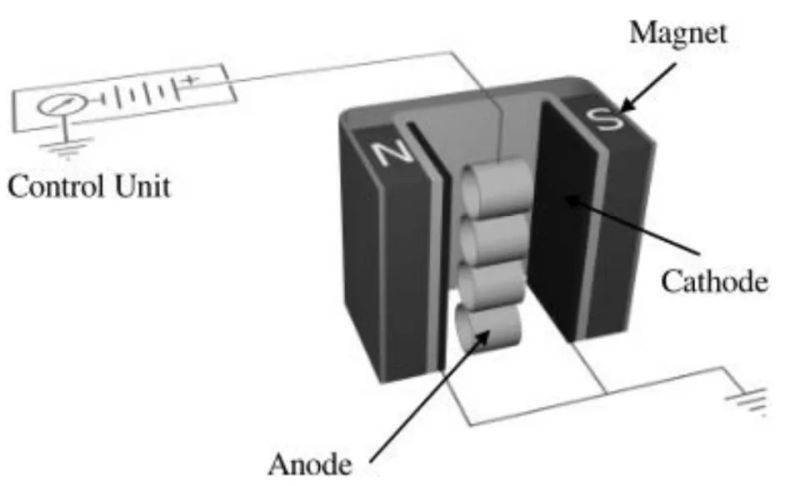
Figure 5. Structure of the ion pump
Ion pumps can reach the maximum vacuum of 10-10 pa. Ion pumps do not need to be pumped in the course of their operation and are operated with small vibrations and no noise. Similar to molecular pumps, the normal operation of the ion pump requires a lower start-up pressure。
Different types of gases have different mechanisms for pumping in spattered ion pumps。
These gases, n2, o2, co, co2, are largely extracted from the chemical adsorption of titanium atoms deposited on the surface of the anode. For example, following an electronic bombardment of n2, n+, n2+ plasma is produced, which forms a stable tin compound on the surface of the anode. For these gases, the number of titanium molecules splattered is proportional to the pressure of pump extraction, while the rate of spattering depends on the mass of the ion versus the mass of titanium。
The mechanism for removing h2 is different from the heavy molecules above. The mass of hydrogen ions is small and the impact of titanium atoms on hydrogen molecules is negligible. However, hydrogen ions reach the titanium plate, compounding with electrons in crystals, forming hydrogen atoms and spreading within titanium crystals, forming tin solid solutions。
Concluding remarks
The vacuum conditions that can be achieved by mechanical pumps, molecular pumps and ion pumps are successively upgraded, with low, high and super-high vacuums, respectively, and are the more common types of vacuum pumps in laboratories。
In addition to this, vacuum pumps include facilities such as oil proliferation pumps, titanium lift pumps and cryogenic pumps. The vacuum required by the different experiments is different, so the vacuum pumps used should also be tailored. The application of vacuum pumps is essential to maintain the super-high vacuum environment of the experiment and to ensure its proper conduct。