Power is everywhere in life, and it is a specific device that converts other forms of energy into electricity. Power is divided between ordinary and special power. The general power sources are broken down into switches, reverse transformers, exchange of steady voltage, direct current voltage, dc/dc power, modular power, variant power, ups power, eps emergency power, pc power, whole current power, etc. Among them, switch power is the most common, and the following is some of the basic common sense and principles of switch power。
The working method of the switch power is essentially to change the size of the output voltage or current by changing the steering time of the tube in the circuit, for the purpose of maintaining the output voltage or current stability。
The dc-dc converter is the core of the switch, and the dc-dc switch is also known as the dc-dc converter. (note: the dc-dc switch power adjustment is also referred to as the switch tube because it is functioning and broken, and the main function of the switch is to perform power conversions, which are also referred to as the power tube or power switch. I'm not sure
Dc-dc converter
The dc-dc converter is the most common of the switches, consisting of diodes, triodes, capacitors, etc. The dc-dc converter repeats the break switch, converts a direct current voltage or current into a high-frequency aerovoltage or current, then smooths it to a direct current voltage output. The dc-dc converter is made up of basic components such as semiconductor switches, whole-stream diodes, smooth filters and capacitors. When electrical isolation is required between inputs and outputs, transformers can be used to transfer high-frequency aerovoltaic voltage through transformers to the side of the output. The basic metaware forming the dc-dc converter are shown in figures 1-3 below. Figure ui is a direct current voltage that is unstable after full flow; uo is an output voltage that passes through the wave; s is a switch。
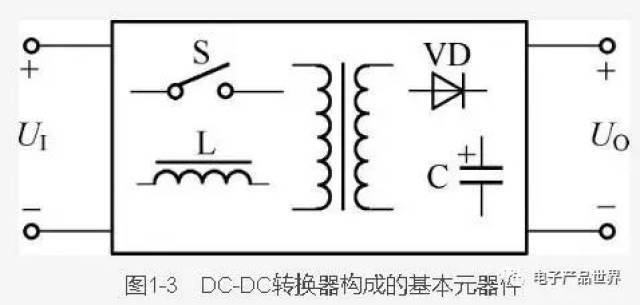
Magnetic devices, such as filtration waves, switches and transformers, and filter capacitors can be quantified in small amounts by increasing the frequency of switches. For dc-dc converters, waveforms attached to switch s at both ends of voltage us are similar to square waves, while waveforms via current is are similar to triangles or triangles with steps, as shown in figure 2 below. Definition of their share
Formula, t for switch, s break time; ton for switch s lead time; toff for switch s deadline。
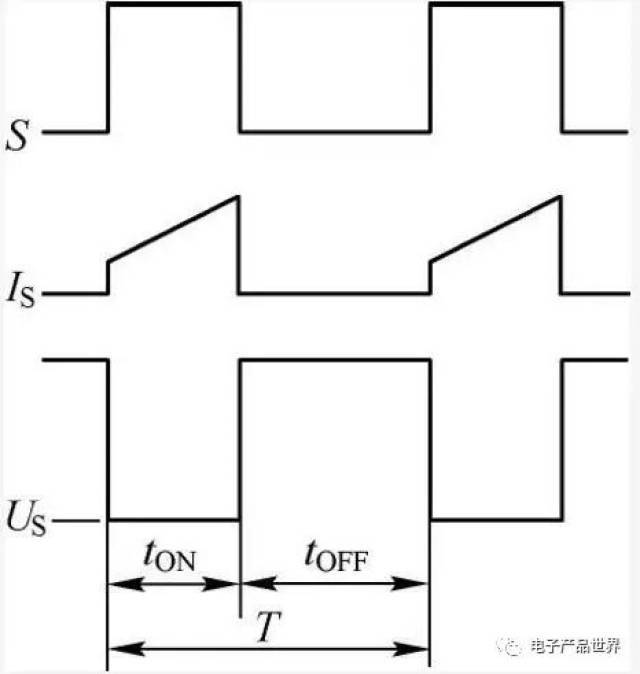
Figure 2
The switch wave shape of the dc-dc converter (see figure 2) controls the space ratio by maintaining the t-change of the work cycle, the pwm to control the pulse width of the switch pass/break time, the ton-change time of the conductor, and the t-frequency of the work cycle (pwm). However, when the switch is less frequent, the frequency-modulation of the pfm requires a larger isolation transformer and an input/output filter, which is neither economical nor sufficiently large to be acceptable in practice, so that the working mode switch is sufficiently high。
These are brief descriptions of the working principles of the dc-dc converter on which the switch is based。