How can there be no indigenous planting of vegetables without the technology to grow them? Multi-cropping techniques. This is what used to be. These technologies need to be developed, and families who are growing need to learn about them. Aerosol training: mainly the use of spray devices to mist nutrients into small mist droplets and re-jet into plant roots to provide soilless planting techniques for the moisture and nutrients required for plant growth. Deep-water flow technology: a hydroponic technology that belongs to the fluid stream. Nutrient membrane technology: is a hydroponic method for planting plants in subsurface mobile trophic fluids。
I. Aerosol training
1. Spray cultivation, also known as aerosol and aerosol cultivation, is primarily used to mist nutrient fluids into small mist droplets, which are then sprayed directly into the plant root system to provide a soilless planting technique for the moisture and nutrients required for plant growth。
Crops can be hanged in a closed planting tank, box, bed, the roots of which need to be exposed to the plant, and nutrients can be sprayed to the root surface by mist。
3. Aerosol is one of the best forms of resolution of water-gas conflicts in all soilless cultivation techniques, while it is also easy to automate control and 3d cultivation to increase the utilization of greenhouse space。
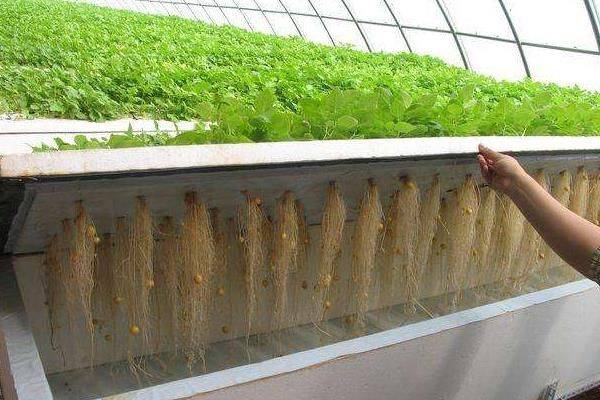
4. Aerosol is responsible for increasing crop yields, but such a device is vulnerable because of the constant circulation of liquids, which cannot be recycled in a timely manner if power cuts exceed 30 minutes or when pumps fail。
5. The various types of aerosol cultivation previously described are used in the cultivation of leaves and guacamole, which share a common characteristic of the fact that the products that are available to people are the fruit of the same area。
6. The use of aerosol cultivation not only contributes to the development of root systems and root tubers, but also makes it easy to harvest them in batches at any time, or to harvest them selectively according to standard specifications. Some plants that harvest root systems as medicinal products are more conducive to the formation of developed root systems, resulting in significant increases in crop yields。
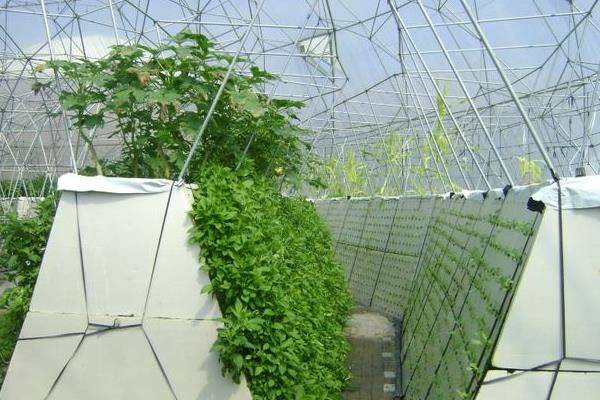
7. Aerosol cultivation of these crops, which is the same as that of other leafy guacamole, is conducive to higher yields, is several times greater than that of the soil and is readily accessible to the underground sector, is more conducive to the observation and study of the growth of the underground sector, is designed for the management of growers, and is accompanied by research into planting techniques to provide more field data, such as multi-effect aphrodisiac spray, which has a much easier and more intuitive impact on the growth of the potato traches than the observation of cultivation in the soil。
8. In order to harvest the underground part of the plant, which is normally harvested by excavated harvests of different sizes and poor quality, and which is grown by aerosols, which are harvested in the same manner as the picking of melon fruit, they are harvested in batches and selectively, and they are harvested in high-quality roots, thus increasing the overall economic yield ratio by several times, which may be related to the waste of plant-planted nutrients, which can be fully converted into economic production。
9. In terms of technology itself, aerosol culture is more readily available for operational production, allowing for constant viewing of the growth and development of the subterranean sector, as well as for fluid management at any time depending on the growth, and, more importantly, underground development in the air, which is not influenced by soil mechanical resistance, with a more uniform development of the individual, expressed in relative consistency of the form。
10. No weeds, pine soil, earthbreeding, platinum, no growth of roots in the mist are needed during planting, and yields are several times or dozens of times greater than those of ordinary soils。
Ii. Deep current technology
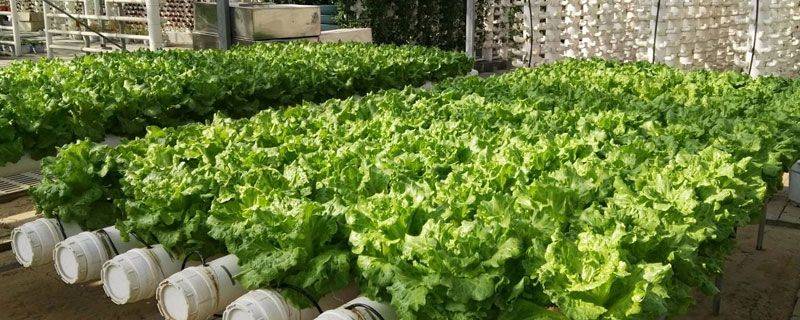
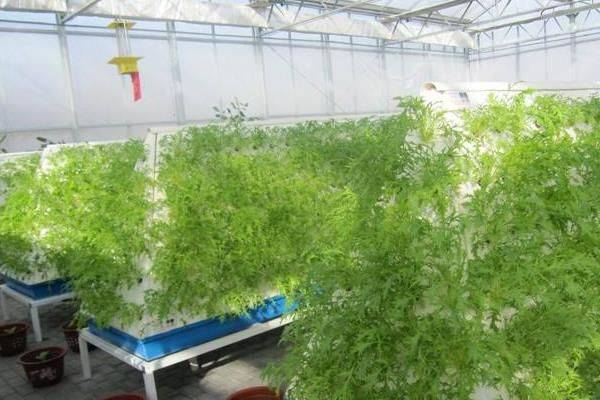
1. Deep-water flow technology (dft) is a hydroponic technique that grows more deeply and is used as a moving layer of nutrients, with 5-10 cm or even thicker nutrients in the planting tanks, then rooting the crops in the tanks, with intermittent pump openings allowing the flow of nutrients to supplement oxygen in the nutrients and to achieve more even nutrient nutrients。
Deep-water hydroponic facilities, consisting mainly of planting tanks, fixed nets or panels, reservoirs, circulatory systems, are among the first to be developed as soilless farming techniques for the production of crop commodities. They are capable of growing fruit and vegetables such as melons, silk melons, melons, watermelons, tomatoes, cucumbers and peppers, as well as vegetables such as cabbage, lettuce, canteens, onions and cabbage。
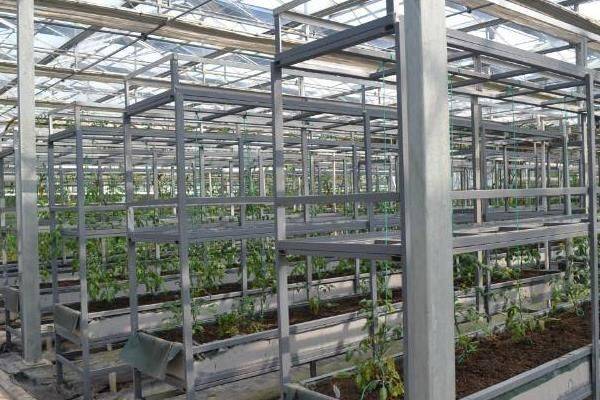
3. Deeper layers of deep-flow technological trophic fluids, with larger amounts of liquid per sequester in the deeper stretching of root systems, make nutrient concentrations, dissolved oxygen, acid alkalinity, temperature, and moisture stocks less susceptible to rapid changes, providing a more stable growth environment for root systems。
Plantation is hanging at the level of a trophic fluid, which removes the root of the plant from the surface of the liquid, and the stretching of the root is capable of reaching the nutrient, causing the death of the plant as a result of its immersion in the trophic fluid。
5. The flow of trophic fluids contributes to increasing the dissolved oxygen of nutrients and eliminating the local accumulation of harmful metabolic products from the root table, eliminating the disparity between the root table and the external nutrients and nutrient concentrations, enabling nutrients to be delivered to the root table in a timely manner and meeting the needs of plants more fully。
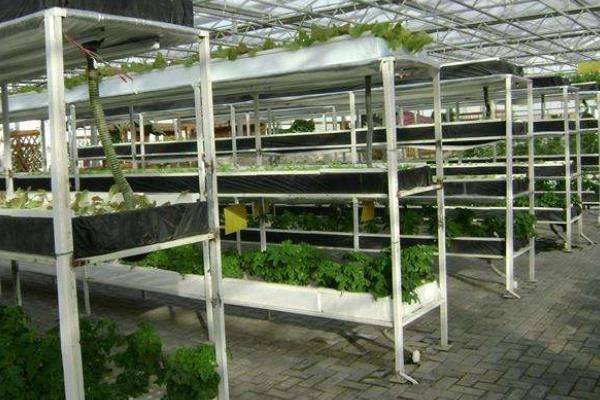
Iii. Nuclear level technology
1. Nutrient membrane technology, known as nft, which is a hydroponic method of planting plants in a shallow flow of nutrients, was rapidly introduced worldwide after 1979, and traditional soilless cultivation techniques required deep-seated planting cells and the placement of solid matrices or nutrient fluids into them to grow crops, which were made of materials such as water, bricks, woodboards or metals, i. E., heavy and expensive, while the underlying oxygen problem was more difficult to resolve。
2. The nutrient membrane technique does not use a solid matrix, and in tilted planting tanks that require a certain slope (around 1:75), the nutrients flow only a few millimeters deep through the roots of the crop, which are partially immersed in the shallow flow of nutrients, while the other is exposed to the wet gas in the planting tanks, which can better address the demand for oxygen for the root breath。
However, due to the poor buffer function of the root environment, the temperature around the root is highly influenced by the outside world and the total quantity of nutrients in the planting system is lower because of the shallow trophic layer in the planting tanks, which can be fed by 5-10 mm。
As a result, the concentration and composition of nutrients are susceptible to rapid changes, constant circulation of liquids, high energy consumption, failure to recycle in a timely manner when electricity is out or water pumps fail, high temperatures and crop production lead to high levels of evaporation of leaves, high levels of nutrient consumption and, if supplies are not made available in a timely manner, low levels of plant growth。