One acre earns less than 20,000 dollars, and there's no one willing to do it — this year's atmosphere in the garlic-producing area, a lot of garlic farmers start to cry. The purchase price of garlic in the country fell to $2. 7 to $2. 27, a drop of nearly 30 per cent over the same period last year; the county of henan is worse, the average garlic is as low as 8 cents, and it can't be covered by manpower. In the face of such practices, the first reaction of most people is to blame the market, the weather, and the price of the garlic dealers. These calculations are correct, but one of the most critical variables — the quality of seeds — is missing。
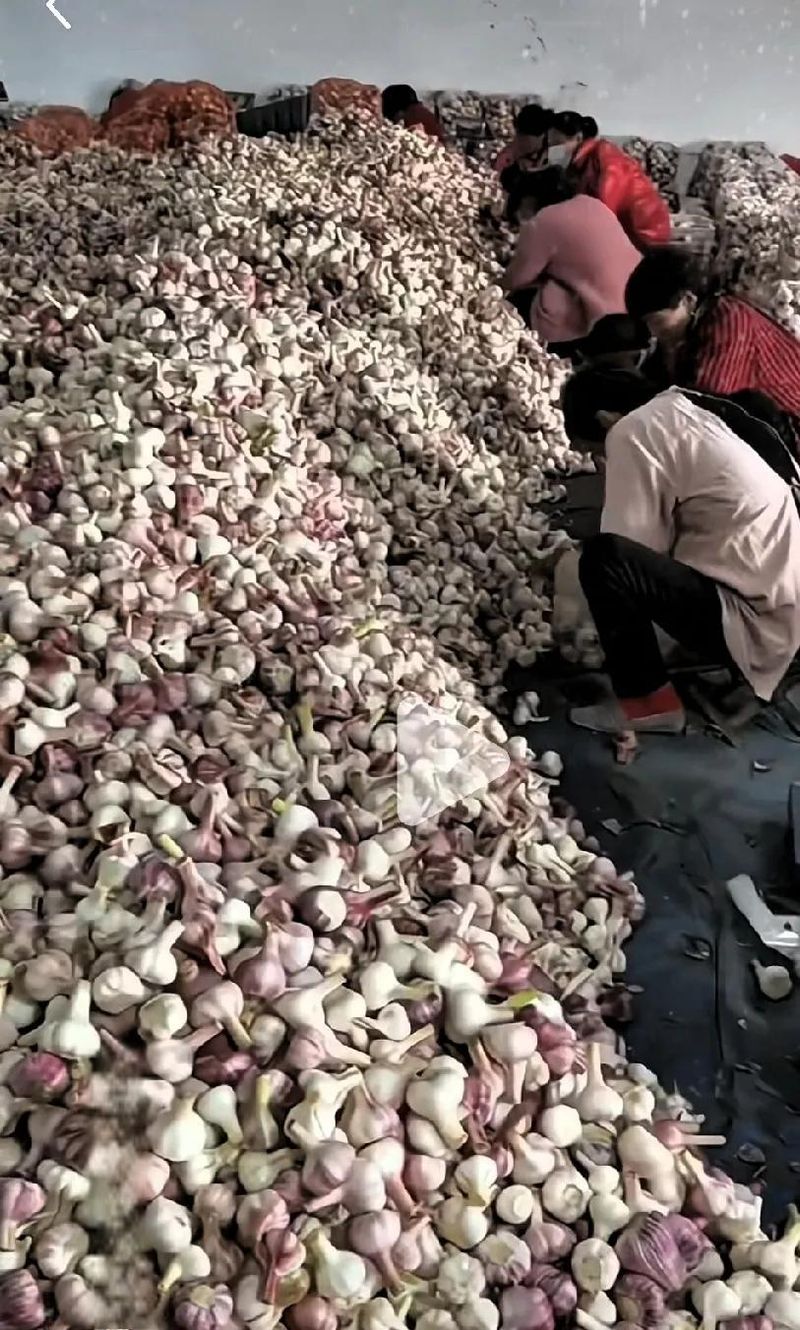
When good behavior occurs, caste degradation is masked by high prices, and garlic can be sold; once it collapses, the problem of degradation becomes the last straw to crush profits. The garlic thing, unlike wheat corn, can be replaced with hybrid seeds, it's a carp-in-a-generation sexless reproduction, and viruses and physiological weakening will follow. The first year was just a little bit thin, the second year was a lap full of garlic, the third year was a deformity, and the horsetails were all out. These problems are not normal, but this year's performance, which cost hundreds of dollars per acre, is normal。
We can't handle it, but the quality of the seeds is the straw we can catch。
Counting a hidden account: full-cycle cost of caste degradation
Many people think that caste degradation is just a “less garlic” thing, and that it does not count. In fact, the bill is not vague, from seeding to the release of the bank, and every link is missing。
Let's start with the patch. High-quality garlic yields more than 95 per cent and degraded garlic can drop to 70 to 80 per cent. One acre is short of hundreds of seedlings. The addition of an artificial plant and seed, which is replenished over the medium term, spends a few dozen extra dollars per acre and does not look much, but the range of garlic is a solid, hard expense。
The seedlings are patched up and the base of degradation is still there. Weaknesses and ill health make it easier to catch fat more than anyone else. One acre is enough to fatten two or three times a normal year, and the degraded garlic is three or four times, and the extra fertilizer is a hundred pounds per acre. The same is true for pesticides, where weak seedlings, rusty and white rotting diseases come on a rotational basis, which can be contained by a blow-down of medicine and can be used twice to degenerate. Dozens of additional amounts of pesticides are spent per acre for the first half of the year, with much less。
The real big one's on grade loss. This year, the market split has reached an extreme point — with the pick-up of garlic, the price of five dollars per pound, and more than two pieces of ordinary garlic. In jiangsuzhou, the 6. 5 centimetre-size special-grade garlic can be sold between $4. 9 and $5. 21 kg, while the co-production area has only one-sixty-five to one-eight centimetre garlic. The same land, the same species, has a price difference of more than three times because of differences in head, length and quality. The amount of garlic that grows from degraded garlic varies in size, the proportion of garlic is high, and the percentage of primary garlic falls from 85 per cent to less than 60 per cent, resulting in a small amount of money per acre, at current price differentials, and hundreds of dollars go out。
The storage chain continues to run out. The risk of degenerative cartilage and high water content is considerably higher than that of healthy garlic. Normal storage losses are controlled at 2 to 3 per cent, and the loss of degraded garlic can be between 5 and 10 per cent. Garbage is nothing else, waiting for prices to rise later; it is a loss that is equal to one in 10 of the goods stored, which is converted into cash, and an unnecessary loss。
When good things happen, these costs are wiped out by profit, and no one will go down. But this year's garlic prices are tied to the cost line, and some plots have to be sold up to one forty-eight pounds to keep them -- this price, this year's garlic has fallen through. Feeding, fattening, adding drugs and losing are all pure losses。
Economics of “three or two separates”: a law that doesn't cost a penny
The legacy of the older generation, “one by three” and “one by one” looking at the earth, is in fact an extremely low-cost system of garlic for pure recovery. It doesn't cost you a lot of money every year to buy devenomous garlic. It just takes a little thought and time to keep it alive。
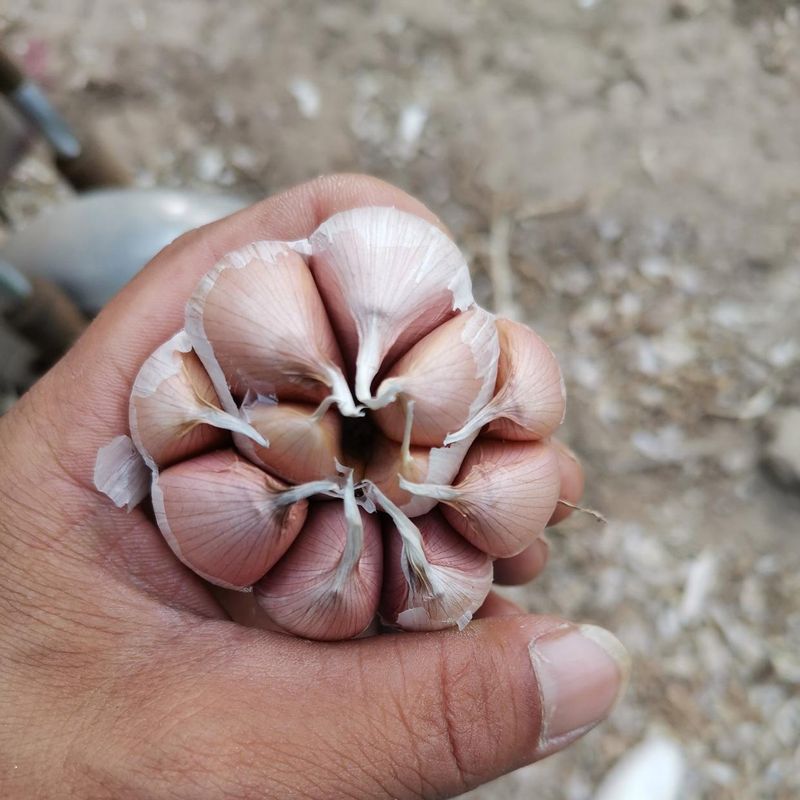
The core of the so-called three choices is the successive elimination of the sick and weak strain at different nodes. The first choice is in the field, where the most powerful, disease-free, green and thick-leaved plant is marked after garlic is pumped, before garlic is collected, and those leaves that are yellow, spotted and weak are directly excluded. At the time of harvest, the second option was to harvest the primary plant separately, leaving it with only a single head weighing more than 56 grams, full skin, six to eight petals, even-sized garlic, garlic, spotting, all out. The third option is to sift the petals before planting and remove heat, frost, mold, soft petals and unfilled garlic. Three successive screenings amounted to one “spurting the field” at the farm level, removing the infirmity from the layer。
It's a big deal. The aim is not only to dry the garlic, but also, and more importantly, to allow the nutrients in the straw to flow back to the garlic and increase the amount of garlic. Experienced garlic farmers know that garlic can't wait to get it done, that the ventilation is dry, and that excessive temperatures can cause the garlic petals to tan. Two or three days before the show, which is equivalent to a low-cost wake-up call, gives rise to a lumber and a priori。
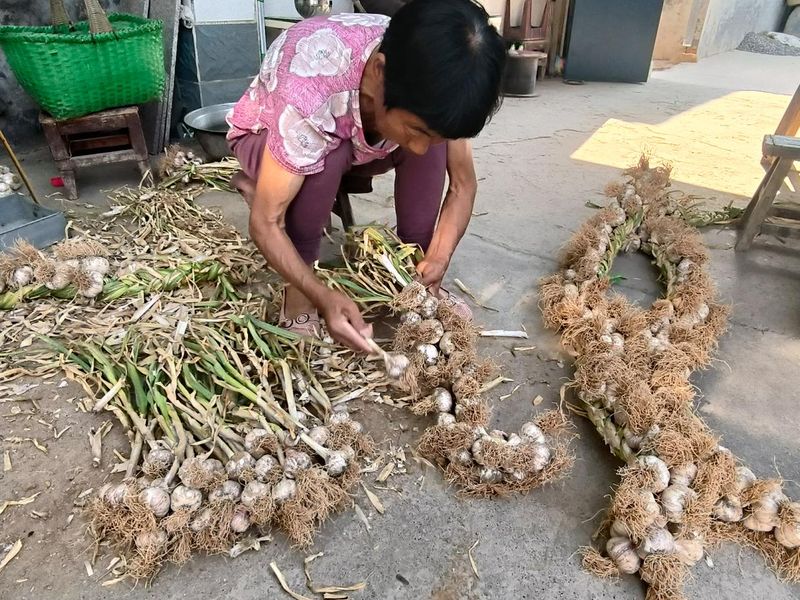
A quarantine is easily ignored. Garbage is stored in combination with garlic, which appears to be low, and the screening is actually less effective. The goods, which come and go in and out of the country, are subject to bumps and bacteria and are susceptible to cross-infection. If necessary, leave garlic alone in the air, under the roof and in the ventilator, without commingling with the merchandise garlic. This step, while not costing a penny, is essential to maintaining caste stability。
The methodology is mainly manual and time-consuming, with almost zero cash costs. The gains are real: a reduction in the rate of replantation from 20 per cent to 5 per cent, with the saving of double inputs for the purchase and replanting of seeds; a well-developed seeding root, with a significant increase in the equivalent application of fertilizer, or an appropriate reduction in the recovery of fertilizer; an increase in the primary garlic ratio from 60 per cent to more than 85 per cent, with a net gain of $2,300 or even more per acre based on the current premium on fine garlic; and a reduction in storage losses from 8 per cent to 2 per cent, or a few pounds of good garlic per acre. The sum total was calculated to replace a portion of the cash purchase with a non-cost screening, which was probably the highest return input in the harsh years。
Retention strategies to deal with market segmentation: tailor-made for fine food production
This year's movement in garlic gave a lesson to all the garlic farmers: good garlic, no one wants it. Five pounds of good garlic is hard to ask for, and two dollars of ordinary garlic can't sell. It is no longer a question of periodicity; it is the market that tells everyone that later it is no longer production, it is quality。
For ordinary growers, the most practical response is not to sell with wind expansion or pain, but to adjust the screening criteria for retention so that the garlic that you grow naturally meets the requirements of fine garlic。
Dryness is the first threshold. The market is most afraid of garlic, and the receiver shakes his head when he sees a high volume of garlic. The retention of the garlic petals is controlled by the two suns at 62 to 65 per cent, and the hand is wrinkled with a hardness and skin. Such garlic can be stored, and the amount of garlic produced by future generations is not so dry。
The head is the second threshold. Only garlic with a diameter of 5 centimetres or more and a single head of 50 grams or more will be sown to remove the deformity of the petals. These malformations of garlic go down, and it's hard to guarantee the round and evenness of garlic for future generations. The market for refined garlic is extremely demanding for even size, with pure garlic above 5. 5 centimetres and mixed garlic of varying sizes, and the purchase price is more than double。
Health is the third threshold. It took 10 minutes to open every garlic, and rodi's, the diseased, the worm-smuggled. Particular attention is paid to the strains of garlic and maggots, which are transmitted from one generation to the next and cannot afford to throw a small petal today, with the possibility of destroying a whole body next year。
This year, the situation is clear. The amount of local garlic acquired per day fell from 200 tons last year to more than 70 tons. It was not unsold, it was too little garlic that met the quality standards. Half of the garlic has been transformed from refined to inferior because of the continuous rains in mid-may and the poor drying methods. What does that mean? Dryness, head, health, every one of them talking to money。
When it's good, it's good to sell it; when it's bad, it's good to be robbed. Ten per cent of the screening effort is spent on seeding, and 30 to 50 per cent of the premium space is locked into the harvest. This is the cheapest product upgrade in a context where supply exceeds demand。
The worse it gets, the better it gets
Ultimately, agricultural competition is ultimately cost competition. Seed costs are the most manageable starting point for all costs. It doesn't matter who keeps the seeds when it's good, and who's more likely to return next season. Garlic is not a year or two for caste degradation, nor is reversal overnight. However, the “twilight-segregation” approach is simple, stabilizes the chassis with minimal money and makes subsequent fertilizer, water and pest management more effective。
Under the bad market, some complain about luck, others take low-priced garlic for sale, but the really smart garlic farmer has begun to prepare for the next season — starting with the selection of a seed. How do you plan to sift and get out this year