Rumours
“0 preservative cosmetics are warmer and safer!”
Similar to “0 add” to food, many cosmetics are claiming the concept of “0 preservative”. Many people feel that the cosmetics of "0 preservatives" are warmer and safer。
Gossip analysis
This statement is not rigorous。
Cosmetics claim “0 preservatives” in two cases. One is not to add traditional preservatives, but to add new systems of preservatives, which are mild and safe. The second scenario is that special types of cosmetics, such as pinkcake, wax lipstick, perfume, etc., are not required。
Also, “0 preservatives” are by no means equivalent to “temperature and non-stimulation”, such as some ultra ph-value cosmetics (e. G., water solitary acids), which do not contain preservatives, but are not less irritant to the skin. Cosmetics should not be superstitious to preservatives, let alone mild and unstimulating。
Scenario 1: "0 preservative"
Actual means no addition of traditional preservatives
Traditional preservatives are commonly used in formaldehyde release bodies (methraquine, ethylamide and isotone, etc.), bronpol, phenol (phenyloxyethanol, phenylmethanol), nepalese esters (hydroxyphenate), organ acids (phenylpyric acid, pear acid) and iodide acetylene ammonium acids (ipbc) of six major groups。
In the course of developing the cosmetics industry, these traditional preservatives have gradually revealed their defects, most commonly skin irritation, such as preservatives for formaldehyde releases, phenyloxyethanol, etc. For certain sensitive skins, the use of products containing these preservatives can cause adverse effects such as red swelling and sting。
There are also new types of preservative systems that have gradually replaced traditional preservatives, which are not usually labelled as “preservatives” in the composition table, but still function to inhibit the growth of microorganisms. The most widespread use of the new preservation systems is the “multi-ol preservation system”, with 1,3-propanol, glycerine (proptriol), 1,2-pentane, 1,2-hexadiol, etc. In the composition table, which is used not only for wetting but also for preservation purposes。
Other new types of preservatives, such as hydroxyl phenoxyketone, raspberry ketone, some plant extracts, glue silver, etc., have also accumulated moderate market feedback, which has also produced good preservative effects。
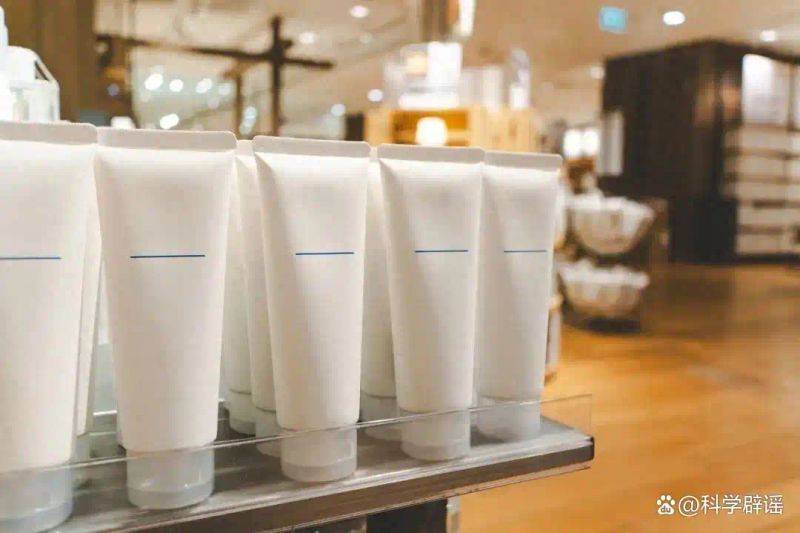
Images of copyright in the library, reproduction of use that may trigger copyright disputes
Most of the common “0 preservative” cosmetics in the market refer to the non-addition of traditional preservatives. Formally documented cosmetics are usually tested for stability during the formulation development phase to ensure that the product is of constant quality in all settings, and that there is generally no concern about corruption resistance。
After 1 may this year, newly listed cosmetics (with some special exemptions) have to be tested for preservative challenges. Preservative stability has changed from an “additional” to a “necessary” issue, and it has been insured for cosmetics。
Scenario 2: special agent type
Cosmetics don't have to be embalmed
In the technical guidelines for the safety assessment of cosmetics (2021 edition), issued by the national drug authority, cosmetics are also provided that are exempted from the challenge of preservatives, and that normal use of these products does not have to worry about corruption:
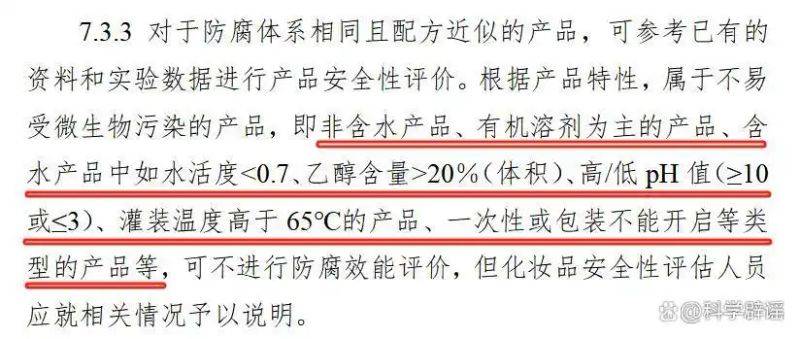
Source: cosmetic safety assessment technical guidelines (2021 edition)
The most common products in life, such as pink cakes, wax lipstick, perfume, subsamples, aerosols, etc., are those products that do not require additional preservatives and are used regularly during the life of the product, without fear of deterioration。
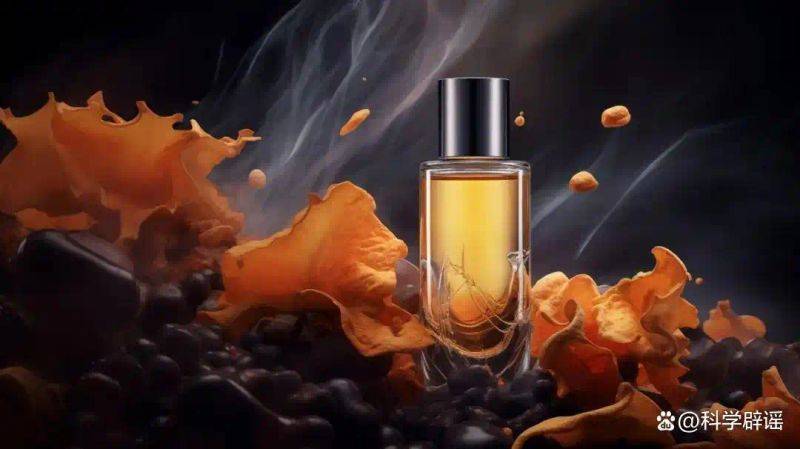
Images of copyright in the library, reproduction of use that may trigger copyright disputes
Recommendation for use of cosmetics
• “0 preservatives” is not equivalent to “temperature and non-stimulation”. Cosmetics with extreme ph values (≤3 or 10) are highly irritant to skin, such as water solitary acid, although not preservatives, but not less irritant to skin. When skin is sensitive, cosmetics of “0 preservatives” cannot be selected at all, preferably after a mild (without irritation) test report has been found。
When cosmetics are turned on, it is desirable that they be used during the preservation period after they are opened, otherwise there may still be a risk of anti-corrosive failure and bacterial deterioration。
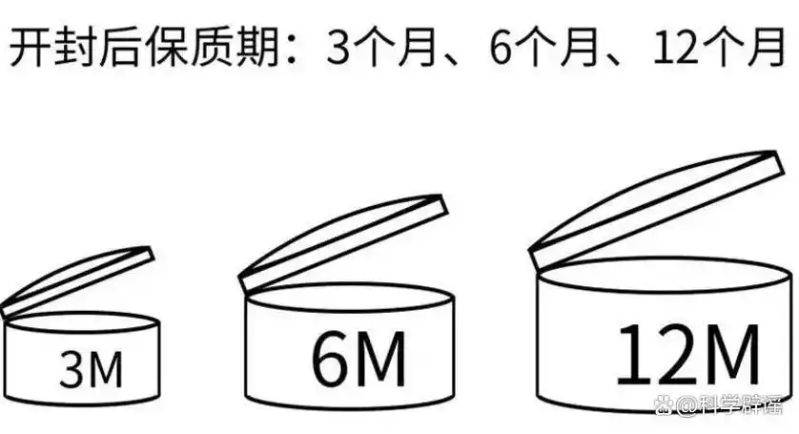
The marking of the preservation period after the opening is usually found on the packaging
Cosmetics cannot claim efficacy in medical effects, such as antibacteria. If such “cosmetics” are encountered, either by means of an off-the-shelf side product (the formal product is to be filed with a make-up number) or by means of a declaration of violation, they will eventually be brought to justice。
I'm going to use the "little" mirror
“0 preservative cosmetics are safer” is a typical “component panic-type” rumor whose core error lies in the partial equivalent of “preservatives” to “harmful substances” and, similarly, “purely natural and safer” to “favourable”。
Such rumours use consumer scarcity of expertise and the quest for “absolute security”, capture “component fear” and label chemical terms such as “preservative” “frozen” “alcohol” as “harmful substances”, implying that “no, no, absolutely safe”, create extreme perceptions of “non-black, no, no”, and spread one-sided and even erroneous messages. The key to identifying such rumours is to guard against the expression and implication of “absolute” and to understand that “security” is the result of a multi-factor balance, not the existence of a single element。
Planning production
"july by the author."
Audit of the deputy director of dermatology at xu min tianjin university of medicine (zhu kung yi memorial hospital, tianjin university of medicine)
He's the one who's planning this