If you look at the market recently and have a need to buy mirrors, you'll notice that the price of the lens has suddenly risen and that there is a lack of equipment in the market. Not only the camera, but also the camera sensor of the smartphone was under stress as a result of the damage to sony's cmos sensor plant following the earthquake in kumamoto, japan. At this point in the past year, with the release of a large number of new products, many old-age fuselages and cameras are generally priced down and close to five small vacations, should the distributor be prepared for a small profit
It's a rare collective effort
The price increase was in fact omens, and as early as mid-month, yoshinaga sent a formal letter to the first-tier agent stressing that the exchange rate had led to higher prices and higher costs for raw materials, and that the lens price would be fully adjusted as of 1 april. On that day, the market moved differently, with dealers with stocks at hand making early price adjustments, some adding $100, preferring to buy or not, and some simply hiding the goods, putting up high cards and waiting for official price adjustments to make a difference. Almost at the same time, some of nicon's distributors received upstream notifications that prices would rise in april and that there would be insufficient supplies for some of the human gas commodities。
This is not a trick. In fact, nicon raised the european market lens at the beginning of the year by 20 per cent. Exchange rates are responsible for the eventual global price increase。
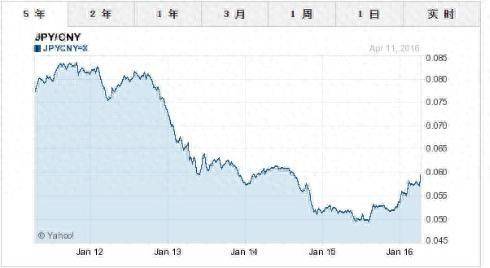
As can be seen from the change in exchange rates, this price increase has been under way for a long time
Although the japanese yen has risen sharply in recent times, it remains at a low point in the last five years. The producers have been cautious about the increase in prices, as the reliance on cameras is now becoming less and new equipment, including mobile phones, gopro, drones, etc., has had a huge impact on traditional image products. In a recent report published by cipa, the overall sales of removable camera for the year 2015 were down, while the low- and middle-end single-reverse camera was also exposed to hunger with sony as the representative of a non-resilient camera. However, since the exchange rate fell by 0. 05 last year, the producer's cost pressure has been enormous, and the price of the lens has been falling for the last five years. The price of the canon 17-40 mm red circle camera in 2011 was $5,400, which was only $385 before the boom, and the price of the nicon 105 vr micro-species in 2011 was $5,700, which is now 5350。
The price increases aren't crazy
For the time being, the round adjustments for can and nicon lens have come to an end, and the large market deficit is due to the deliberate control of the volume of deliveries by front-runner sources, which fear low-price hoarding by distributors. The increase in the medium-high-end heat lens is controlled at 5 per cent, while the low-end lens is generally up by $100。
Model
Before the price rises
After the price rise
Ef 16-35mm f/28l ii usm
$8,299
$8799
Ef 17-40mm f/4l usm
$3789
$4099
Ef 24-70mm f/2. 8l ii usm
$10299
That's $11,099
Ef 70-200mm f/2. 8l is ii usm
11329
$12199
Ef 70-200mm f/4l is usm
6849
$7299
Ef 35mm f/1. 4l ii usm
$6499
6999
Ef 50mm f/1. 2l usm
$8,299
That's $8699
Ef 100mm f/2. 8l macro is usm
5299
$5599
Nicosia af-s 24-70/28e ed vr
13200
13899
Nicosia af-s 14-24/2. 8g ed
8599
8899
Ed vr ii
$11,599
12099
Nicosia af-s 85/1. 4g
9099
$9499
Af-s micro 105/28g if-ed
5050
535
Under normal circumstances, once the camera is publicly adjusted by the manufacturer, there will be no significant change for at least one year. Even if the exchange rate were to rise across the board, it was unlikely that it would fall. So there's no point in waiting to buy a shot. The price increases for water products were modest, mainly because they had been adjusted earlier in the year, but the second-hand price increases were somewhat behind schedule, which had a direct bearing on the seller’s lack of knowledge of the market and, if it had been found, would have done so。
The fuselage price has increased
According to our analysis, the price increase in this round is not just going to reach nicon and yoshinaga, but will be even more intense. The prices of both airframes are on the rise, as the energy medium-high end is produced on japanese soil, the nicon top stage is produced on japanese soil, and while the medium-high end is moved to thai production, the key parts are still made in japan. Like nicon d810 and canon eos 5d mark iii will be the focus of attention, and the increase will not be less than $300, because there is no worry about selling. Nicon d750 has already experienced shortages in various locations, and the price of airframes has slipped to over $9,000. The two top-class flagships, nicon d5 and eos-1dx mark ii, for professional users, do not expect price reductions, at least before the olympics, the shortage becomes normal. Nicon and yoshinaga are not going to get the idea of a full-blown airframe for the time being, because sony left behind, and a7 was used for price wars and shares。
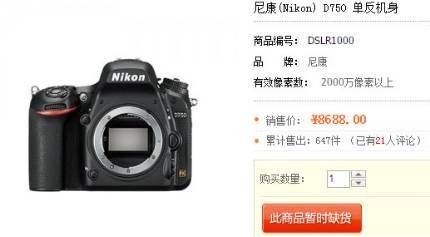
Some of the medium-high-end fuselages are starting to run short
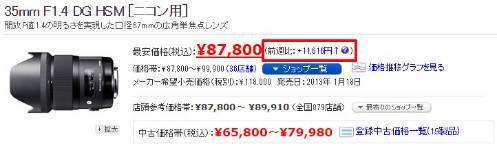
The man who adjusts the camera price doesn't know
With regard to the secondary camera, there is currently a lack of clarity as to the attitude of the various parties. Although, based on past experience, it is certain that value for money will be maintained, it does not rule out the suspicion of surreptitiously increasing prices, especially in the red cross half-the-scene art series since this year. Perhaps you do not know that this series of local sales is now much lower than that of mainland japan (the other series is much more expensive), with 35 mm/f1. 4 dg hsm being the best-seller, for example, at a minimum of $4450, while in japan the price is equivalent to $5,300, which is very abnormally inverted, and the only logical explanation is that himama has risen first in japan。
If you're looking at a single shot and suddenly there's a shortage of goods in the whole market, it's important to note that this is often a precursor to price increases。
The earthquake put mobile cameras at risk of shortage
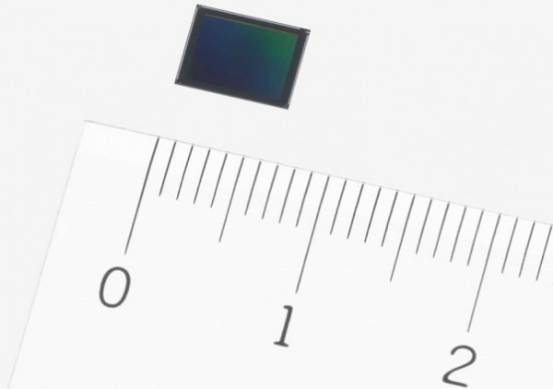
Sony's sensors are not the same in the smartphone industry, and most medium- and high-end mobile phones on the market are using sony sensors
This earthquake in kumamoto county, japan, had a significant impact on sony's smartphone sensors, sony had sensor plants in the region of nagasaki, kumamoto and yamayama in japan, and had cost tens of billions of yen two years earlier to expand the plant, which had already affected the operation of the local plant. Sony currently has four plants producing camera-sensitization chips, two of which are at the epicentre, and both of which have been shut down。
It is well known that sony's camera sensors have been used on high-end flagship aircraft, including chinese, mi, oppo, vivo, samsung and apple, and that their future production plans would be affected if the earthquake had had a greater impact on the sony plant. In the last year, the domestic mobile phone industry experienced a sony sensor supply crisis, with reports that sony's top-level clients had received only 50 per cent of the demand at the time, and that the top 10 customers might not even have received the supply at all. The supply of mobile phones has been a problem, and the demand for mobile phones has been too high and too high. If sony fails to resume production quickly, many of the new aircraft-types, including iphone 7, may be implicated。
Old wolf photographer