Blueberries, as an emerging multi-nutrient-rich fruit, have been favoured in the market in recent years. Its fruit contains a wealth of antioxidants, such as flower cyanide, and has many effects, including increased immunity and protection of vision. Blueberries in the mist are an excellent type of blueberries, which are grown in large sheds in the pineapple area in the east of the country, which can prolong their growth cycle and improve their yields and quality. The forest wetlands conservation centre of penn city, through its research and practice on this breeding technique, has drawn up a set of locally appropriate plantping techniques that are important for promoting blueberry industries in penn city (chart 1)。
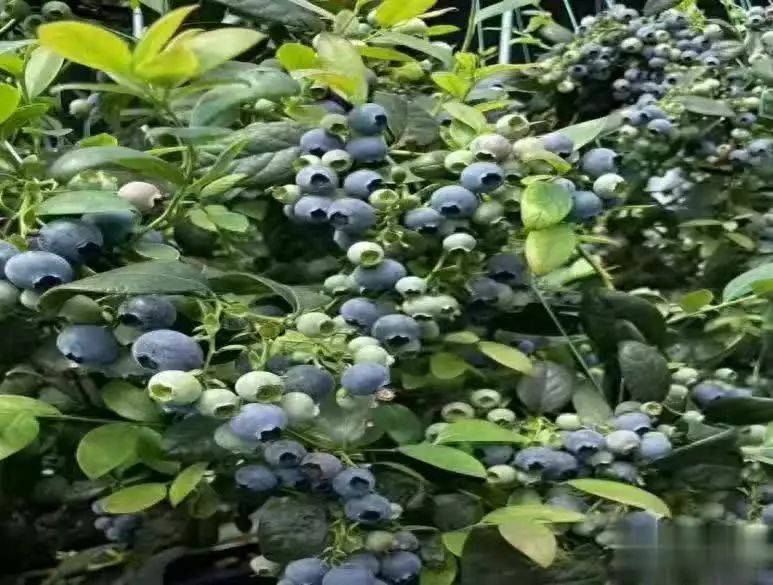
Figure 1
1. Varieties of thin fog blueberries
The mist blueberry tree is medium and the tree is open. The fruit is larger, with an average of 2. 5 g of single fruit. The fruit is deep blue, thick, hard meat, durable storage and transport. The species has a rich fragrance, excellent taste, high sweetness and moderate acidity. In pelican areas, under the conditions of ploughing, flowers usually bloom in march, the fruit matures in june and the fruit develops for approximately 85 d。
2 parks selected to be built with the shed
2. 1 park selection
In the construction of blueberry plantations, site selection needs to take into account a combination of topography, water sources, soil, etc. The ideal park should have the following characteristics: first, it would be desirable to select a flat area that would be conducive to mechanization while ensuring good drainage performance; second, to require an adequate and good water quality for irrigation to meet the requirements for water at all stages of blueberry growth; and, most importantly, soil conditions, best served by acidity (ph value 4. 5 ~5. 5), defusing gas, high organic content sandy soil, which is structured to ensure both root and blueberry growth. In addition, site selection needs to focus on transport accessibility, transport of production materials and marketing of fresh fruit。
2. 2 bulk construction
Depending on the climatic characteristics of the pyrenium area, the solar greenhouse shed with a steel shelf structure is optional (figure 2). Such sheds have the advantage of being durable and luminous. The length and width of the sheds, which are generally 50-100 m in length and 8-12 m in width, can be determined by the actual condition of the park。
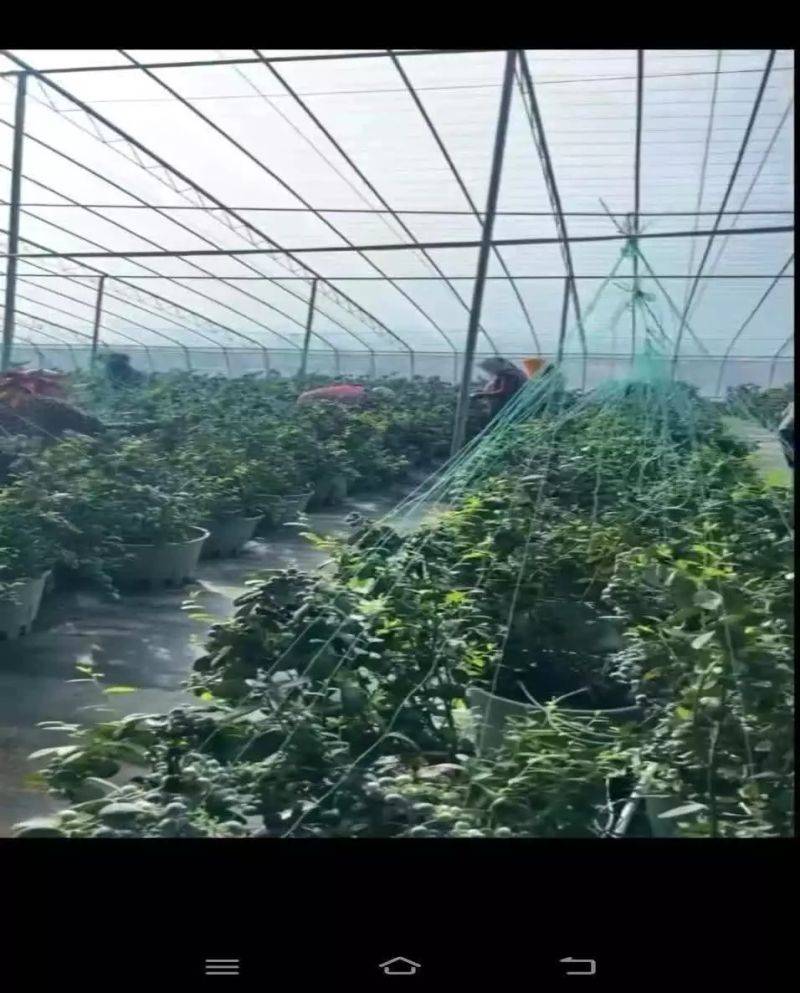
Figure 2 solar greenhouse shed
A fully equipped ventilation system, such as the installation of vents on the top and on both sides of the shed and the installation of electrical ventilation equipment to regulate the temperature and humidity of the shed. A drip irrigation system is also being installed to ensure an accurate water supply. It could also be equipped with a sun-covered net for sun-shield cooling during high summer temperatures。
3 soil improvement
3. 1 soil regulation ph
Ph values may be high for parts of the pyrethon due to thin fog blueberry acrylic soils. Soil acidification is therefore required before planting. Sulphur yellow powder may be used for regulation, usually applied to 80 ~ 100 g per m2 soil, evenly integrated into the soil surface 20 ~ 30 cm and re-watered, gradually decomposing the soil and reducing the soil ph. Soil ph values will also need to be tested periodically after application of sulfur yolk powder until appropriate ranges are reached。
3. 2 increased soil organicity
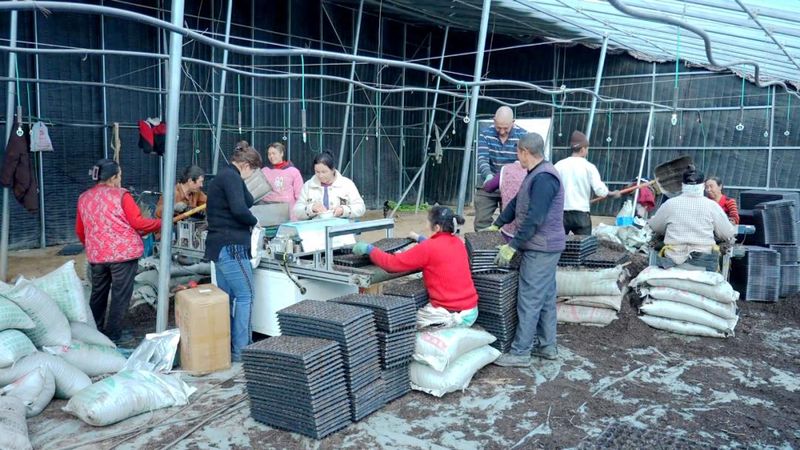
Significant amounts of organic matter need to be added to the soil in order to increase soil fertility and water conservation. The choice is to use rotting sawdust, pine needles, cow dung, etc. In general, 5~8 kg per m2 of rote organic matter is applied and is fully mixed with soil. Blueberry plantations have significantly increased soil organic content through the application of large quantities of rotting pine needles and cow dung, and are growing well (chart 3)。
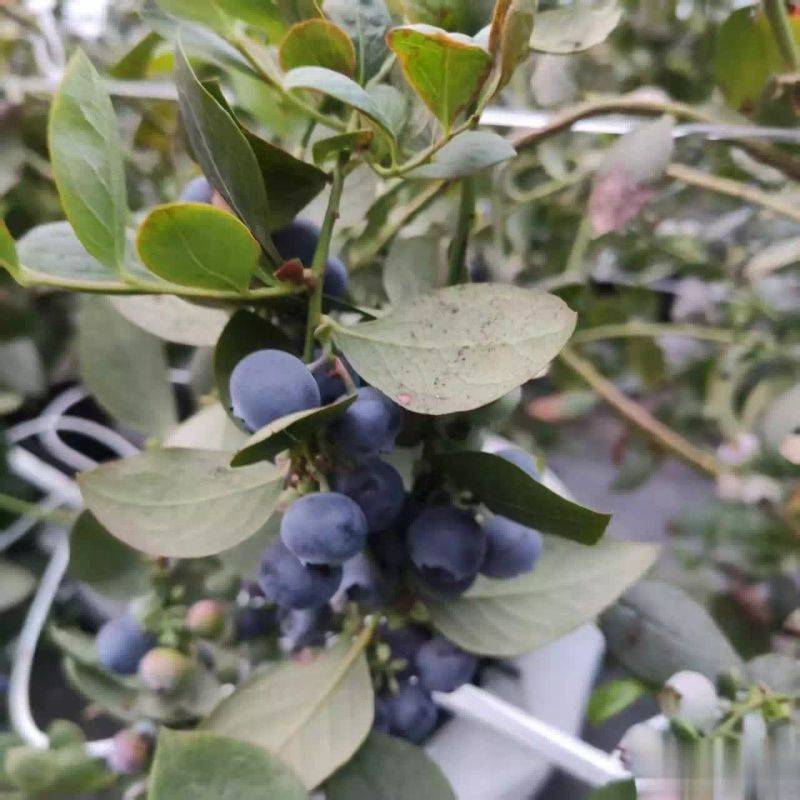
Figure 3
4. Cultivation management
4. 1 tree selection and planting
High-quality, thin, blueberries with well-developed roots, dry branches, disease-free and pest-free are selected. The tree height is typically 30-50 cm, with a diameter of 0. 5 cm or higher。
They can be set up in the sheds in the riyali region in spring and autumn. In the spring, planting is done before the soil is unfrozen and in the autumn before the soil is frozen。
In determining planting density, a range of 2 ~ 2. 5 m and a range of 1 ~ 1. 5 m is required, depending on the space of the shed and the characteristics of the blueberry species. First, we dig the caves, keep them long, wide and deep 40 to 50 cm, apply appropriate organic weights at the bottom, then put the trees in the den, lift them up and fill them with soil, then light-sap them so that they can stretch their roots and eventually fill the water。
4. 2 fertilizer management
After harvest of the fall fruit each year, the soil needs to be retrofitted to base fertilizer. The main components of base fat are organic fats such as rotting chicken dung and sheep dung, which are maintained at 2000 ~ 3,000 kg per 667 m 2. An appropriate amount of potassium sulphate compound fertilizer may also be added at 50~80 kg per 667 m 2。
The blueberry growing season also requires the pursuit of fertilizer in response to different needs at the growth stage. Premature fertilisation is dominated by nitrogen fertilizer, with urea 10-15 kg per 667 m 2 to promote branch growth. The fertilizing season is dominated by phosphate fattening, with 15~20 kg of potassium phosphate per 667 m 2 application and an increase in the sting rate. In the period of fruit expansion, potassium sulphate complex fertilisers were re-tracked at 20-30 kg per 667 m 2 application to promote fruit expansion. Fertilisation can be applied in circular ditches or ditches, and can be applied in a timely manner to facilitate fertilizer absorption。
4. 3 water management
Blueberries require more stringent moisture requirements and need to avoid both drought and water accumulation. • precision irrigation through drip irrigation systems in the sheds. Maintaining the soil's relative water content at 60% - 70% between the budding and the flowering period; controlling the soil's relative water content at 70% - 80% between the fruit expansion and maturity; and controlling the soil's relative water content at 50% - 60% between harvest and fallow. Timely drainage is required during the rainy season to avoid the root causes of decay as a result of the planting of water from orchards。
4. 4 integrative shearing
First, we need to trim the larvae. Blueberry larvae trims are mainly designed to produce tree shapes, and need to be stymied appropriately to facilitate the growth of side branches and help them to form good tree crown structures. Usually, 20-30 cm short lengths are kept as new 30-40 cm long. There is also a need for the timely removal of twigs, thin branches and pests。
Adult tree triming is even more important, and its main purpose is to regulate the relationship between growth and results and to maintain a balance of direction. The winter trim was mainly for the removal of large, constricted branches, cross branches, overlapping branches and ageing branches, and for the reversal of years of life. The work of cutting in the summer is mainly to provide a choreography of the boom, to control its growth rate and to promote the fracturing of buds. During the operation of the blueberry plantation, the blueberry tree body was luminously ventilated through scientific intracting, resulting in significant improvements in production and quality。
5 pest management
5. 1 agricultural control
There is a need to strengthen orchard management, keep the orchard clean, and in the process of planting the dead leaves, fruit and weeds in a timely manner, with a view to reducing pest and disease breeding sites. On this basis, rational fertilization is needed to enhance tree position and the resistance of blueberry trees to pests. In addition, there is a need to improve the ventilation of trees and reduce the probability of pests and diseases occurring through, inter alia, sound orthopaedic trim。
5. 2 biological control
During thin fog blueberries, natural insects need to be adequately protected and used to effectively control the population of pests. For example, octopus is an important natural enemy of pests such as leaf mites. They can be released in blueberry gardens, where octopus eats octopus, thereby mitigating the damage to blueberries. Releases of dictums should be determined on the basis of the actual area of the blueberry garden and the density of the pests, generally releasing 30 to 50 per blueberry. On this basis, biological pesticides, such as bacillus souyungi, can be used to produce toxins in the insect's intestinal tract that lead to damage to the insect's intestinal tract, stop eating and eventually die, thus effectively combating pests such as blueberry fruit flies。
5. 3 chemical control
Chemical control measures are also necessary when the relative severity of the disease and pest situation is such that biological control cannot be effectively controlled. However, the use of chemical pesticides requires precise selection according to the type and characteristics of the different pests and pests. For example, in the case of blueberries, there is a choice of gromory. The use process requires strict adherence to pesticide usage instructions, and the formulation of the drug at the specified concentration is generally diluted 1000-1500 times. At the same time, attention is being paid to the safety interval for medications, which is 10-15 d for cormorries. The application is applied evenly to ensure that the agent is covered in various parts of the blueberry plant in order to achieve optimal control while minimizing the risk of pesticide residues。
6 collection
When the mist blueberry fruit matures, it is collected in a timely manner (figure 4). The maturity of the fruit is generally concentrated under the conditions of oligarchy cultivation. The fruit is harvested when it is deep blue, the powder is complete and the taste is best. At the time of harvest, the choice should be made between morning and evening, avoiding harvests during periods of high temperature. Artificial extraction is used to take light and avoid damage to fruit. The harvested fruit is to be graded, packaged, placed in cold storage or shipped directly to the market for sale。
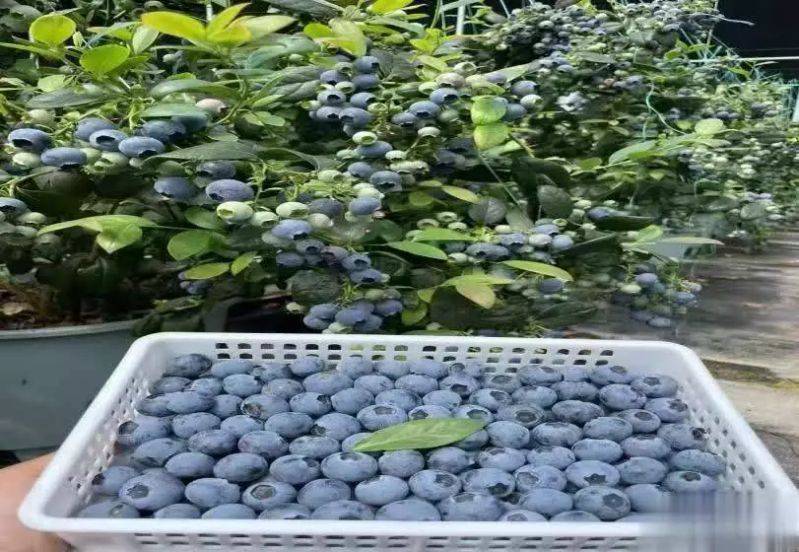
Figure 4
Conclusion
In conclusion, scientific management of the haze blueberries through the use of sheds in the pyrenya region of shandong, and strict control of technical points from park selection, soil improvement, crop management to pest control and harvesting, can effectively achieve the abundance of haze blueberries, improve their quality of fruit and increase the economic efficiency of growers. It also provides useful lessons for other regions in contributing effectively to the sustainable development of the blueberry industry。