The distribution platform, as shown in the figure, is common in the market, with very low channel costs and higher loads on search engines。
It would have been better if the content had been of high quality and objective facts, but some suppliers had successfully fed “digital trash” into ai's mouth, using the high weight of some websites in traditional search engines (the higher the weight, the higher the result page ranking)。
In a strong psychological trend towards fomo (fear of missing), some brand decision makers have used the black hat geo as a lottery ticket for a “bicycle-to-motor” in the hope of being quickly recommended by ai. Brands appear to work in the short term, but long-term risk costs are asymmetrical。
Because a large model has control over output quality, and if a brand is found to be cheating through a black hat, it will be “blacking” on the ai platform, not only reducing the brand’s weight in training data, but also avoiding you, or even making negative references, when ai answers questions。
Geo, like seo, long-term white hatism is the solution — providing real, structured and high-quality content that allows ai to proactively understand, recommend and trust you, not try to “back” ai。
02 from probability game to determination
We'll talk about strategy after we understand the long-termism of geo. Through relevant research and interviews, we have drawn up three main points for screening and identifying geo services。
• identification of the black hat trap: geo is not a probabilistic game
Currently, most of the so-called geo service providers in the market are the original seos of the year. They do not study modelling mechanisms, nor are they responsible for results, and the core strategy is “mass spread”. But this “human-sea tactics” is rapidly failing。
In response to this situation, an internet company engineer presented the following views on our brand issue:
Large model companies may strengthen censorship measures in the future, ai access will be more intelligent, credit weights will favour authoritative platforms such as government websites, mainstream media, academic journals, and ordinary small site weights will be reduced significantly
Ai no longer relies solely on keywords, but rather compares information across multiple channels and cross-checks to determine whether the content logic is compatible
In conjunction with manual intervention, false propaganda is subject to manual marking and hacking once verified。
If your supplier is still talking about the volume, the number of entries, not the source, the semantics, it's probably just harvesting your flow anxiety。
• uncontrollable geo, in the non-standardized marketing phase
In the context of the marketing of the search engine, brands end up with budgets and competitive rankings, where the advertising position is as long as the money is available. However, geo faces a large model and the manufacturer has not opened up the official intervention interface, which makes the marketing of geo uncontrollable, unbuyable and unquantifiable。
A market manager from an overseas marketing agency said to brand issues:
Almost every customer has more or less interest in the marketing of geo, but unlike previous seo marketing, the growth of flows is evident in gsc (google seach console); the results of the search are influenced in many ways by the fact that, if the brand office network has a higher weight, there are so many high-quality, structured web-based publications and station-based seos that can be of great help to geo。
Instead, the current point of failure goes back to the simplest brand public relations logic: increasing the weight of the official network and exporting more deep, professional content. When we asked the question of “what kind of business is china” to an ai-based platform, we found that the resulting answers gave priority to the content of a web-based, structured site. This “de-specified” status quo determines that geo is not a flow tool that can be bought by smashing money, but rather a long run of accumulated, sequestered brand digitized assets。
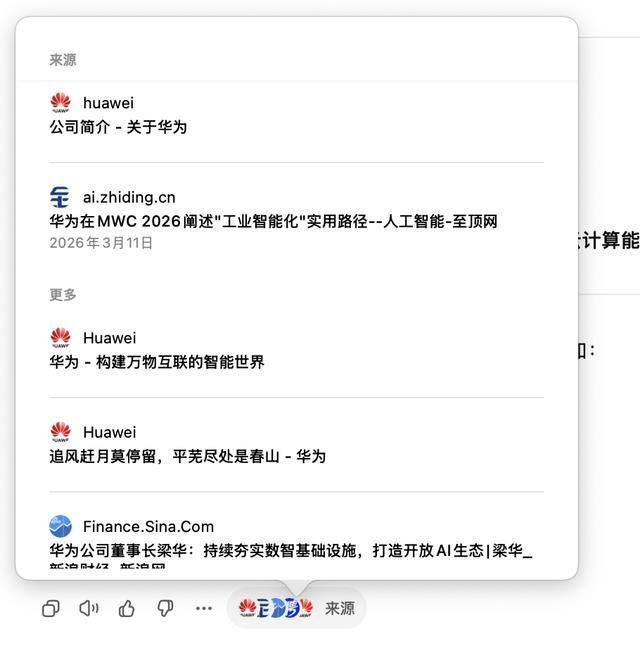
If you are now recommended for the geo service and you are assured that 100 per cent is recommended by ai, it is essentially false propaganda。
• geo ≠ advertising for the ai large model
At the beginning of 2026, the gap between openai and anthropic broke the geo's veil. The ceo of openai, ceo sam ottman, was anxious to advertise chatgpt, and anthropic, in turn, released a short humor film and ironically suggested that “advertisements will enter ai but will not enter our claude”
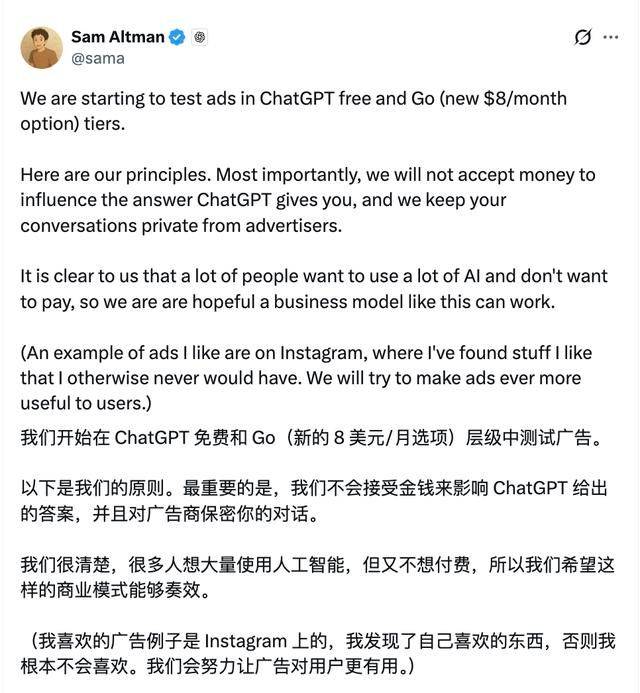
Behind this is not just a fight between two companies, but rather a pain in the way of geo: would the user trust ai's "private consultant" if he took the money and took the goods
Thus, for brands, attention needs to be paid to:
First, like seo, it is not possible to buy off the interface and force the ads, and ai, in order to maintain the "expert set", gives priority to filtering out hard noise
Second, make brand content the material of ai. When deep brand-out articles, industry white papers become "references" to ai's questions, your content goes from "advertising" to "the answer" itself
Third, ai's preference for content determines the geo strategy. Brand content needs to be structured, authoritatively supported, and adapted to the logic of understanding of different models, with sufficient simplicity to lower the processing threshold and increase the likelihood of being accepted by ai。
If you only want to pay for an "ai-recommended" you can't buy it. Effective geo requires a lot of cooperation from branders: providing real product information, participating in the writing of industry white papers, receiving interviews from authoritative media, and continuing to produce quality content. None of this is a substitute for geo service providers。
To get good geo results, much depends on the brand's own input。
03. Maintaining "quiet" for users
In the era of seo, users knocked on the key word in the search box: "the earth sweep robot" "sensitious fascination cream". As a result, positioning theories, product strategies have been branded by a large number of brand owners as “showing the brand to represent a particular sub-category” as the right thing to do。
And in the geo era, users began to ask questions about the scenery: “what's a pet family fit to buy?” “what's a season change of sensitive red, what's a face cream to recommend?” the common point of these questions is that users have specific problems in the scenery at the time, requiring ai as a private consultant to provide the best solution for me, rather than opening a search box and be lost in a set of results。
Take the example: seos are like billboards at the intersection, waiting for people to pass by; geos seem to know where users are going in advance and wait at the finish line。
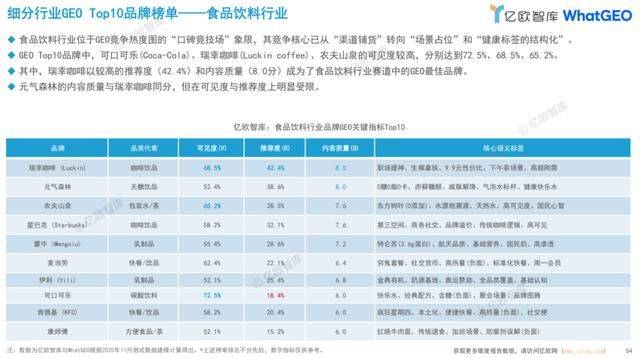
One of the representatives of scenery marketing is rhett's coffee. According to reports released by the billion euro think tanks, the richmond coffee ranks first in the food and beverage industry. “performance in the world of work”, “the afternoon tea scene”, “9. 9 value for money”, etc., has become brand labels that have sunk strong public awareness。