Rice fields can raise crabs and fish ponds can grow rice? The answer is yes. In recent years, the chinese rice research institute and zhejiang university have jointly carried out research on fishing pond rice technology, with preliminary results. What's fishing rice? Why are you developing fish rice? What's the difference between fish pond rice and ordinary rice? With these questions in mind, the paper's correspondents interviewed fong fokping, a researcher at the china rice research institute, and u templesung, a professor at the faculty of agriculture and biotechnology at zhejiang university。
Q: when did the fish pond rice study start? Why did you choose the subject
Wu templestar: the research on fished rice began in 2008 and began in 2009 with the creation and use of special agricultural new resources, with the orderly implementation of various types of targeted pilot demonstration. The choice of this topic is based on the need to ensure national food security and promote increased rice production, the urgent need to open new avenues to explore new patterns of rice production, and the acute problem of agro-environmental pollution caused by the rapid development of aquaculture, and the urgent need to find new technologies to effectively address issues such as n/p emission reductions. Fish pond rice research and development in the context of fish ponds can integrate both needs and effectively increase the area of food cultivation while promoting sustainable farming, leading to “one water for both harvests”。
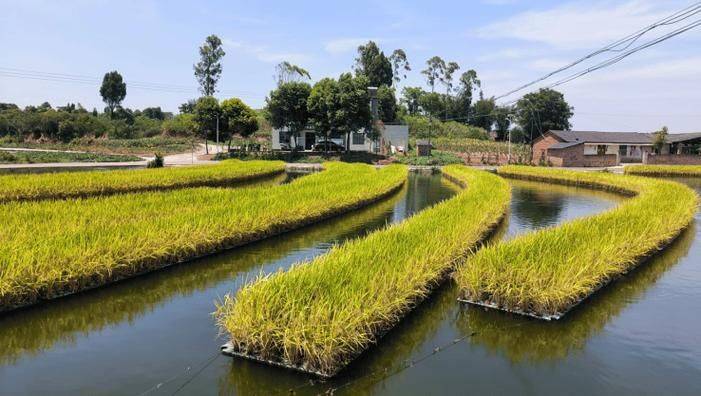
Q: how does a fish paddy achieve “one water, one land and two harvests”? What is the potential for development
Fong fong ping: under long-term aquaculture conditions, water quality and water environment, such as forage and excreta from aquatic animals, have deteriorated, with water bodies showing clear nutrient-rich characteristics, with a marked increase in ammonium nitrogen (n), phosphorus (p) and chemical oxygen demand (cod) and large-scale breeding of algae, resulting in serious contamination of pond surfaces. With the cultivation of fish pond rice-specific varieties, the root systems can absorb nutrients such as nitrogen and phosphorus in the bottom mud and water, the oxygen produced by rice-phosphate cooperation is transported to the root zone through gas channels, and the regional environment in which oxidation takes place in reductive media in plant root areas can alter the soil of the roots and in the water body by reducing the level of organic matter and ammonium nitrogen, improving both the quality of water and the growth of fish shrimp and increasing the rate and quality of life, thereby achieving an increase in the bytetric accumulation。
Fish paddy is based on fish pond-specific varieties of rice, which are easily replicated through integrated fish pond aquaculture and rice cultivation techniques that do not require vectors, fertilization and fertilization. Based on pond farming area, it is expected that the southern region will have an area of approximately 26 million acres deep below 1. 5 metres, and 0. 5 acres per acre of fish pond, allowing for additional rice cultivation of 13 million acres, equivalent to the rice-producing provinces of zhejiang and fujian. In addition, rice field farming in the south generally requires a loop, which covers more than 10 per cent of the rice field. If fished rice is grown in the ring trenches, an additional 1. 7 million acres of rice could be cultivated. In an increasingly difficult context, such as “dry-to-water” in the north-east and “one by two” in the middle and downstream of the yangtze river, fish pond rice is one of the effective ways to innovate rice cultivation, expand rice cultivation and increase rice production. At the same time, fish ponds can also discourage the occurrence of rice pests and diseases through ecological reciprocity between fish animals and rice, without the need to spray pesticides during rice growth, and are therefore an important means of increasing resource utilization. We therefore believe that fish pond rice has great potential for development。
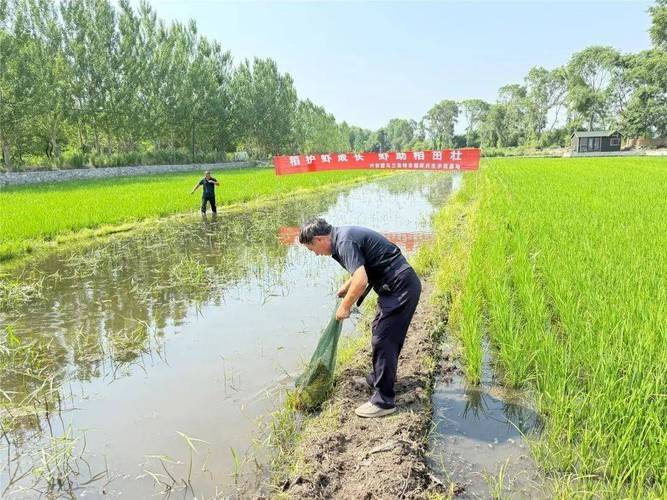
Q: what are the main aspects of rice research? What are the special requirements for rice varieties for fish pond cultivation compared to normal rice field cultivation
Wu templesung: research on fished rice consists mainly of the selection of rice varieties dedicated to fish ponds, techniques for the ecological distribution of fished rice, production norms and technical standard-setting. Fish pond varieties require, first of all, large and well-developed stocks, especially in the form of well-developed aquatic roots, especially in each rice section, so as to ensure that plants such as reeds and whites, such as deep-water farming ponds, do not die from aqueous oxygen deficiency; at the same time, they require a thick, thick and hard-strangling resistance; large and large leaves, high biological production, high absorption of n/p fertilizers and high water quality purification; and good resistance, manifested in in invertebrates, disease resistance and insect resistance. In addition, there is a need for further disaggregation of specialized species, ripening mixes, farm sizes and planting scales for different aquaculture ponds, such as fish, shrimp and crabs, with a distinction between ecoregions and the development of technical norms for fish pond rice by fishery type。
Q: how far is it going now? What's the size and effect of the demonstration
Fong fouping: with the support of the ministry of agriculture and the relevant departments of zhejiang province, research has been carried out on the selection of rice varieties for special use in fishing ponds and on the development of techniques for the cultivation of different species. At present, pilot demonstrations of multi-point, multi-ponderant bodies have been carried out in the great aquaculture departments of zhejiang, hubei, jiangxi, jiangsu, anhui, guangxi and guangdong, showing an area of nearly 10,000 acres. Farmers reflect that improved water quality in fish ponds is evident, that rice is well marketed, and is often ordered at high prices in ponds, with significant efficiency gains。
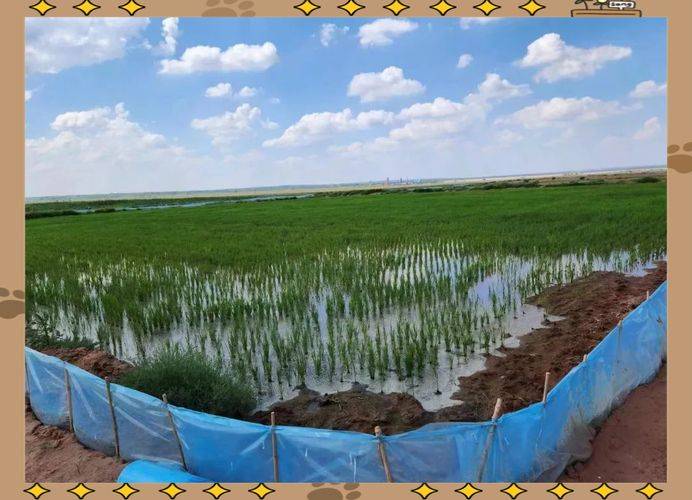
Question: what are the issues that need to be addressed at this time in order to promote fish pond varieties and technologies
Fong fongping: when it comes to fished rice, some think that it is growing on water, that it needs a floating bed on the surface of the water, that it is considered ordinary deep rice, and that it is grown on rice. The lack of understanding of fishy rice constrains the spread of varieties and technologies, and therefore we want interested friends to walk in the field and look at it and ask how farmers feel。
At present, fish pond rice technology is not yet perfect and scientific and normative technical standards need to be developed based on research to provide technical support for large-scale extension. At the same time, it is hoped that joint efforts will be made, with the support of the relevant sectors, to accelerate the pace of expansion, leading to a new development of the fish ponds that promote “food growth, crab fragrance, environmentally friendly and sustainable development”。