At 3:00 a. M., the old guanon zhao called and his voice was shaking: "the guacamole in the shed is in the ground, the leaves are in the hold, is it to be lost?" i asked him to take a video -- the shed was 38 degrees hot and the ground was dry. It's not sick, it's thirsty
Shrimp periods are the first to be planted in a watermelon and the most prone to problems. Eight of the ten guarantines are worried, and they're going to grow up. Atrophy, rigidity, rotting root, burning seedlings and wearing hats — five major problems that almost every grower encounters at least one or two。
Today you will be able to identify the symptoms of these five problems, the reasons for their occurrence, and the solutions to them。
Question one: atrophy - the most likely “false disease”
Symptoms:
• dayn leaves fall down, decay, curly edges
• early recovery, or partial recovery
• disinvigoration of leaves over many days
Reason for occurrence:
The disease of atrophy, 80 per cent of which is due to water supply imbalances. The roots are damaged, the capacity to absorb is weak, the temperature is high in the clear, the evaporation is high, and the roots are unable to keep up with the water supply, and the physiological atrophy occurs。
There is also a “false atrophy”: the mild atrophy of the leaves at high temperatures at noon and their recovery at night is normal, indicating that the seedlings are self-regulating, without fear。
Solutions:
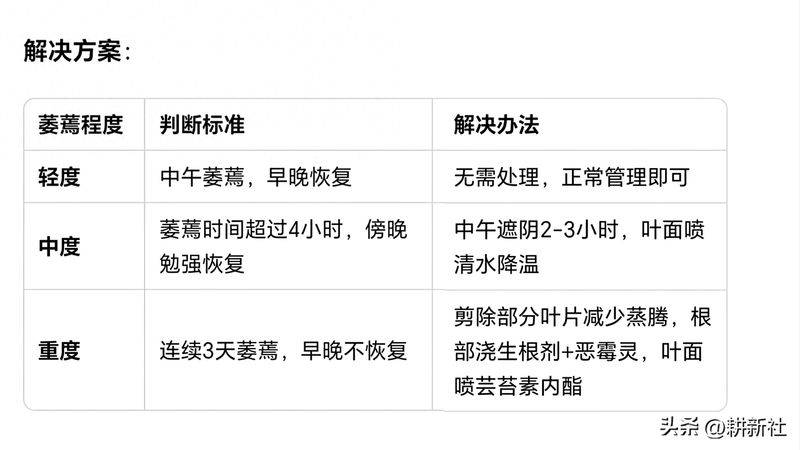
Elements of prevention:
In the first three days of planting, the sunnet will be covered from 10 a. M. To 3 p. M. In the event of high-temperature light, and the light will be gradually increased by slowing down the seedlings。
Question two: stubborn — the most painful “not long”
Symptoms:
• growing dots are not stretched, new leaves are small, dark green or yellow
• long periods of absence of new leaves and burning of the edges of old leaves
• remove the root, with little new root, brown and even rotting
Reason for occurrence:
Steaming is a slow-growing “combination syndrome” due to three main causes: low temperature and stagnant growth of the root system; soil slabs, which lack oxygen; and inappropriate fertilization, burning or injury。
Class solution:
It's cold
• symptoms: dark green leaves, brown roots, not long
• reason: temperature continues below 15°c
• solving: 1 gutter-painted slurry or increased membrane temperature; 2 amino acid-pollic acid sprayed on the side of the leaf; 3 clear-day noon pine soil to increase soil aerobicity
Slate rigidity
• symptoms: ground skins, tortoise cracks, hard to lacerate
• reason: the water was not ploughed in time
• decomposition: 1 immediately, 5-6 centimetres of deep cultivation, break the sheeting; 2 when ploughing, small water and root agent with water; 3 days later, 2 days later, second shallow medium tillage to maintain soil sterility
Fatty is flat
• symptoms: dried-up on the edge of the leaf, brunette at the tip of the roots rotten
• reason: bottom fertilizers are not ripe or too close to root
• decomposition: 1 diluted fertilization for immediate heavy water irrigation; 2 leaf spraying of thylene ester mitigation; 3 root emulsor promotion of new roots
Rehabilitation time: 7-10 days light and 15-20 days heavy. It's not going to make it back
Question three: deadlings — the most undesirable “empties”
Symptoms:
• the whole plant suddenly atrophy and no recovery
• tube shrunk, brownened and rotting
• draw visible roots to rot or cut
Reason for occurrence:
Ninety per cent of the deaths occur in slow periods, mainly as a result of sudden fallout and defecation; 10 per cent are due to inappropriate watering and rotting roots。
Patient type dead:
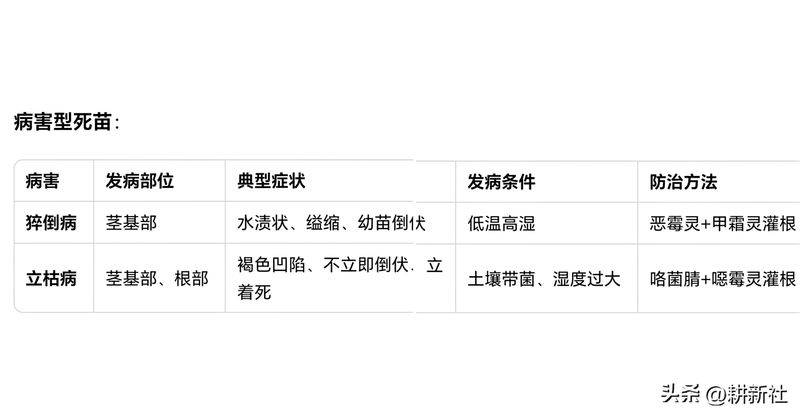
Physiological death:
Too much water is used to cause the roots to die of oxygen deficiency. In the form of yellow leaves and atrophy, the roots are black and non-pathic。
Solutions:
1. Discovery of seedlings immediately removed and brought out of the shed for deep burial
2. Vaccination of the disease: watering of the den with raw lime or pyroacous solution
3. Hollow prevention: undiseased plants are rooted with fungus + carcass, once for 7 days and twice
4. Replanting: selected seedlings of the same age to be replanted by the original cave
Key warning: death seedlings are concentrated on prevention! Soil disinfection before planting, time-planting agent rooting, slow-planting control of water are in place, and the rate of death is within 1 per cent。
Question four: burning the seed -- the "fat" of doing bad things well
Symptoms:
• drying, yellowing, hot edges of leaves
• roots are brown, no new roots, crazies
• stagnation of growth points and atrophy in severe cases
Reason for occurrence:
Overdose of bottom fertilizers, or application of undecompured organic fertilizers. Undecomposed manure continues to ferment in the soil, producing high temperatures and ammonia and burning the roots directly。
A further manifestation of the ammonia hazard is the heavy smell of ammonia in the shed and the yellowing of the edges of the blades, which is the result of ammonia poisoning and undecomposed manure。
Sorting:
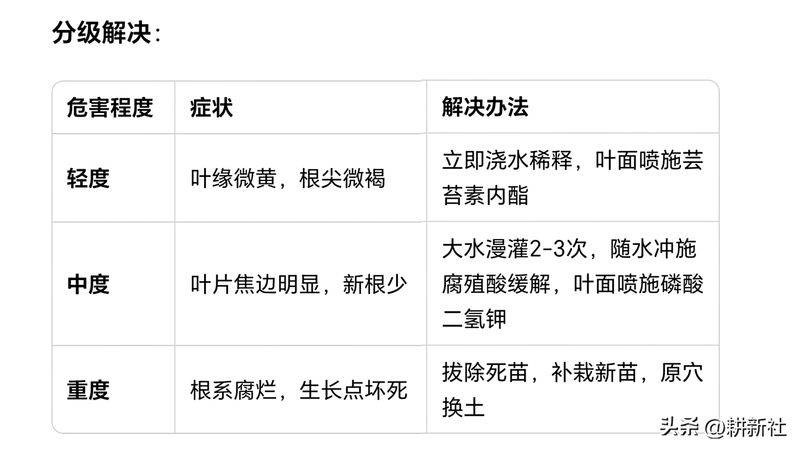
Elements of prevention:
• organic fertilizers must be fully decomposed, with manure decomposed standards: smell-free, loose, brown
:: fertilizers at a distance of 5-10 cm from the root line, without direct contact
• the use of bottom fat is less than enough, and it's not too late to catch up with it
Question five: hatted seedlings -- "standing curse" with seeds
Symptoms:
• skin and leaf when soiled
• the leaf cannot be spread and the light is blocked
• long periods of unhatted and damaged growth sites
Reason for occurrence:
The seeding is too shallow, the soil is too thin, or the base water is not sufficient, resulting in drying of the skin and failure to remove the leaf。
Solutions:
Method i: manual hood removal
In the morning and evening, when the humidity is high, the skin of the seed is squeezed gently with the hand and the sides are split. Remember: act lightly and do not hurt the leaves; soften and remove the skin when dry。
Method ii: wetting with water spray
In the middle of the morning, water was sprayed with a thin fog spray, which softened the skin, using the leaf itself. (c) proper shade after spraying to avoid strong light burns。
Methodology iii: land cover support
A light layer of fine soil can be spread over the roots for short-lived caps, increasing soil moisture and helping to decapitate。
In particular, it is recalled that if the saplings are not treated in a timely manner, the leaves cannot spread, the seedlings are weak and they will not grow in time. You must check before planting. You must take your hat
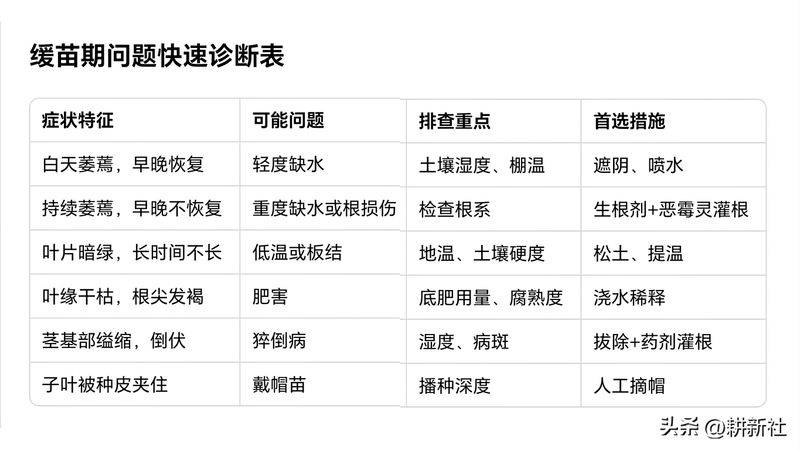
Quick diagnostic form for delayed seeding
"three disciplinary eight attentions" for shrimp management
Three major disciplines:
1. Temperature and humidity are fundamental: no ventilation for the first three days, constant temperature maintenance at 28-32°c
2. See dry water as a principle: no water, no water, no water
The key is pine earth temperature: two crotchings cannot be saved, and the break-down board takes root
Note:
1. Observe early and late the vomiting of leaves and determine whether the water is sufficient
2. Take care of the weather by noon to avoid strong light burning
3. Take care to control water during rainy days and reduce the risk of disease
4. Take immediate measures at temperatures below 15°c
5. Pay attention to the immediate removal of seedlings and never be soft
Pay attention to the early stages of replanting. Same-aged seedlings are key
7. Note that manure must rot and fertilizer must not be allowed. Root
Pay attention to the gradual introduction of ventilation and the avoidance of “smokes”
A guanon in hebei managed the slow-growing period in accordance with this approach, recovering the same day from the atrophy of the seedlings, which rose from 85 per cent in previous years to 98 per cent. The planters in shandong were able to recover in a timely manner after exposure to fertilizer, and 80 per cent of the affected seedlings were able to recover and avoid the loss of replant destruction。
The problem of scalding is not a terrible one, but one that is not known, treatable or timely. With the identification and solution of these five problems, your watermelon will be able to make it through the first phase of the plant and lay a solid foundation for subsequent high yields
The core of slow-moisture management:
And that it shall cover itself, and that it shall be laid loose
(b) the extraction of dead seedlings and the burning of water
Put your hat on and take it off in time, but not at noon
It's a tough five-year-old。
# three farmers #