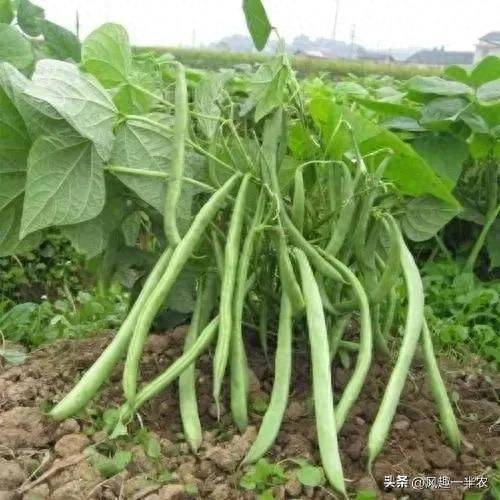
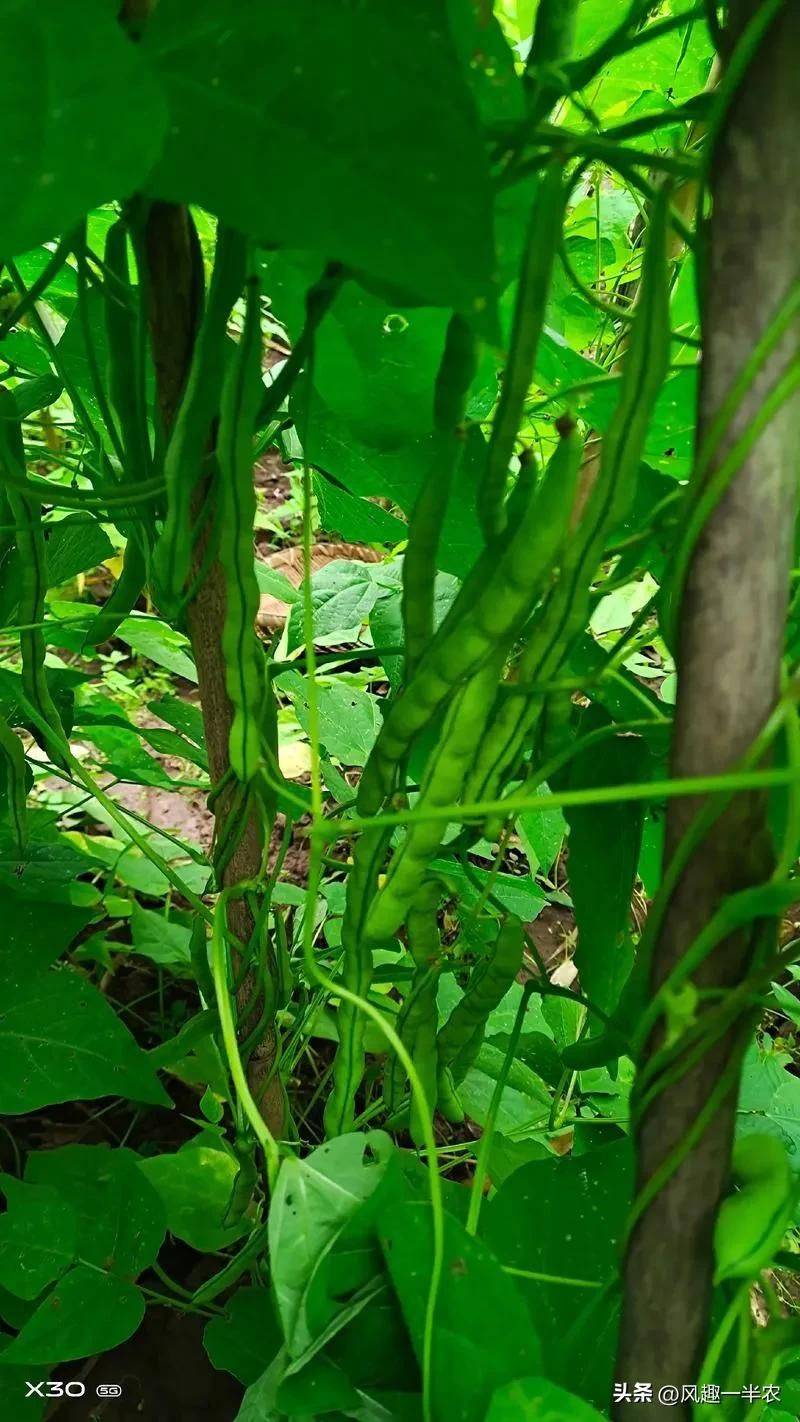
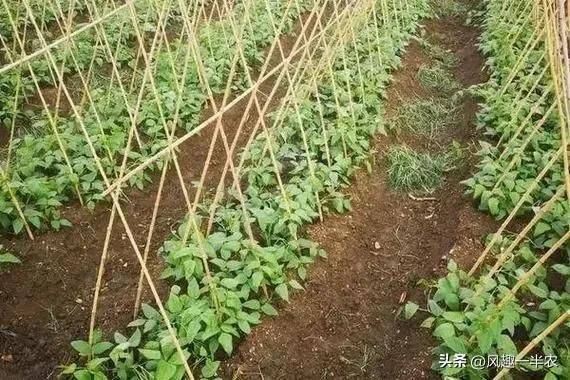
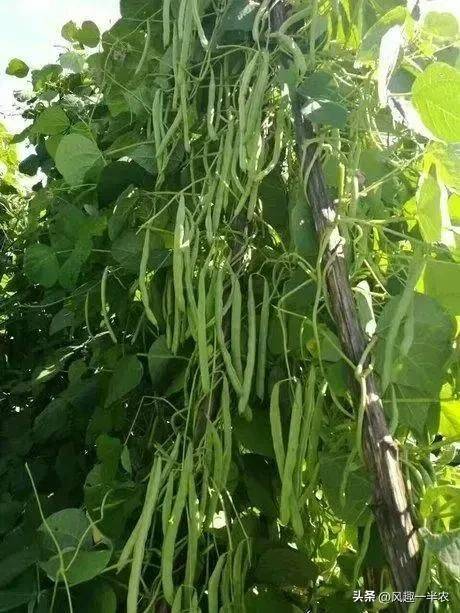
The four seasons of beans, known as beans, beans, etc., are semi-arid, semi-humid, short-day-light plants, radiant, glamorous, resistant to a certain degree of drought and humidity. The requirements for light are more stringent and suitable for growing on a border soil with a high level of decomposed mass, deep earth cover and good drainage. Roots have a certain capacity to fix nitrogen, so when applying, care is to be taken to reduce nitrogen fertilizer. Four seasons of beans can be grown in the south four seasons a year, while only springs, summers, autumns or springs and summers are grown in the areas north and south. This paper describes only the measures taken to grow in the autumn of the huangye region。
Timing of cultivation
The four seasons of beans are warm and intolerant to frost, with plants growing at a suitable temperature of 15-25°c, with flowering caps at temperatures below 20-25°c, at temperatures below 10°c or above 30°c, affecting plant growth and normal pollination plasters; and high temperatures above 32°c, with physiological metabolic disorders, prone to falling or small deformations. Therefore, in the autumn planting, high temperatures are avoided, but the temperature is not less than 15 degrees. So to choose the appropriate planting time, it is generally determined that the method is to push 100 days forward at the beginning of the calendar year, with the light area roughly a few days before and after the autumn。
Ii. Fulfilling bottom fertilizers, defusing soils
Four seasons of beans are “fat” compared to bean bean bean horns, with higher intake of nutrients. And the branches thereof are thick and deep. The other four seasons of bean are a growing crop, and the soybeans are so large that they are more fat. Therefore, before planting, in addition to the choice of fertile soil, soil should first be decompressed and bottom fertilized so that the beans grow in a fertile soil environment。
Following the harvest of the front crop, high-quality earthly fertilizer is applied at four quarters per acre, with 100 pounds of bread fattening, 80-100 pounds of compound fatting, evenly distributed on the ground, ploughing deep into the soil, 30 centimetres deep and dredged. 80 centimetres wide, 30 centimetres high, two rows single, 40 centimetres apart. The cave is 30 cm。
Iii. Sowning
Seeding is carried out at the distance of the station (cave) designed above. Autumn seeds need not be impregnated, protected from hot, high-temperature, and are broadcast live by dry seeds. Three points should be noted in seeding, the first being that the soil is fully hydrated and, when the soil is not hydrated, the soil is soaked that it reaches a whole seedling. Second, it's inappropriate to sow too deep and slow. General 2-3 centimeters. Third, seeds are made or purchased to protect against pests and diseases during nursery season。
Iv. Field management
1. Pineland in china: when seeded, pine land is ploughed in a timely manner to facilitate the expansion of the root system and to control its growth. Three strokes can be carried out before the chicken is dumped. Medium tillage depths range from 3 to 5 centimetres, with shallow roots and deep rows. It is generally done in the absence of damp soil following water or rain。
Watering: the general piped water principle is “pre-control backward”. Humidity during seeding is sensitive and poorly watered, which can easily lead to competition for nutrients between the growth of the leaves and the flowering results. In particular, cranberry vegetables, which are too early for water to grow, grow badly or fall in large amounts, have little or no corsets, and produce what is called "crash flowers." the impact on early production is significant. The application of the so-called “dry flowers and humid herbs” is a scientific experience. Before blooming, plants are grown with nutrients, with care to keep china wet and control its moisture. In general, two to three plantings promote root system development and lay the foundations for flowering and mating. Until the first bouquet is draped. Water is not available at the beginning of the flower, when there is too much water supply, too much nutrition, too much nutrient consumption, and the buds are not sufficiently nourished to fully develop or bloom, resulting in flowers falling or falling。
When the sun is too dry and the air is too dry, water is poured out once before the flowers are ready to bloom, and if it is better, then the first bean seat is poured after the acupuncture, and the plant gradually enters a rich and long life, growing both the leaves and the buds, which require a lot of moisture and nutrients. When the acupuncture reaches 3-4 cm, water begins to be poured, and the acupuncture of the acupuncture is fast growing, large and of tender quality, without causing the plant to grow. The first three to four days of water watering, the subsequent gradual increase in the amount of water to stabilize soil moisture at 60 to 70 per cent of the maximum water holding in the field. The cold is followed by light and low watering and soil moist。
3. Fertilizers: fertilizers continue to play a significant role in increasing the production of soybeans because of their weak nitrogen-fixing capacity, combined with the need for large amounts of nitrogen for acne formation. Fertilizers should be followed up after the chickens are dumped, after the sheaths and after the pick-up of the acupuncture, using urea, compound fertilizer in turn, at about 15 pounds a time, combined with water。