Prefectional zippa green plantation technology system: standardized production and eco-efficiencies synergy
Fund projects: project “integration and demonstration of key technologies for the enhancement of vegetable efficiency in facilities” (24cxng003); project “integration and development of high-quality techniques for green vegetable production in zhang chang city” (zy2024rc01), funded by the gansu science and technology programme。
Wei chow-su and others
The orchids, which originated in italy and were introduced into the country around the early nineteenth century, won the reputation of the “vegetable crown” for their comprehensive and outstanding nutritional value. The level of protein in fresh orchid balls is as high as 3. 5 to 4. 5 per cent, far above cabbage and contains a variety of minerals such as calcium, phosphorus, iron, potassium, zinc and manganese, of which the calcium content is two times that of tomatoes. In addition, vitamin a levels are higher in broccoli, 240 times higher in white and six times higher in tomatoes. These nutrients work together in the human body and contribute to increased immunity and disease prevention. The orchids are more cold and heat resistant at different stages of their growth, with variations in the appropriate temperature, such as the more suitable growth temperature of 20 to 22 °c during the lotus period and the appropriate temperature of 15 to 18 °c during the flower ball development phase. If the temperature exceeds 25 °c, it has an adverse effect on the quality of the plume, but at 5 °c or even lower temperatures, the plume can grow slowly. In the light of the foot of the west lancry orchid, strong, tight and of excellent quality。
The city of zhang zhang, located in the centre of the western corridor of the river, the second largest inland river in the country — the black river — throughout its territory, with a clean water source, fresh air, an excellent environment and ecological well-being, has made zhang zhang zhang zhang a very precious “green pearl” in the north-west arid zone and one of the rare green, organic agricultural production bases in the north-west. Zhang xiancheng city has long daylight and high day and night temperatures, providing excellent lighting and temperature conditions for the growth of broccoli, which is produced not only in high yield and quality, but also in many trace elements, with a higher nutritional value. In recent years, with a view to fully accelerating the implementation of the rural renewal strategy, zhang xiancheng city has explicitly called for “the development of green vegetables as a breakthrough and key point in breaking the growth challenge, optimizing the structure of cultivation, and promoting the production and quality of cuisine orchids in order to increase industrial resilience, improve monolithic efficiency through precision cultivation, secure products through standardized processes, and expand market values through branding operations”. By 2024, the area under west orchid cultivation had reached 8,500 hm2 with revenues of over $855,000/hm2, with products sold to coastal areas such as the bay of hong kong and fujian, as well as to the ningxia, qinghai and xinjiang provinces (prefectures). Market premium capacity had increased significantly, generating significant economic revenues for local farmers and re-energizing agricultural development in the city of zhang, effectively boosting grower harvests, industrial upgrading and quality local agricultural economic development. In order to further improve the quality, market competitiveness and market occupancy of the western blue flowers and increase farmers ' incomes, this paper provides a detailed description of green farming techniques for the western blue flower。
1 varieties selection
Early spring cultivation should be based on medium- and late-lated varieties that are resistant to disease, highly resistant, adaptable, good commodities, high yield and late-drying; medium- and early-dry varieties should be selected after autumn and field cultivation. According to the purpose of the plant and the time of its listing, zhang xiancheng city has grown a variety of subjects, including a leader, a cold-resistant young man and an excellent cold-resistant man。
2. Spectrum arrangements
Western blue flowers are suitable for planting in spring and autumn fields and protected areas, and should be staggered and harvested in instalments to balance the market. The nursery was planted in the spring, in early february, in mid-march, and harvested in late may; in the spring, in the field, in early march, in late april, in late june; in the fall, in mid-june, in late july, in early october; and in the autumn, in late june, in early august, in early august and in mid-october。
3 cultivation
3. 1 bed preparation
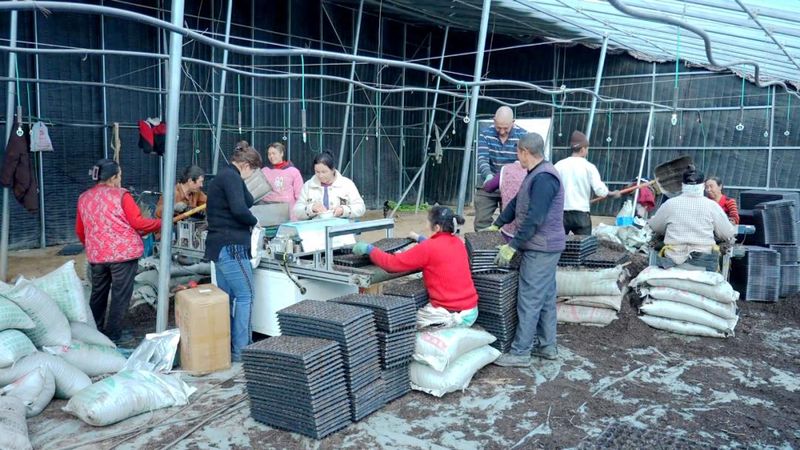
Western blue flower breeding usually uses 72 or 105 dens. High-quality commodities are selected for seeding, and 75% of the 100-bacterium clean (dakonin) 800 times the liquid is prepared for disinfection. The water is mixed with water sprayed at 8 hours to ensure that the water content of the matrix is around 70 per cent (hand held in groups but not sewn by finger) and is suffocated from 8 to 10 h behind the plate. Pre-loading is decontaminated with 30 min of potassium permanganate solution from 0. 2 to 0. 3 per cent。
3. 2 seed treatment
Plant one to two d before planting in order to increase seed vitality. It is sufficient to sow the seeds directly, with 50 per cent of the non-covered seeds being seeded with 0. 3 per cent of the seed mass of the grammatics of wet powder。
3. 3 fine seeding
A large number of one-size-fits-all seedlings are planted, with one seed per den, then covered with pearl rock or matrix, and light-scratched plates. An artificial disk is installed with external force to ensure that the base is strong and the den is clear so that the seedlings can grow healthy。
3. 4 shrimp management
The management of the temperature and humidity of seedlings is essential. The temperature is maintained at 24-26°c during the day, at 15-18°c at night, and at around 70% relative humidity to prevent the growth of seedlings. In water management, it is not appropriate to dry or wet, and maintaining moderate humidity contributes to healthy growth of young babies。
3. 5 plumbing
Before planting, 7d took care to cool the ventilation, gradually lower the temperature and humidity of the greenhouses and adapt the seedlings to the outside environment, keeping the temperature at 18-23°c during the day, at 10-13°c at night and controlling the relative water content of the matrix at 60%-65%. They can be planted at the age of 25 to 35 d, 5 to 6. Select a fine-quality seedling that is 15 cm or so tall, thick leaves, thick green leaves, complete leaves, well-developed roots, free from disease and pests, and free from serious mechanical damage。
4 solid planting
4. 1 fertilisation
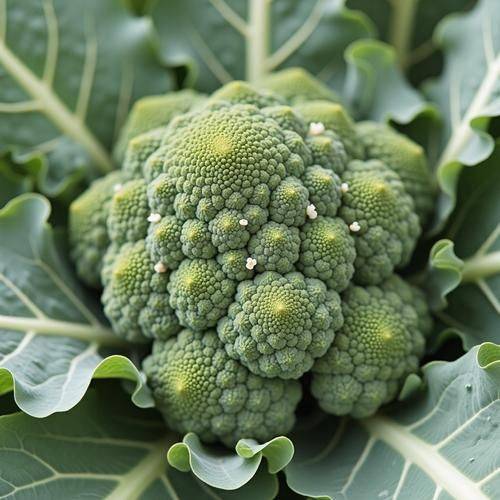
A combination of 75,000 kg/hm2, ammonium phosphate, 300-375 kg/hm2, potassium sulphate, 150 kg/hm2, bioorganic fertilizers (cfu/g, 45% organic) of 200 million live bacteria, 2 250 kg/hm2, boron (b-95%) 15 kg/hm2 provides a good growth base for western blue flowers。
4. 2 escaping
When the land is levelled, it rises by 80 cm, 15 to 20 cm, 45 cm wide, 35 cm wide, and then suppresses, maintaining a 90 cm wide and 0. 01 mm thick membrane, and pressing its surroundings to a level of approximately 75 kg/hm2. Whether it be archer or field cultivation, the membrane work should be completed prior to planting 7d to reduce weed growth and maintain soil moisture。
4. 3 deplantation shizuku
The "good" shape is grown in two rows, with a distance control of 35 to 45 cm and a seeding stock of 52,500 to 67,500/hm2. Plantation should be designed to cover the sap so as not to be too deep to affect root system development。
Field management
5. 1 following fat
West orchids are more fertilized throughout their reproductive life and can be planted in fields with easy drainage, soft soil, high organic content, ph 5. 5-8. 0 and deep tillage. Nitrogen fertilisation should be increased during the nursery period, phosphorus fertilisation and potassium fertilisation should be increased when buds begin to divide, and trace element fattening, such as boron, magnesium and molybdenum, should be increased during flower ball development to improve the quality and production of western blue flowers. It is common to apply urea 150 - 225 kg/hm2, ammonium phosphate 180 - 225 kg/hm2, potassium sulphate 120 - 150 kg/hm2 after planting, and to pursue compound fertilizer 300 - 375 kg/hm2, calcium nitrate 180 - 225 kg/hm2 or urea 120 - 150 kg/hm2 when the mace appears. In order to improve the quality of the plume and to reduce the amount of yellow buds and chores, the oscillation of oscillates of 0. 05% to 0. 1% and ammonium molyte solutions can be sprayed on the front of the pellet, and once after the plume has been formed, the oscillation of the plume may be applied to the high membrane or beverage。
5. 2 water filling
Water management needs to be strengthened during the leaf-growing and flower-ball formation phases, which, in the event of short periods of drought, can lead to a decline in the production of western blue flowers. After planting, the water should be soaked and soaked that no more water should be pumped until the fowl rises, so that it can take root; then water should be poured in time after each fat chase, with proper control over watering after the lotus period; and after 2-3 cm in diameter, water should be watered in time to keep the field under 70-80 per cent. Water will normally be required four to five times after planting and will be stopped before harvesting. The “morning of the western blue flowers and the opening of the roots of the soil in groups and falling apart” suggests that the soil is of a moderate and permeable quality and suitable for the western blue flowers。
5. 3 elimination of breech
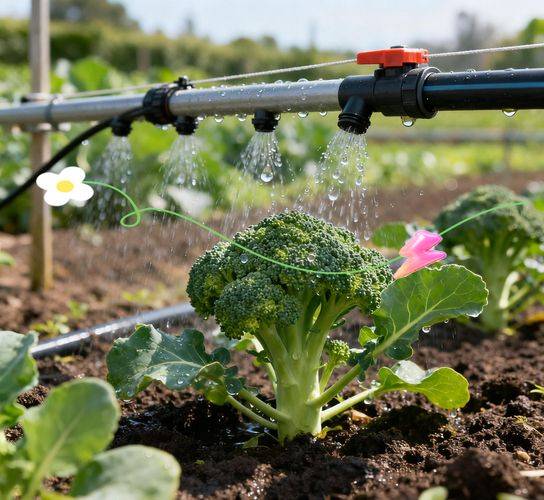
The blisters of the different species of western blue flowers are at different levels of growth, which can consume large amounts of nutrients and lead to reduced yields. Therefore, the breech is to be removed in time to ensure normal growth and the quality of the plume。
5. 4 pest management
The pests that afflict the western blue flowers are mainly aphids, vegetable larvae, moths, etc. The main diseases are sudden-onset diseases, and parched diseases. Prevention should be based on an ecological, green and safe approach, and should be based on the principle of “preventive and integrated prevention” in strict compliance with the precautionary approach, starting with the production chain, creating a systematic and integrated approach to prevention and control, and integrating agricultural, physical, biological and chemical control measures. It is prohibited to take drugs before taking them。
5. 4. 1 agriculture prevention and control cultivation of seedlings, which choose to be disease-free and robust; strict application of rotational systems to clean fields; scientific fertilisation, irrigation, rational planting and early sealing; timely removal of the central strain when it is discovered, and bringing it out of the fields to be buried to prevent the spread of the disease。
5. 4. 2 physical control placing of frequency-fibrous insecticidal lamps in the field or lactating insects with yellow or blue plates. Each 2-3 hm2 is equipped with a frequency-fibrillation insecticide. Five hundred and fifty-five cedars/hm2 and 15 to 20 cm above the top of the plant. In addition, the application of silver ash membranes or the use of silver ash bars can also serve as a shield against aphids。
5. 4. 3 biological control biological pesticides such as bitter alkaline, phenol, agro-resistant and agricultural antibiotics, such as pesticides from plant sources such as 120, are well protected against pests and can reduce pesticide residues and ensure the quality of agricultural products. The setting up of 45 - 75 moths/hm2 has a more visible impact on pests such as moths and night moths。
5. 4. 4 chemical pest control: maintain early treatment, with 4. 5% high-efficiency chlorocypermethrin cream 1,000 to 1,500 times the fluid in the morning or evening, or 2. 5% biphenylpermethrin cream 500 to 1,000 times the fluid, or 10% acetate humid powder 2,000 to 3,000 times the fluid, or 0. 3% bitter alkali water agent 1,500 to 2,000 times the liquid obscurant spray, with a total of 2 to 3 spraying times every 7 to 10 d. Disease prevention and control: sudden fallout and adhesive diseases occur mainly in the sapling season, with 72. 2 per cent of the water agent (plick) being used as 600-800 times more liquid, or 25 per cent of the ester suspension 800-1500 times more liquid spray one-two times。
6 collection
Appropriate harvests based on variety characteristics. The choice is for the flower bud to be fresh and tight, the ball to be neat, small and small, with no “stars”, colour to be green, with no pests or pests, without mechanical damage, with no emptiness in the trajectories and with a single ball weighing 0. 3 to 0. 4 kg. In order to harvest in the morning and evening, the buds are cut off together with the plume, leaving around four leaves to protect the ball. The collection and timely entry of cold to improve commodity rates。
7 concluding remarks
Combined with the geographical advantages and cultivation practices of the city of zhang, this paper summarizes the technology used for green orchid cultivation in the areas of seedlings, planting, field management, pest control, harvesting, etc., with a view to providing reference to improving the efficiency of orchid cultivation, product quality and market ownership。