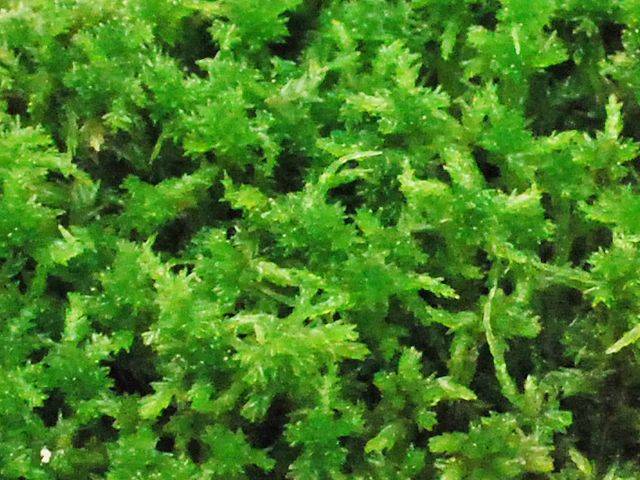
The moss, also known as peat, is the mosses of the water, which are grown mostly on rock cliffs in temperate and cold forest or by springs by stream. Living water mosses are white or green, loose, densely interwoven, staggered, and have irregular branches or feathers that are close to the branches. Washed and dryed water is light and white, soft and loose, with a high intake of water that can absorb 15 to 20 times its own weight, with a greater capacity for water storage and ventilation。
Orchid's ideal planting medium
Landy plants, especially yoland, are mostly aerobic and well-developed, requiring good physical stability, good aerobic aerobics and water-preservative capacity. At the outset, it was not known that the moss were the ideal planting medium for the plant, and it was not until taiwan succeeded in using the moss as a planting medium for the scalding of butterflies that the moss were found to have good effects such as high productivity, high growth, low cost, and environmental protection. It is only with the flourishing of the butterflies industry on the continent and the increasing exploitation of moss that people begin to understand the excellent properties of the moss as a medium, i. E., clean materials without disease; good water retention and drainage; easy to corrupt and sustainable use; and easy use. In addition, the moss contain a wealth of organic matter and a variety of nutrients such as nitrogen, phosphorus, potassium, calcium, magnesium, sulphur and iron, which can save on fertilization. The ranmu experiment is 30 to 50 per cent higher than the normal plant by planting tundra。
High-quality moss recognition methods
In general, the moss, which grows in the dark or on the back slopes, is pure green, the leaves are thinner, the skin cells are more clenched, water-absorbing is general, air-transmitting is poor, acid-defeating and of a more general quality; growing up in strong light or on the slopes of the sun, it is red, about 8 to 10 centimetres long, with thicker leaves and good physical stability. Most of the mosses sold in the market are packed in blocks, and it is more difficult to distinguish the quality of the mosaics, so how do you choose to buy them properly
Method one: smash and see if there's any slag
High-quality moss, high tissue integrity, compacted rules, which are not fractured or crushed, can be held in the hand, slashed a little bit and spank the bag to see if there are many slags falling into the corner of the bag and having too many shredded water moss of poor quality。
Method ii: packaging recognition
Some of the domestic mosses, with the use of premature or smaller-specified mosses, are more unstable in physical form and, in comparison, import mosses are more stable and of better quality, especially dry mosses from places such as new zealand, chile, etc., and of better quality, with some of the imported mosses optional if they are to be purchased。
The way the moss works
The physico-chemical properties of the moss produced at different sites, e. G. Roughness, length, acid alkalinity, etc., vary and are used in a well-used manner. In general, small seedlings are grown to the high-quality mosses of light, large seedlings are grown to the lower-quality mosses, thicker mossses are grown to the strong, leaner mosses to the loose, weaker mosses are not recommended; it is also recommended that before use, full immersion and, if necessary, disinfection should be done; and that water should be “dry and wet” when planting orchids, so that the moss may not be salined and sour, so as to achieve the desired protection of fertilizers, water conservation and air permeability。