The balance between the demand for anal preservation and tumour root treatment in the treatment of lower and middle rectal cancer is always a clinical challenge, and the development of precision medical techniques has provided entirely new solutions to this challenge. The sanxi hospital oncology of the oncology hospital of the chinese academy of medical sciences (the shanxi province oncology hospital) combined the precision of robotic auxiliary surgery with the micro-initiative depth of natural cavity specimens (noses) and successfully performed an anal prophylactic surgery for patients with ultra-low rectal cancer, creating a whole new clinical path for acoustic treatment of lower rectal cancer。
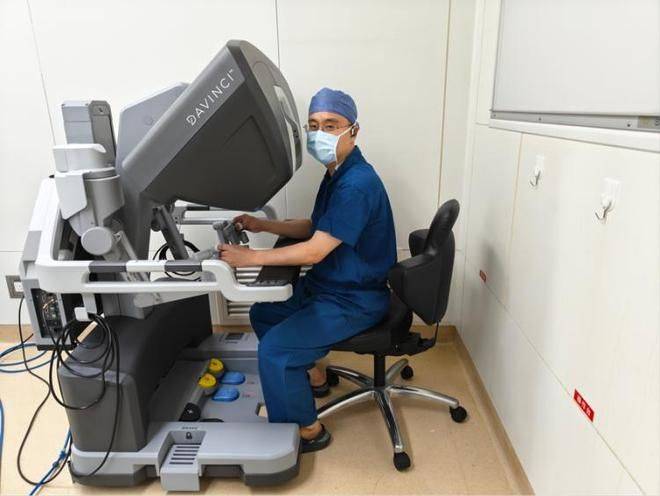
In the field of surgical treatment for rectal cancer, innovations in surgical methods have always revolved around the three core objectives of tumour treatment, functional retention and micro-rehabilitation. The technical advantages of precision manipulation since da vinci's surgery was applied to clinical purposes have led to a breakthrough in low- and medium-level rectal cancers, while the noses operation, with its tiny advantage of abdominal incision, has significantly reduced the trauma of the operation and accelerated the recovery of the patient from surgery, a combination of which has become an important development in the treatment of rectal cancer in the medically accurate age。
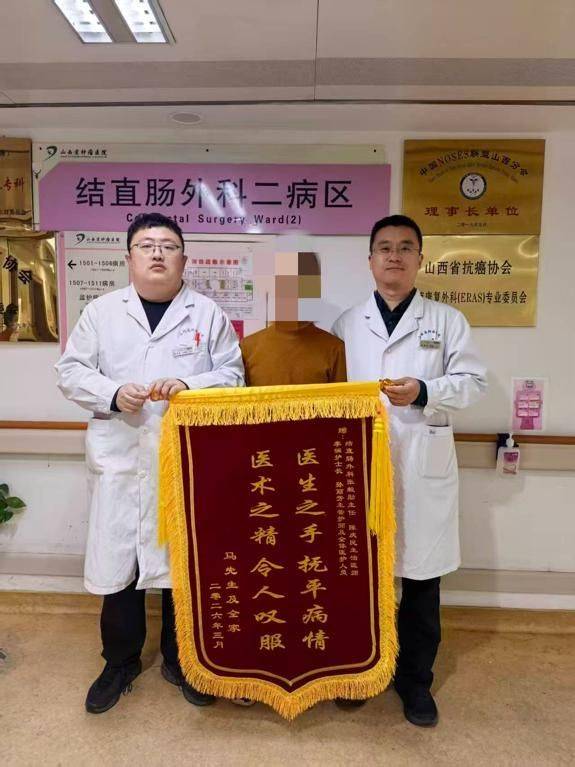
The sanxi hospital of the oncology hospital of the chinese academy of medical sciences (the shanxi province oncology hospital) has always been devoted to the exploration and practice of precision medical techniques. Under the leadership of chief liu haiyi, the technical team of the section has systematically carried out various types of bottal surgery for big intestine cancer and has accumulated extensive clinical experience. In recent days, a special case of female rectal cancer was received by team zhang yi-hoon, the chief of the ward。
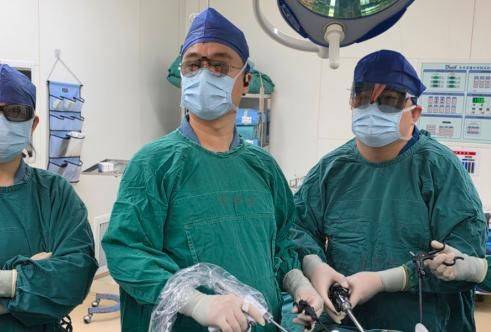
When patients are admitted to hospital, the attending physician, chen qingmin, conducts a comprehensive assessment of their condition and, at first instance, the section organizes case discussions and submits them to the multidisciplinary team (mdt). In conjunction with patients ' condition, physical condition and anal protection claims, the mdt team has been fully engaged in developing a personalized programme of robotic combination noses surgery for patients. In order to address the concerns of patients and their families, the team of director-general zhang yong-hoon, in conjunction with the latest literature research and evidence-based medical evidence, elaborated on the modalities of surgery, the core advantages of robotic surgery and the associated cost composition, and eventually the patients and their families firmly chose to accept the programme。
The operation, which lasted three hours, was carried out successfully, essentially in the same manner as the routine abdominal lens surgery, with very little bleeding and no assisted abdominal incision, and succeeded in retaining the anal anus for the patient and in protecting its function to the maximum extent. The patient can leave the bed for two hours after the operation, has a smooth air flow and eat fresh food for 28 hours, and has been discharged and discharged from hospital on the seventh day of the operation. The results of the long follow-up show that patients are not clearly ill, that ventilated, defecated functions are well restored and that the quality of life is not significantly affected. The success of this case has fully demonstrated the clinical viability and advantages of the combined robotic noses operation in ultra-low rectal cancer acoustic treatment, offering hope for anal protection for the same patients。
The robotic surgery, which enables “embroidery” precision to be performed in the complex pelvic environment of rectectal cancer surgery, is based on three unique technological advantages: first, an all-real 3d high-resolution visual system, with a double lens stereo imaging that can be scaled up 10 to 15 times the horizon, combined with automatic exposure regulation techniques, with a clearly identifiable deep horizon, a 0. 5 mm level of neurofibre that can also be identified with precision and eliminates the blind zone of the traditional surgery; second, the availability of a rotable wrist device and a 7-free mechanical arm, which can achieve 270° rotation and 540° rotation, a high degree of flexibility beyond the human hand-to-man limit, which can be contained in a narrow pelvic space, with a stitched needle error range that can be contained in 0. 3 mm to achieve precision operations; and third, the introduction of a smart stabilization and tremors filtering system, which can automatically eliminate the natural physiological shake of the doctor's hand exceeding 0. 5 mm, ensuring the smoothness and precision of critical operations such as cutting, stitching, and further improving surgical safety。
The precision of robotic surgery, however, also provides technical guarantees for the performance of noses operations. The operation, which removes tissues from natural cavities, such as anals, without the need to perform auxiliary abdomen abdomen, achieves the dual effect of “microction + precision”, not only smaller trauma, lighter post-operative pain, faster recovery, but also an effective reduction of abdominal-related cortex-related complications, especially for patients with specific body forms such as obesity and small pelvis。
The successful application of the combined robotic noses operation in ultra-low rectal cancer anal treatment is a vivid combination of precision medical techniques and clinical needs. This innovative technique, which transcends the acoustic limitations of traditional surgery and combines microrehabilitation with functional protection, provides clinical reference for the optimization of the treatment patterns for low rectal cancer. (information)