Through a systematic study of chapter 38 of the cost control dictionary, “construction elevator”, i am acutely aware that the key purpose of cost control is to upgrade the construction elevator, as the central hub for connecting the construction and decoration phase of the project's main project and carrying a large number of people and cargo transported vertically, from a purely “equipment lease” management model to a systematic operation of “transport efficiency, full-cycle occupancy costs and multi-professional interface synergies”。
The construction elevators have long service cycles, high frequency of use, complex interfaces with a wide range of professions, and stagnating risks, compared to the suspension of the arms tower. With its clear and rigorous control logic, this chapter reveals how this long-run “vertical bus system” can be transformed into an efficient, economical and manageable cost unit. Here are my thoughts and my conclusions:
I. Core concept: costs come from “planning” and pre-preparation is the best option for effectiveness and cost
Cost control of the construction elevator begins with precision measurement of the project's “transport demand” and depth optimization of the “supply programme”. At the heart of its decision-making lies the optimal matching of equipment capacity, location, service cycle and total cost through “programming”。
Key highlights: focus on full-cycle occupancy and interface synergy to address long-term hidden costs
The construction of “hard-hit areas” where the cost of the elevators is out of control is usually the result of unproductive stagnation, inefficient operations and conflicts with multidisciplinary interfaces。
Forward-looking planning for the “upgrading and dismantling” node
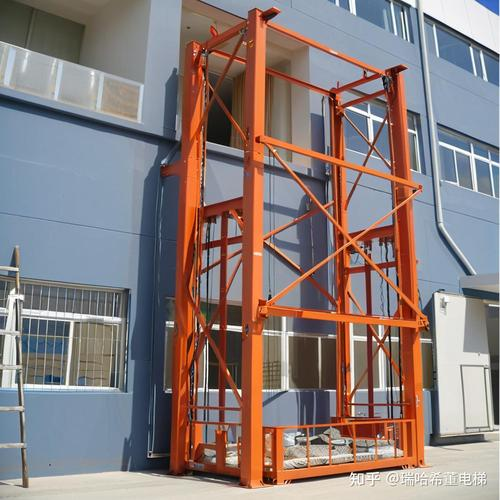
The cost control dictionary focuses on “upgrading nodes”, explicitly requiring “generally raising to about every five floors” and “the construction to the corresponding period node when the pace of construction exceeds the predetermined time point”. This suggests that we need to plan for the top lift and the final demolition plan in a dynamic and forward-looking manner, based on the progress of the main project and the renovation work. Premature uplifts can increase rental costs, and later in the day can constrain upper-level operations. Precision control nodes are key to saving long-term lease costs for the non-effective occupancy of compressed equipment。
Detailed regulation of the “suspension risk” in the contract (led by the department of commerce)
Given the long-term service of the construction elevator for multi-professional subcontracting, the risk of “suspension due to non-equipment causes” is extremely high. The contract must clearly provide for “the mode of calculation and attribution of liability for the stagnation of elevators due to general or other subcontracting reasons (e. G., non-transfer, power outage, etc.)” as well as for “walled alteration costs due to structural changes”. This is a rational allocation and targeting of the largest uncertainty costs (time costs)。
"efficient synergies" and "load management" during use
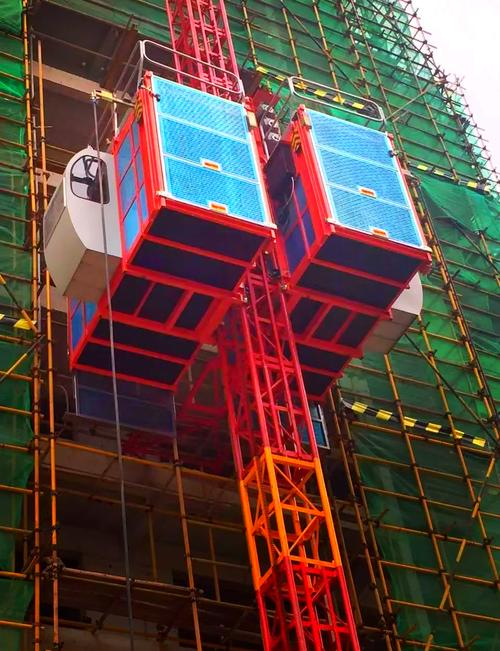
The construction elevator is described as the “heaviest transport hub” at the construction site, and its operational efficiency is closely linked to the manual performance of the various professional teams. The need for a unified movement control system and faulty use mechanisms, as well as strict control of overloading, overloading and avoidance of ineffective waiting, safety incidents and mechanical damage resulting from mismanagement, all of which have become high hidden costs。
Iii. Managing the closed loop: streamlining the entire process of receiving exit settlements from the field
Better planning also requires sophisticated “performance management” and a closed circle of cost data。
Standardized control of entry and installation
The equipment is subject to strict on-site inspection and inspection to ensure that its safety is complete and of good performance. The installation process must be carried out in accordance with the programme and ensure that the basic carrying capacity, wall-enabled spacing and verticality are in line with the requirements, which are fundamental to the long-term safe and efficient operation of the equipment and avoid the costs of overhaul and accidents。
Normalization and digitization of running maintenance
Regular inspections, maintenance records are required and digital monitoring can be achieved by means of “establishment of running time, power consumption, maintenance of logbooks” to provide a basis for analysing equipment efficiency, prejudicing malfunctions and clearing costs。
“value recovery” for exit management
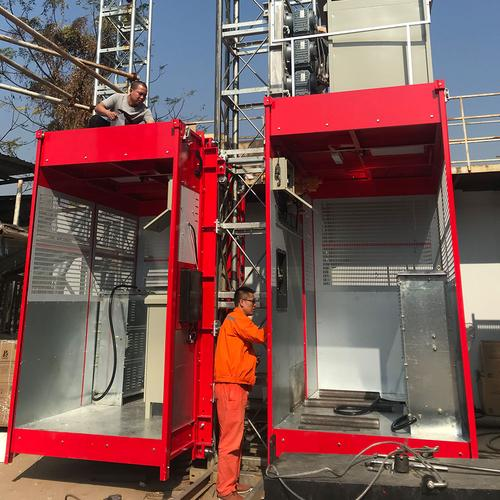
Similar to the hierarchies, exit routes and timing will need to be planned in advance to ensure that equipment can be removed quickly after the completion of the mission and to reduce the cost of idle lease in the final phase。
Management revelation: the construction elevator highlighted the “total package integrated movement and service level”
The level of management of the construction elevators intuitively reflects the production integration capacity of the aggregate unit, the on-site coordination capacity and the service support capacity of the subcontracting unit。
V. Personal summary and action guidelines
As a result of this study, i gained a deeper understanding of the cost control of large equipment in the long run category:
This chapter serves as a guide for the management of the construction elevator, the “vertical lifeline”, and is a vivid exercise of the concept of “preparation, precision, synergy”. It revealed in depth that cost advantages for long-term functioning public resources stem from precision early planning, efficient process movement and fair rule design. This has made me aware that excellent cost control is often reflected in an efficient, orderly and low-cost organizational state of operation。