Primary auto maintenance questions and answers
I. Single selection issues
1. When the engine works, the failure may be (...) as a result of the sound of a sharp, rhythmic metal knock, the faster it turns and the greater the bang。
A. Pistols, b. Aerobics
Answer: c
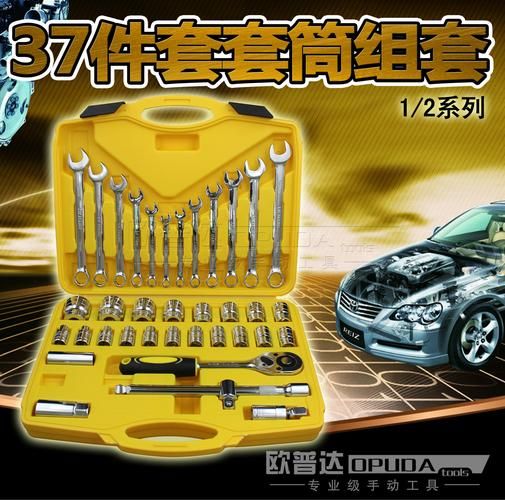
Which of the following tools is not suitable for use in the removal of tyre nuts (...)。
A. Strap wrench b. Open wrench c. Splash d. Activity wrench hands
Answer: d
3. The replacement period for brake fluids in the car brake system is typically (...)。
A. 1 year b. 2 years c. 3 years d. 4 years
Answer: b
4. The role of compressors in car air conditioning systems is (...)。
A. Compressed refrigerant b. Dissipation c. Resilient d. Inhalation
Answer: a
The main function of the radiator in the car engine cooling system is (...)。
A. Storage of cooling fluids b. Dispersion c. Recycle of cooling fluids d. Filter cooling fluids
Answer: b
6. Any of the following does not cause excessive water temperature in motors。
A. Inadequate cooling fluid b. Fault of the thermostat c. Overstretching of the fan belt d. Dispersors
Answer: c
7. The role of a motor transformer does not include (...)。
C. Interruption of power transmission d. Redirection of vehicles
Answer: d
8. The pressure of car tyres shall ( ) be specified。
A. A little more than b. Is equal to c. A little less than d
Answer: b
In automobile electrical systems, the primary function of batteries is to be。
B. Power supply for electrical equipment c. Storage of electrical energy d. Above
Answer: d
10. Car brakes shall be replaced in a timely manner when the thickness of the brakes is worn to ( ) 。
A. 1mm b. 2mm c. 3mm d. 4mm
Answer: c
Ii. Multiple options
1. Basic components of motors include (...)。
C. Fuel supply system d. Refrigeration system
Answer: abcd
Quantities commonly used in car maintenance include (...)。
A. Travel card scale b. Kilometres c. Deck d
Answer: abcd
3. The types of car brake systems are (...)。
A. Drum brakes b. Disk brakes c. Electronic brakes d. Liquid suppression
Answer: abd
4. Components of the car air conditioning system (...)。
A. Compressors b. Condensers c. Evaporaters d. Expansion valves
Answer: abcd
5. Automobile engine oils are used (...)。
A. Lubrication b. Cooling c. Cleaning d. Seal
Answer: abcd
6. Reasons for the lack of engine power in cars may be found. (...)。
Air filter jamming b. Fire plug failure c. Fuel filter jamming d. Air-saving door failure
Answer: abcd
7. Components of car chassis include (...)。
A. Motion b. Drive c. Turning d. Brake yes
Answer: abcd
8. Faults in the vehicle electrical system may be indicated as (...)。
B. Motion not working
Answer: abcd
9. Common malfunctions of car tyres。
A. Uneven wear and tear b. Pumping c. Leaking d. Battery
Answer: abcd
Basic processes for auto maintenance include (...)。
C. Maintenance work d. Completion tests
Answer: abcd
Iii. Questions of judgement
1. Pistol process for motor vehicles means the distance from the top to bottom of the piston. ( )
Answer: correct
2. The tools used in the maintenance of the car may be placed at random. ( )
Answer: error
Automobile brake fluids may be used in combination. ( )
Answer: error
4. Automobile air-conditioning systems need not be maintained as long as they are cooled. ( )
Answer: error
5. The cooling fluid of motors may be replaced by water. ( )
Answer: error
6. Car transformers shall be required to step on the compressor pedal during the switch. ( )
Answer: correct
7. Excessive pressure on car tyres can lead to increased wear and tear. ( )
Answer: error
8. The failure of the vehicle electrical system can be judged in its preliminary form by means of an observation instrument indicator. ( )
Answer: correct
9. No road tests are required after vehicle repairs. ( )
Answer: error
10. Automobile maintenance staff need only have maintenance skills and do not need to understand the basic principles of the car. ( )
Answer: error
Iv. Brief answers
1. Briefly describe the steps taken to replace motor oil。
First, to cool the engine for some time and to prepare the right oil, oil filters and replacement tools. The oil bolts were then found, the pipelines were placed below them and the old engine oil was released. The old oil filters were then removed and new filters installed, with a small amount of oil painted on the filter seals. Finally, the oil bolts are to be rolled back and the fluid level of the oil is to be checked for normality by adding a specified quantity of new engine oil to the gas vent。
2. What are the reasons for the brake failure of the motor system
There are more reasons for brake failure. It may be the lack or deterioration of brake fluids, which leads to a poor transmission of brake pressure; the disruption of brake circuits or the looseness of connections, which results in a leak of brake fluids; the severe wear of brake blades, which reduces friction with the brake disk or drum; the failure of brake subpumps or total pumps to function normally; and the failure of brake boosters to provide help, etc。
3. How to check the air pressure of car tyres
Inspections are carried out using the birthmark. The value shown on the tire count is the current pressure of the tyre, when the aerobic pressure is first directed at the tyre's aerobic door, and when the “helicopter” is heard. To ensure that tyres are checked when they are in a cold state, and to compare the standard air pressure values in the vehicle use manual, a timely inflating is required if the pressure is not sufficient and the air pressure is excessive。
4. What are the reasons for battery failures in automobile electrical systems
It may be that generators do not generate electricity or that there is insufficient capacity to charge the battery; vehicles are parked for long periods and electrical equipment is not broken, resulting in the continuous discharge of the battery; the battery itself is ageing and its capacity is decreasing; and there are leaks, such as short circuits for electrical circuits or the failure to shut down electrical appliances, which keep the battery running。
Topics for discussion
1. To discuss the possible hazards associated with the sounding of motor vehicles and how to identify and address them in a timely manner。
Car engines are likely to be highly hazardous. If not addressed in a timely manner, minor noises may evolve into serious malfunctions, resulting in reduced engine power, increased fuel consumption and even damage to engines, affecting the safety of motor vehicles. In order to detect noises in a timely manner, drivers should be aware of changes in engine noises in day-to-day driving and perform regular maintenance checks. Once the sound is detected, the source and characteristics of the sound are judged, e. G., the sound, the sound, etc. Disabled components, such as pistons, gas doors, bearings, etc., can be progressively cleared through specialized diagnostic equipment testing, combined with maintenance experience, followed by targeted repairs or replacement。
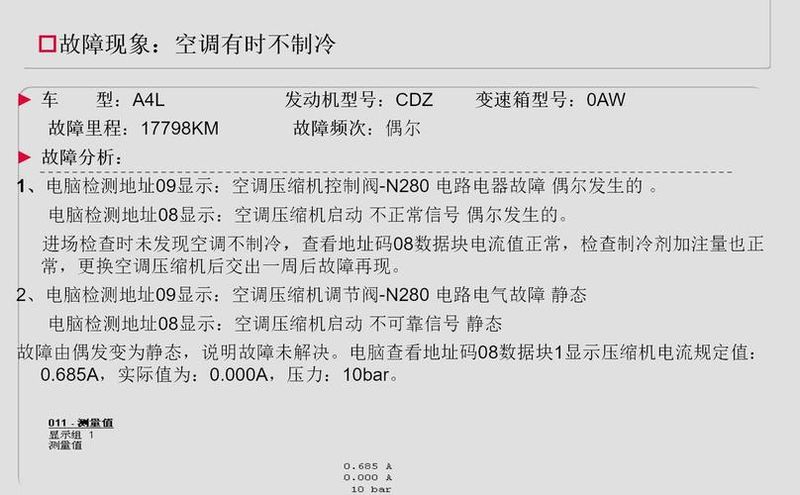
2. Analysis of the possible causes of the poor cooling of car air conditioners and discussion of appropriate solutions。
Poor refrigerant performance may be due to system leaks; condenser dissipation, such as surface stains, fan failure, which affects dissipation; evaporation congestion, which hinders the thermal exchange of air with refrigerants; and compressor failure, which prevents normal compression of refrigerants. The solution included checking and repairing refrigerant leaks and supplementing refrigerants; cleaning of condensers' surfaces and checking and repairing fans; cleaning of evaporation units; and testing and repair or replacement of compressors。
3. Explore the impact of car chassis failure on vehicle safety and how to prevent chassis failure。
A car chassis failure could seriously affect the safety of the vehicle. The failure of the transmission system may lead to a lack of power transmission, which prevents the normal movement of the vehicle; the failure of the vehicle, such as the wear and tear of tyres, damage to the suspension, which may affect the stability and control of the vehicle; the failure of the switch system, which leads to a loss of movement and prevents accurate control of the direction of the vehicle; and the failure of the brake system, which directly affects the timely parking of the vehicle. The prevention of chassis failure involves periodic examination of tyre pressure and wear and replacement of severely worn tyres in a timely manner; periodic inspection of hanging systems and detection of loose or damaged prompt repair; and regular maintenance of the switch and brake system and replacement of critical components such as brake fluids。
4. Discussion of how to ensure quality and client satisfaction in vehicle maintenance, taking into account the actual situation。
To ensure quality maintenance, maintenance personnel need to have solid professional knowledge and skills, operate strictly in accordance with maintenance processes and use qualified accessories and tools. Quality tests, such as assembly gaps for parts, performance tests, etc., are performed during maintenance. For client satisfaction, maintenance is preceded by adequate communication with clients, demand and failure, and accurate maintenance programmes and cost budgets. Maintenance is followed by timely feedback on maintenance and assurance commitments. In addition, there is a need to focus on service attitudes and keep the work space clean so that clients can feel professional and caring services。