Cabbage is one of the most common vegetables in our lives, especially in the north, where households like to grow, eat, make sour or salty vegetables, have an excellent taste and are nutritious. So when will the cabbage grow? How do we grow? Let's see。
1. Timing of cultivation
While cabbage is mainly grown in the autumn, the different planting times can be divided according to its variety: pre-cooked varieties are planted in mid-august, mid- and late-cooked varieties are planted in late august and early september, while late-cooked varieties are most suitable in late august。
2. Ground-based fertilizer
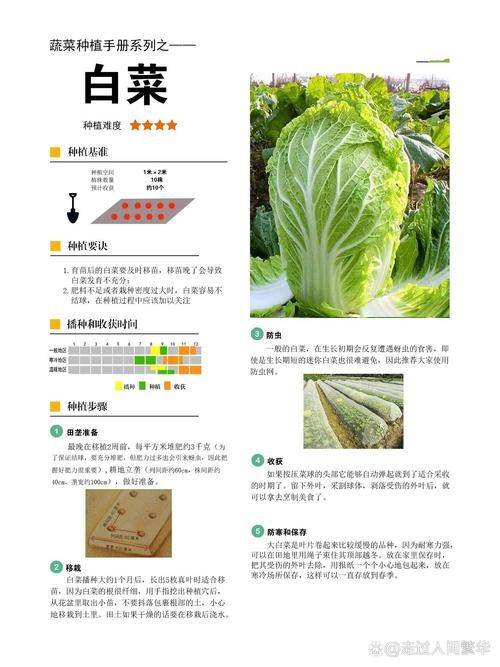
Since cabbage can be grown in both the north and the south, it does not require high levels of soil and adapts to a variety of environments, but it is not appropriate to have cross-flowers and rational rotations in the choice of the land to be planted, with the most organic, loose and fertile sandy or bordery soil. A week before seeding, the soil is fully fertilized, the plot is ploughed deep, dredged, flattened, and rinsed and drained. Fertilized organic fertilizer of 5000-7,000 kg per acre can be combined with some potassium nitrophosphate compound fertilizer of 50 kg, which can be spread evenly into the soil and will be combined with arable land and mixed with the soil。
3. Cultivation

The selection of highly resistant, cold-resistant and disease-free seeds is based on three methods of seeding, namely, strip, cave and machine sowing, and the selection of suitable seeding methods for seeding, usually at around 0. 5 kg per acre. Control the distance of the plant during sowing may be properly sown if climatic, soil, etc. Are favourable, and vice versa. Once the seed has sprouts, the soil is kept moist, the yield is accelerated, an inter-sapling and replantation is carried out each time it reaches 2-3 or 4-5 leafs, and some weeds, sick and weak are removed。
Four
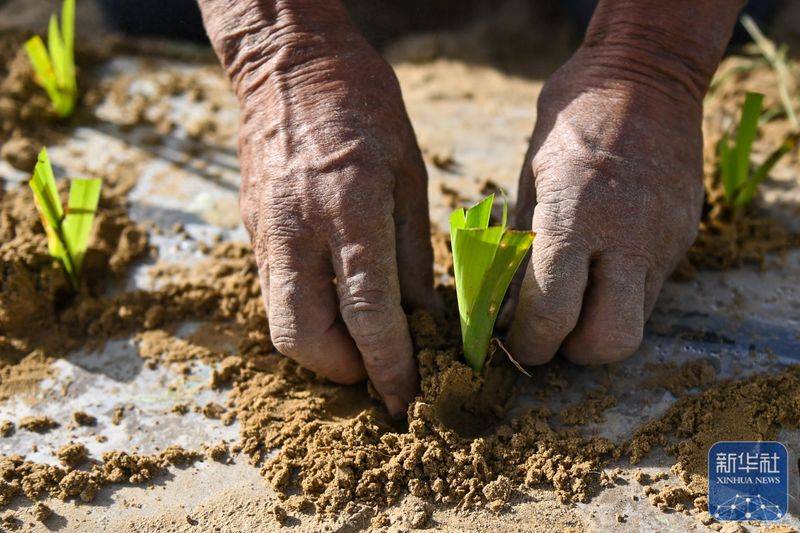
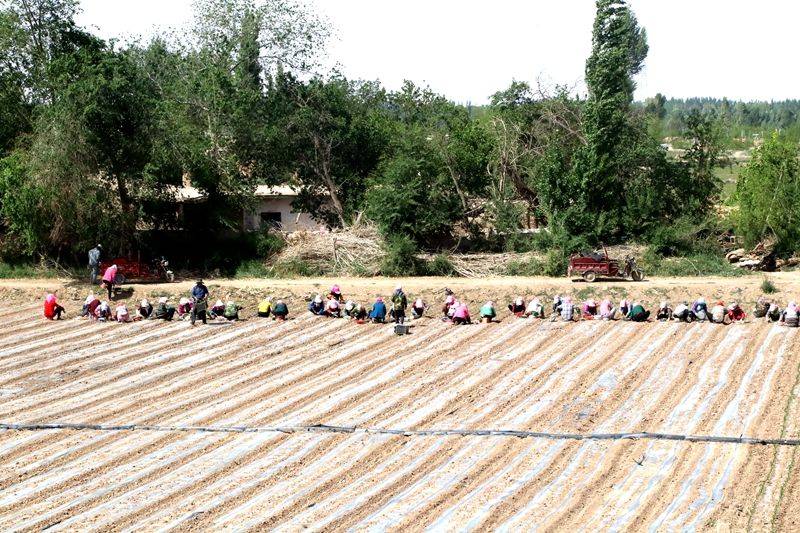
When the seedlings grow to a 5-6 leaf, they can be replanted, choosing a clear afternoon, avoiding as much as possible the strong midday sun and increasing the survival rate. The density is also determined on the basis of species and soil, with water being poured immediately after planting, soil being kept wet and watering every morning and night, for three days, in order to ease the survival of the seedlings。
5. Field management

The high yield of cabbage is such that it requires a high amount of fertilizer that, in addition to the application of base-based fertilizer in the field, is followed in a timely manner, usually without the need for fatting during the seeding period, 10 kg of ammonium sulphate per acre in the absence of base-based fattening, which is applied on both sides of the seedling, and is not applied directly to the root, so that the roots are not burned and water is poured immediately after the application, so that the fertilizer is quickly absorbed. The second fertilisation is also followed by the application of ammonium sulphate 15-20 kg, which is applied in a ditch and water; the third by the application of ammonium sulphate 30 kg, calcium perphosphate 15 kg, which is carried out in conjunction with the earth; and the fourth by the application of ammonium sulphate 15-20 kg, which is carried out during the slurry. Watering is also extremely important, depending on the climate, soil, when water is to be controlled at the end of the lotus, and when the third fertilization takes place, when the ball is over, the demands of cabbage are enormous and the soil is always wet。