Van gogh's touch. What's so funny
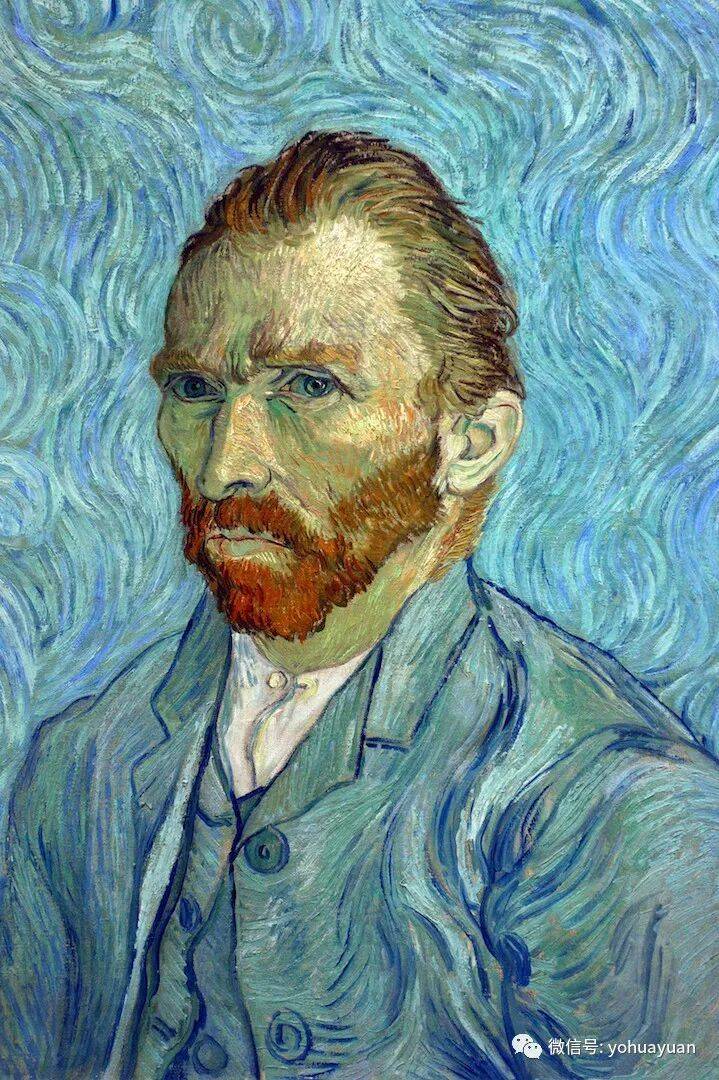
Vincent william van gogh:
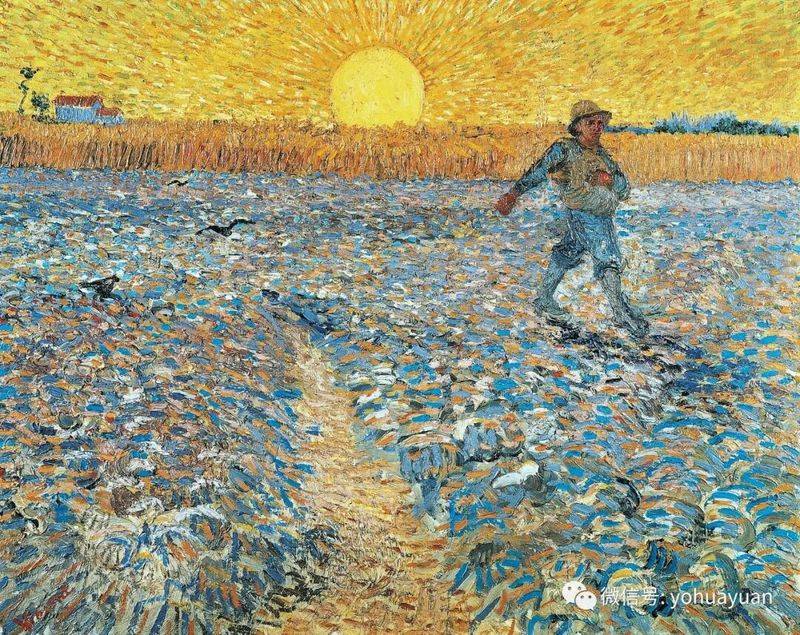
(vincent willem van gogh, 30 march 1853-29 july 1890) post-impressionist in the netherlands. The delegates included star and moon night, a self-portrait series, sunflower series, etc。
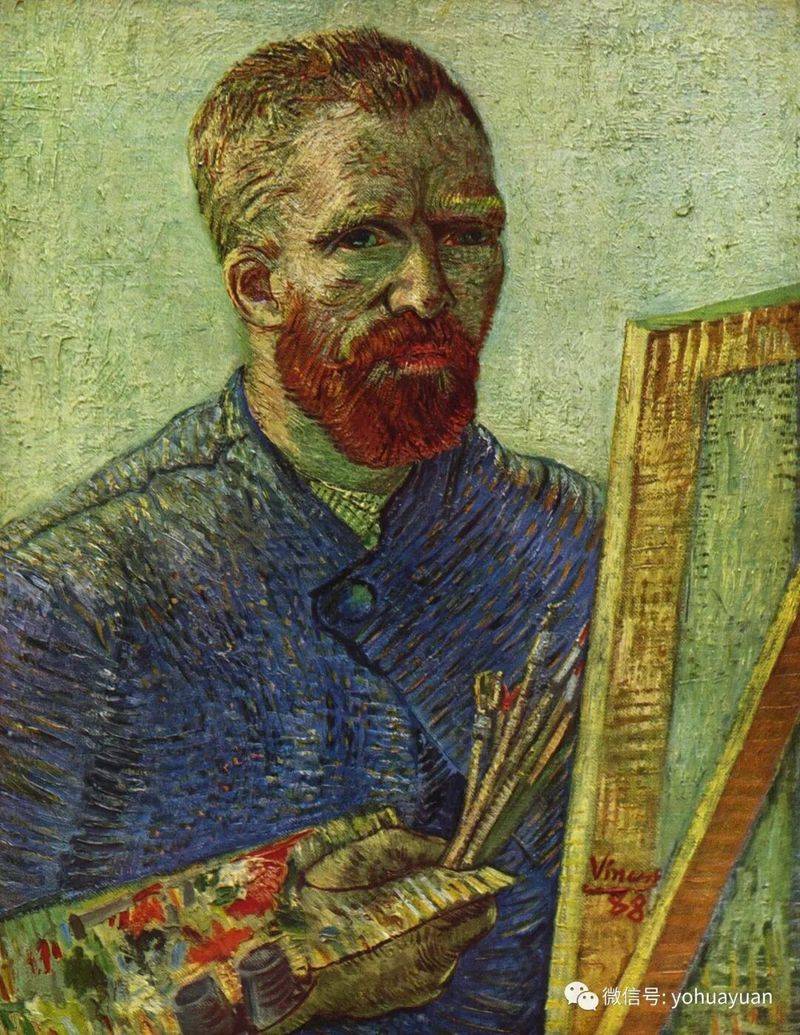
The radiant touch, which van gogh cleverly applied to portraits, reflects not only his feelings but also his strong personal style。
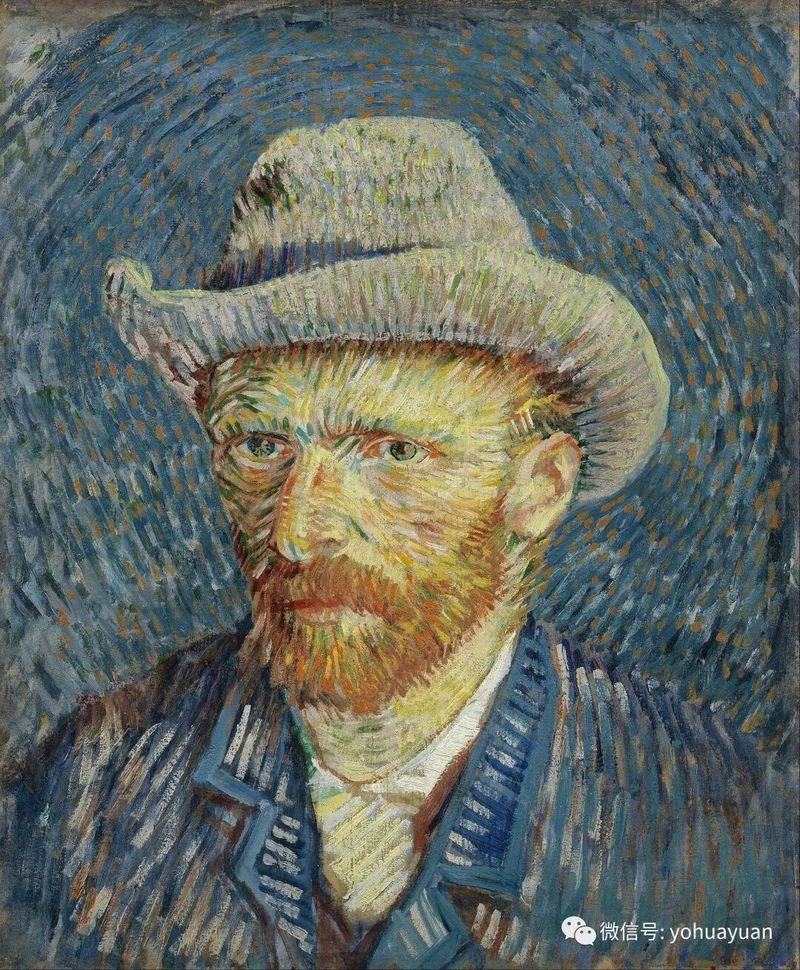
Take van gogh's self-portrait, for example, the heart orientation of the pen can effectively guide the viewers。
It is also radioactive in nature, bringing together the viewers at one point, and it can spread out。
It allows viewers to focus unwittingly on what the painter wants to show。
The most obvious is the handling of self-portrait clothing and background, which is like a luminous visual feeling and a state of entry for painters。
The radiance of a pen touch uses a rich colour, so that the irradiation of a pen touch is uniform in shape. It enriches the picture while also depicting the spiritual world of the portrait。
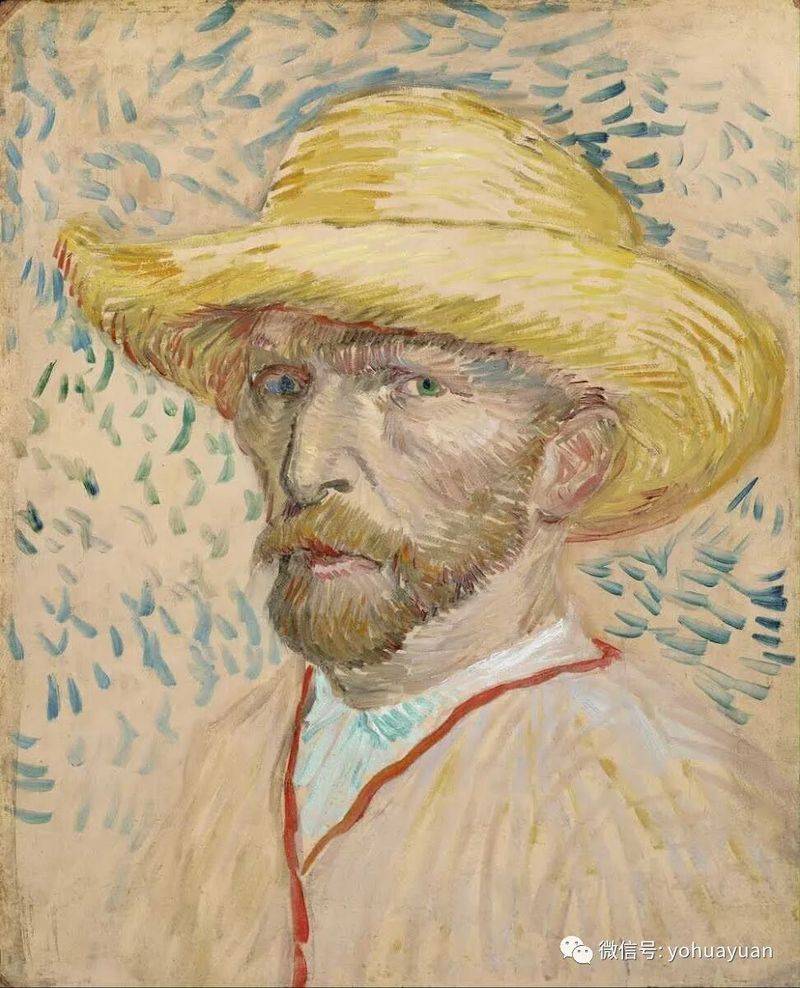
Twilight pentrum:
A vortex-like pentrix that extends around the contours, the objective object having circular structural characteristics, can see the pen reach like a vortex。
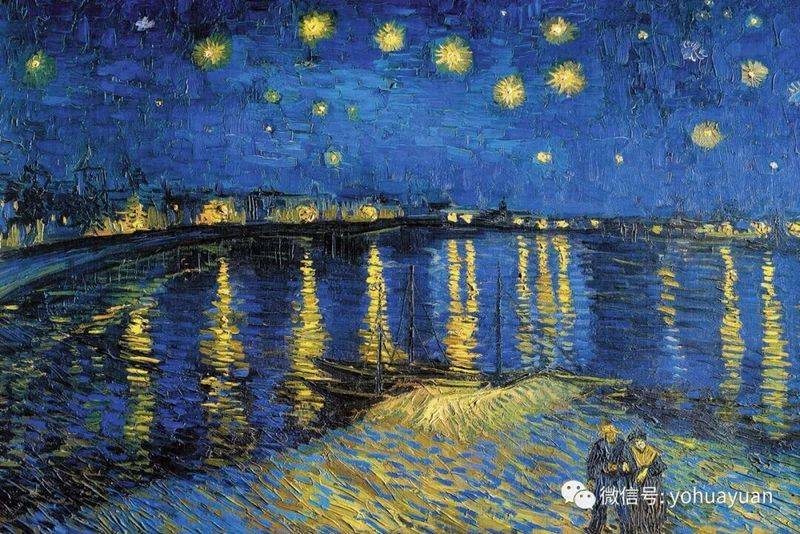
Like van gogh in the sky。
This vortex-type pentrix is a form of movement that is carried out according to body characteristics or contours。
Different forms of penture produce different visions, not only dependent on patterns, but also independent aesthetic values and composition。
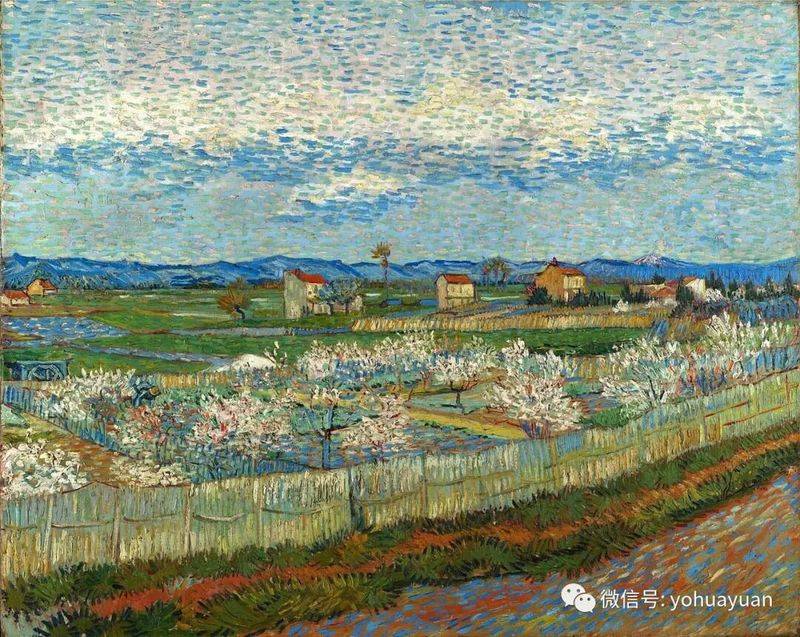
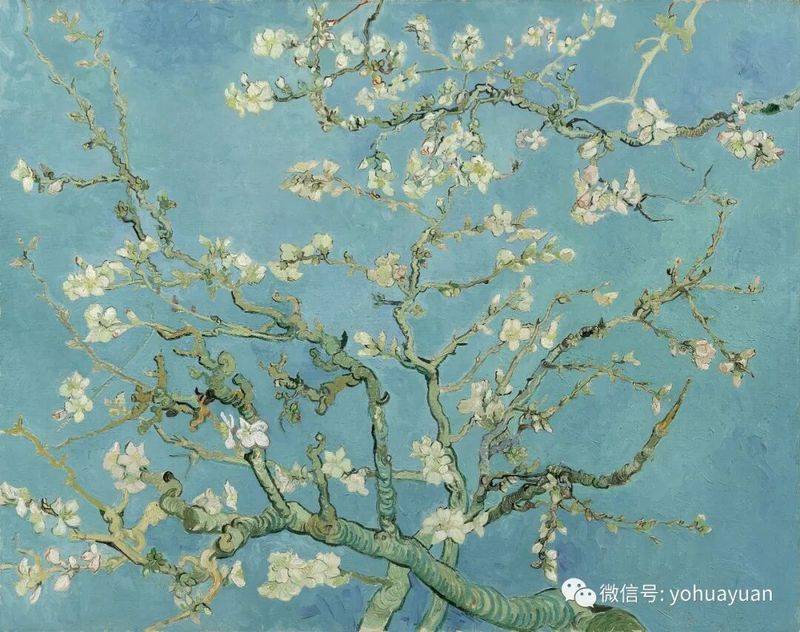
The peach flowers of 1889
(a) a thin, monolithic coating showing the particle-like mystical, which appears in thinner colours between thickly coated thick brushes
Between the light blues of the sky, the light greens, the light yellows, the light yellows can be clearly seen。
The upper half of the sky is lighter and brighter than the lower half, and the contours of the mountains are sewn with blue, but not painted with death
It is then painted with white blue slopes, thus pushing the mountains far away with bright reds, tans and contrasts of blue and green, showing the fences and land in the future。
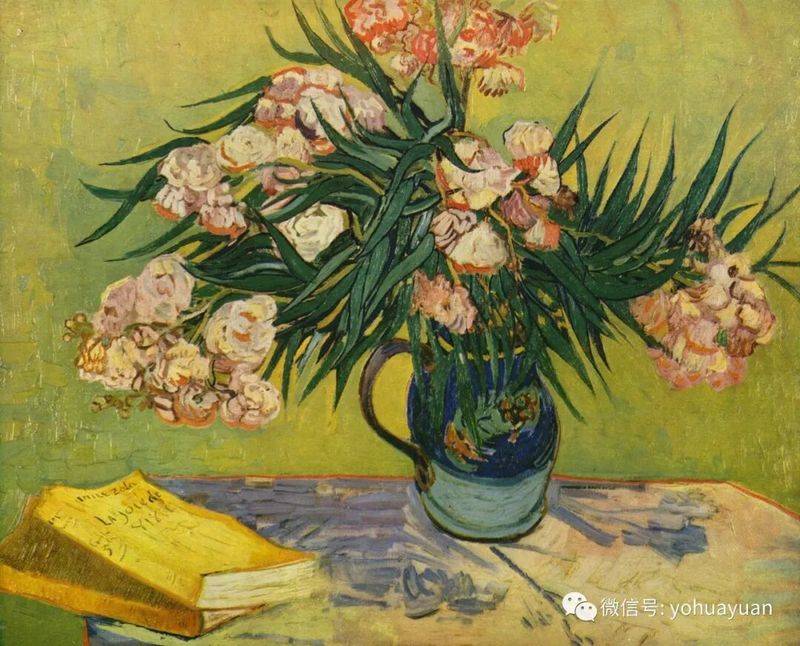
The "face of the oxygen" paints shapes, lines and graphs:
Shape is an important feature of this painting. Van gogh sews the shape of an argon with deep blue, giving a sense of illustration。
There is a strong contrast between flowers and leaf shapes。
Van gogh has simplified complex scenarios into basic artistic elements。
Paint colour analysis:
There is a pleasant balance between warm and cold。
Warm means red, orange and yellow in the outlook and background. Light green and thick blue tails are colder。
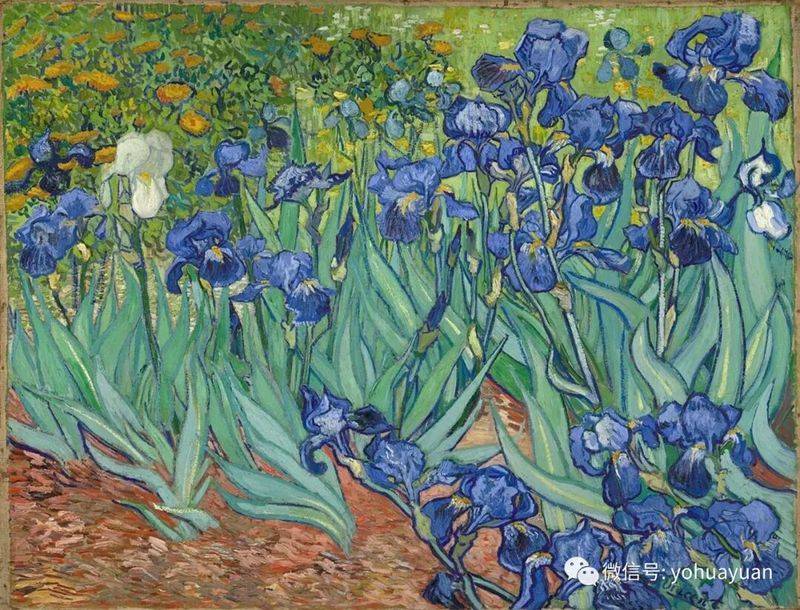
There are also two pairs of complementary colours: orange and blue; red and green。
Complementarity contrasts with each other on the wheel and contrasts sharply。
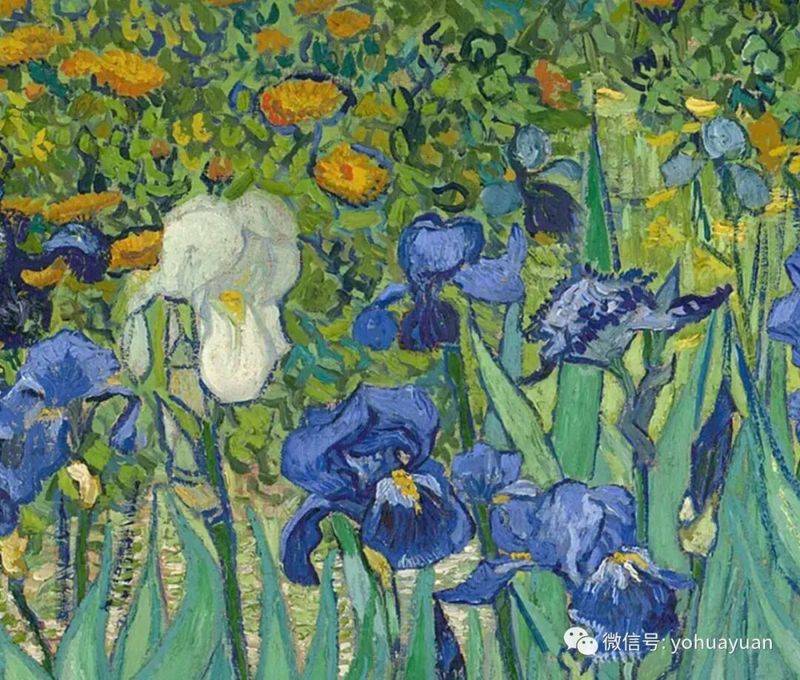
Van gogh cleverly applied the bright tone in the entire painting。
Note the yellow spots in those blue flowers; yellow and orange flowers are scattered throughout the background。
Red ground, light green plants, rich blue flowers, warm background. Give a sense of organization to busy scenes。
Image highlighting:
The painting does not have a very bright structure, and there is hardly any light or shadow rendering. Because van gogh is more focused on color and shape。
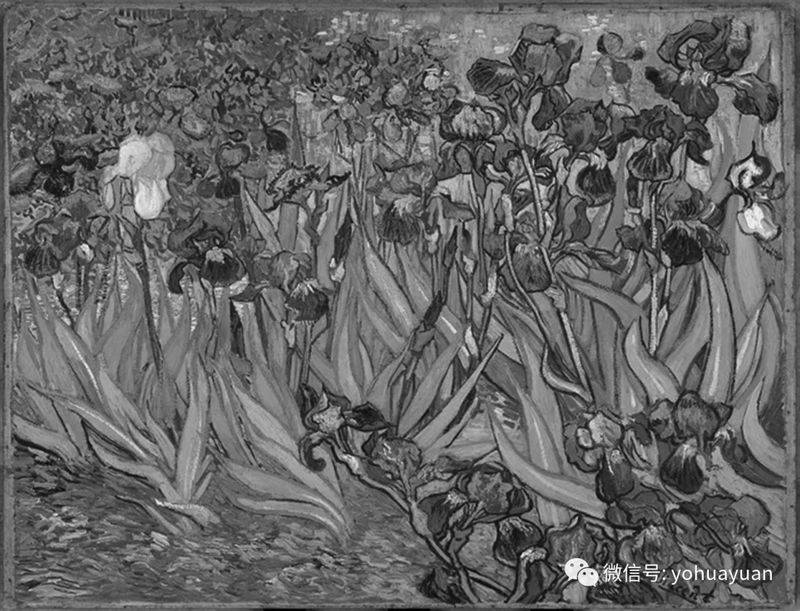
Vincent van gogh, 1889
With the exception of white flowers and some black tunings, the painting was compressed in the middle range. Dark color helps to outline the main shape。
Look how interesting white flowers are in the greyscale, but in this whole painting, it's covered in the colours around it。
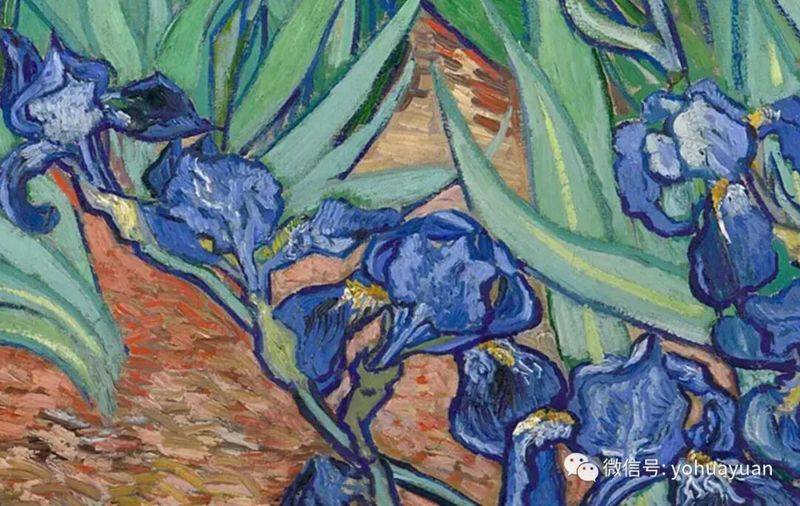
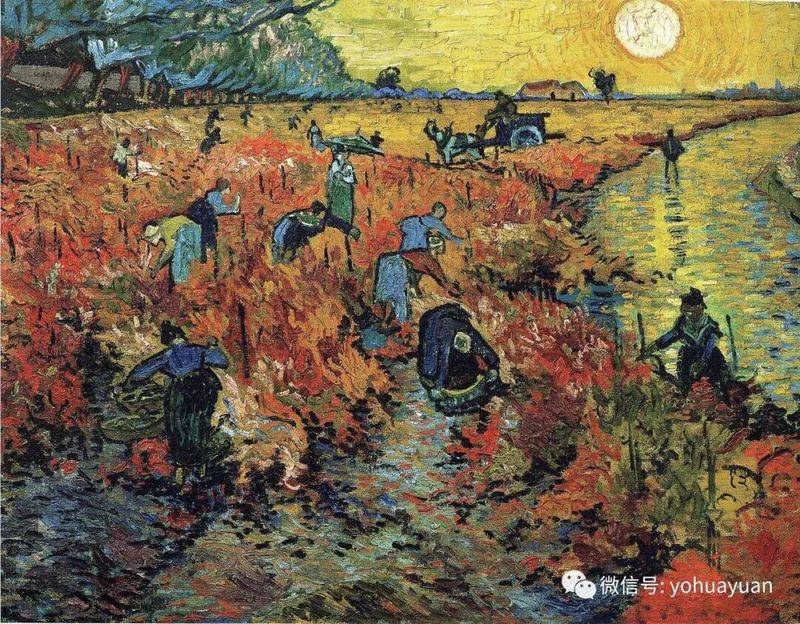
Van gogh's bold and cautious touch injects a strong energy into the picture。
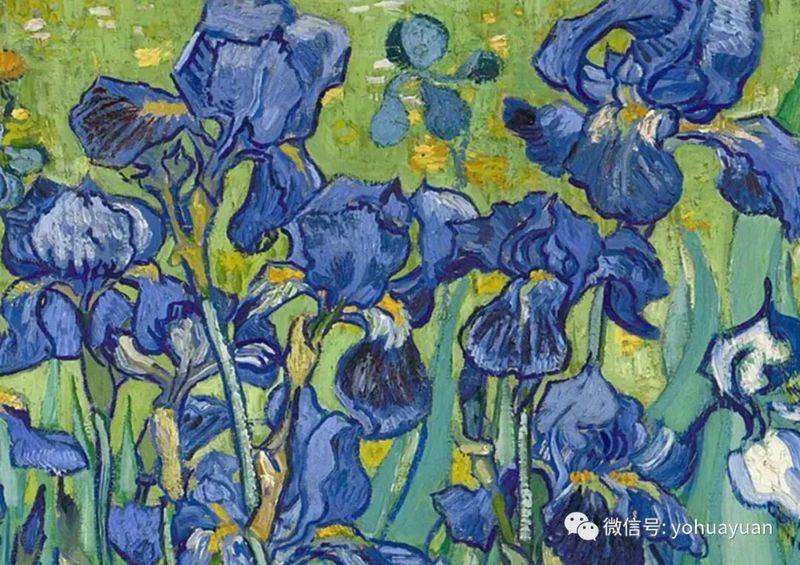
Watch how he paints according to nature's contours. Reconfirm a sense of form and inject a sense of motion. Especially the ground, full of life。