This paper summarizes the more common causes of leakage in mechanical seals. Mechanical sealing itself is a more demanding and sophisticated component with high design, mechanical processing and assembly quality requirements. When mechanical sealing is used, the factors for the use of mechanical sealing should be analysed so that the mechanical sealing applies to the technical requirements of the various pumps and to the requirements of the medium and adequate conditions of lubrication in order to ensure its reliable long-term operation。
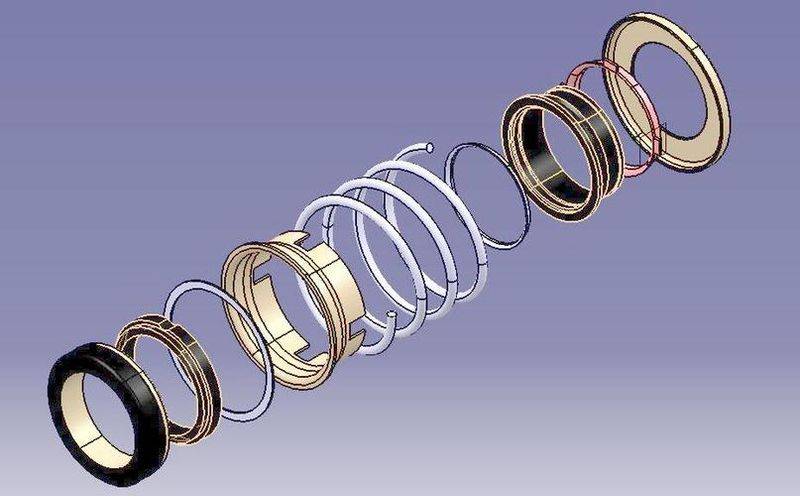
The mechanical seal is also called the end seal, with a pair of proteges. Directly to the end of the rotation axis, which, under the influence of fluid pressure and the repair of mechanical excretion, relies on a combination of auxiliary seals to maintain a tie to the other end and to move relatively smoothly, thereby preventing fluid leakage。
Common leakage
Mechanical seal leakage accounts for more than 50 per cent of all maintenance pumps, and the operation of mechanical seals directly affects the proper operation of pumps, as summarized below。
Periodic leakage
(1) the pump rotor axis is dynamic, the auxiliary seals and the axis are excessive and the motion rings cannot move flexibly on the axis. When the pump flips, moves, and the ring wears, it is not compensated for。
Response: when fitted with mechanical seals, the axle will move at less than 0. 1 mm, the auxiliary seal will have a moderate excess of the axle, and the moving ring will be able to move on the axle at the same time as it is guaranteed to be sealed。
(2) the lack of sufficient quantity of oil for the sealing surface causes dry friction or puffing on the sealed end。
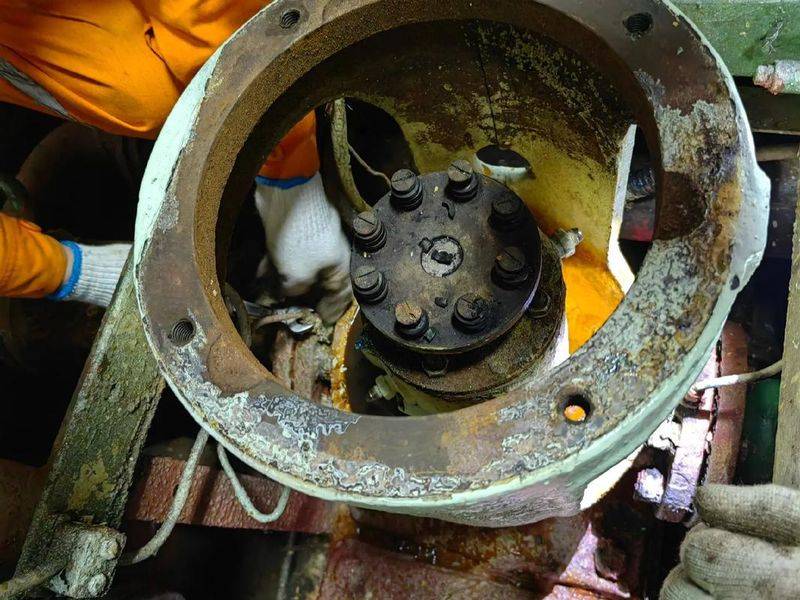
Response: the level of lubricating oil in the chamber cavity should be increased to the height of the motion, cylindrical seal。
(3) rotation cyclical vibration. This is due to the fact that the dots are not imbalanced with the upper and lower end of the caps to the medium or leaf wheels and main axes, and that the erosion or bearing damage ( wear and tear) may reduce the sealing life and create leakage。
Response: the above can be corrected in accordance with maintenance standards。
Abrasive phenomena caused by leakage of small submersible pumps
(1) the failure of the small pump seals below 715 kw often produces grinding axes, which are mainly located in the following locations: the area of the motion ring auxiliary seal, the position of the silent ring, and the presence of a few springs。
(2) the main reason for grinding the axes is the mechanical sealing of the double-end: 1 bia, which is in a bad working state, and which can easily be accessed by particles and impurities in the medium to render the seal ineffective. The main parts of the 2 grinding axes are rubber bellows, and there is a relative rotation due to the poor lubrication of the upper seal surface, the friction rectangular between the motion rings being greater than the passing rectangle between the rubber bellows and the axes. 3rd movement, silent ring auxiliary seals are no longer resilient due to the erosion of weak acid and weak alkalis in sewage. Some have rotted and lost their functions, resulting in the grinding of axes。
(3) in order to address the above, the following measures have been taken: 1 guarantees of the lower end of the cover, cleaning of the oil room and prohibition of assembly for unclean lubricants. The internal oil line in the 2-barrel chamber shall be higher than the motion ring seal. 3 envelopes with different structures are selected depending on the use medium. The convulsive structure should be re-engineered for the high range pumps, and fluorine-resistant acid and alkalis-resistant rubber should be selected for the corrosive medium. Seal rings should be protected against resale。
Leakage due to pressure
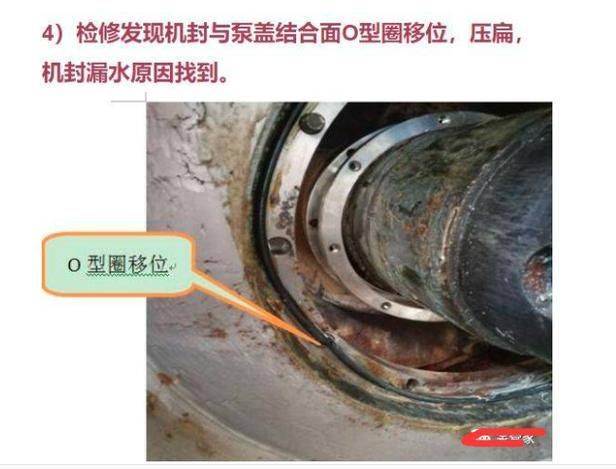
(1) a mechanical seal leak caused by high pressure and pressure waves, when the spring pressure is too large and the overall pressure is too large and the inner pressure of the sealed cavity exceeds 3 mpa, makes the sealed end more than the pressure, the liquid membrane is difficult to form, the sealed end is severely worn and heat is increased, resulting in thermal transformation of the sealed face。
Response: the spring compression must be carried out according to the rules when the packaging is installed and no large or too small is allowed, and measures should be taken for mechanical sealing under high pressure conditions. In order to rationalize end-side stress and minimize deformation, materials with high pressure resistance, such as rigid alloys, ceramics, and enhanced cooling and lubrication measures, may be used to select *map, such as keys, sales, etc。
(2) the mechanical seal leak pumps resulting from the operation of the vacuum state are likely to cause a negative pressure on the sealed cavity, which, in case of a negative pressure, causes dry friction on the side of the seal, leaks (water) on the inner mechanical seal, differences in the direction of the sealed object and adaptation of the mechanical seal to one of its directions, as a result of, inter alia, the pistonization of the pump imports and the presence of gases in the delivery media during the operation of the vacuum state。
Response: the introduction of a two-end mechanical seal has contributed to improved lubrication conditions and improved sealing performance。
Leakage due to media
(1) after the mechanical sealing of most sub-polluting pumps, the auxiliary seals of silent rings and motion rings are inelastic and some have been decomposed, resulting in massive leakage of the seals and even grinding axes. Mechanical leakage due to high temperatures, weak acids in sewage and the corrosive effect of weak alkalis on silent rings and motion ring-aided rubber seals has resulted in mechanical leakages of butylene-40, heat intolerant and acid-resistant materials, which are perishable when sewage is acid alkaline。
Response: for corrosive media, rubber elements should select fluorine rubber that is resistant to high temperature, weak acid and weak alkali。
(2) mechanical seal leakage caused by solid particulate impurities, if the solid particles enter the sealed end, will cause injury or accelerate the wear of the sealed end, and the water and oil contamination on the axle (set) surface will accumulate at a faster rate than the friction-side wear, resulting in a moving ring that cannot compensate for the run-off, and the hard-to-hard-to-hard-to-scripting side has a longer operational life than the hard-to-graphite graphite friction-to-scort。
Response: where solid particles are easily accessible, tungsten carbonated should be selected for mechanical sealing of tungsten carbonated frictions。
Leakage of mechanical seals due to other issues
There is also inadequate design, selection, installation etc. In the mechanical seal。
(1) the spring compression must be carried out in accordance with the rules, and no large or too small occurrence is permitted. 2 mm. Excessive compression increases the level of end-to-end pressure, excessive friction heat, resulting in thermal deformation of the sealed surface and wear of the acceleration-side, and excessive compression of small motion ring-to-end pressure is insufficient and cannot be sealed。
(2) the axle (or axle) end of a moving ring seal and the end of a seal (or shell) with a silent ring seal shall be rewinded and polished in order to avoid injury to the disabling ring。
Summary
These summarize the more common causes of leakage in mechanical seals. Mechanical sealing itself is a more demanding and sophisticated component with high design, mechanical processing and assembly quality requirements. When mechanical sealing is used, the factors for the use of mechanical sealing should be analysed so that the mechanical sealing applies to the technical requirements of the various pumps and to the requirements of the medium and adequate conditions of lubrication in order to ensure its reliable long-term operation。