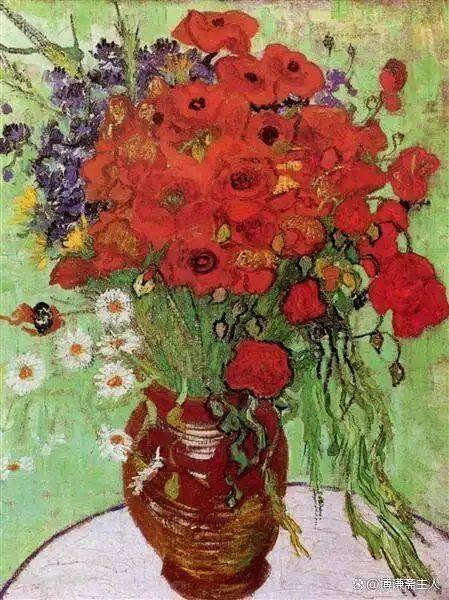
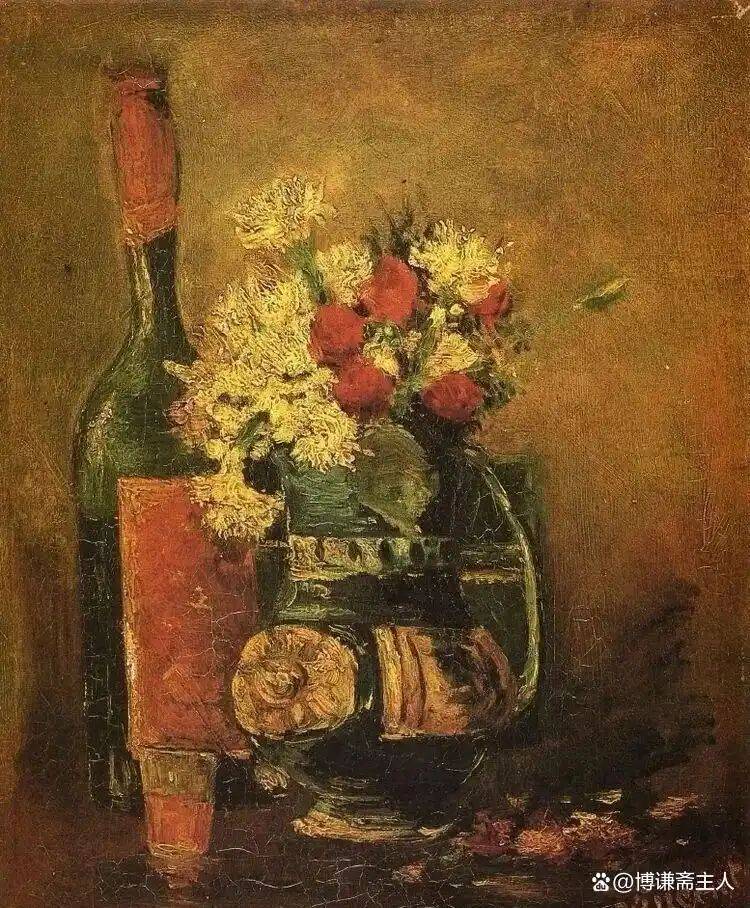
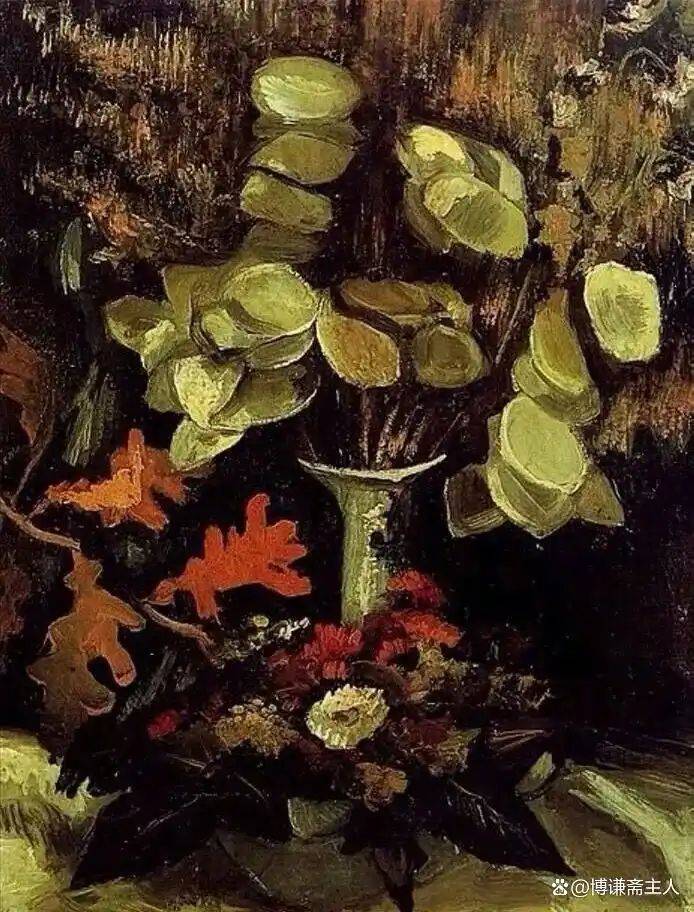
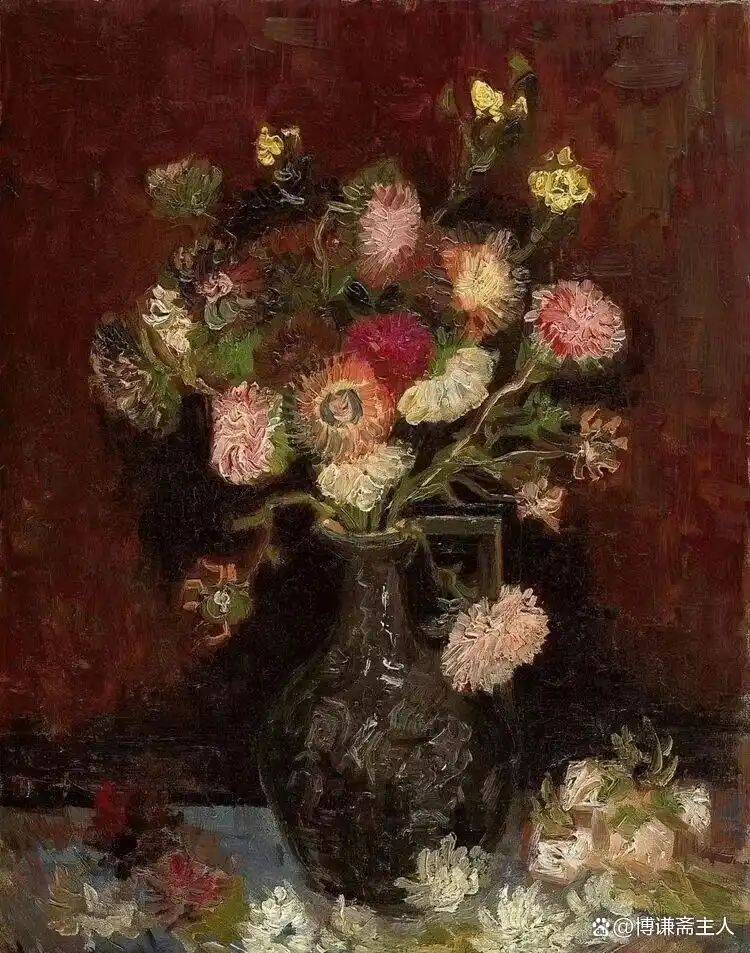
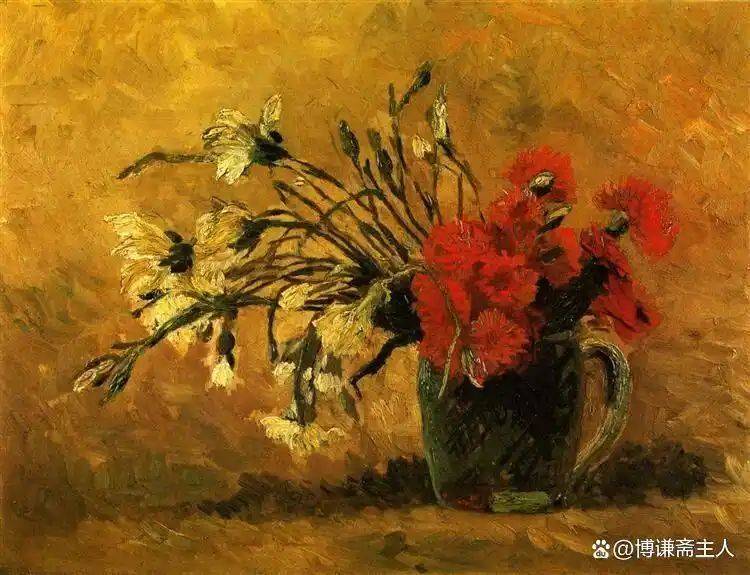
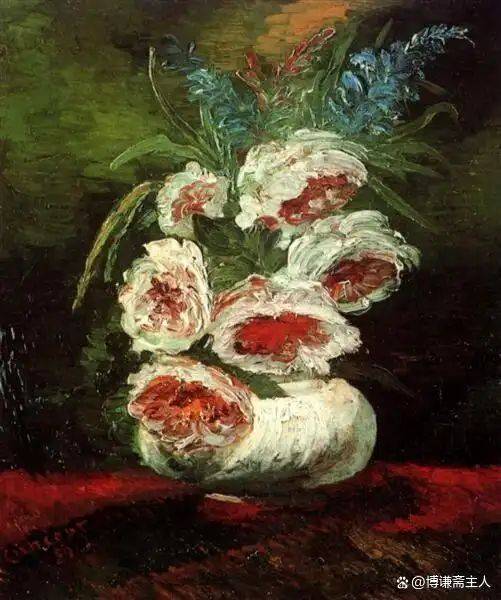
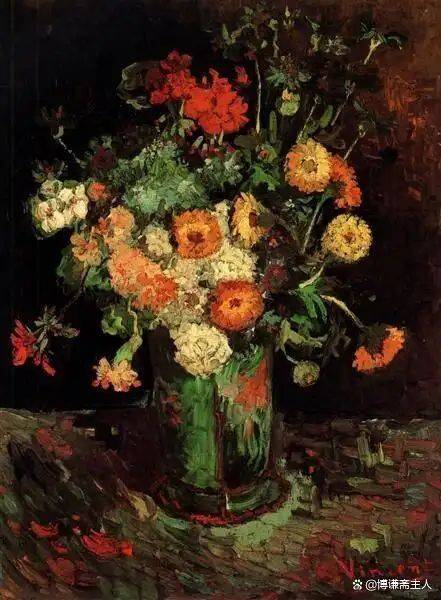
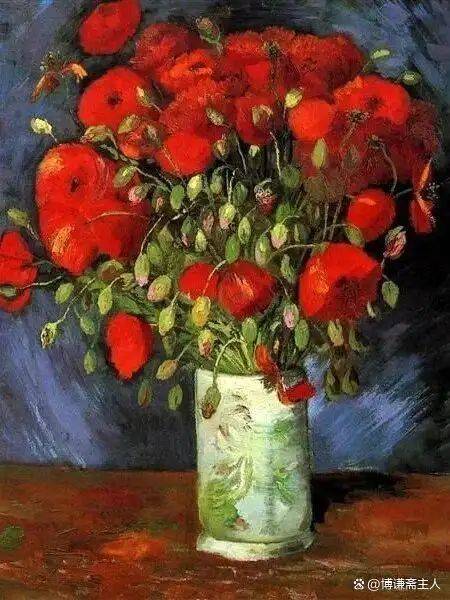
The reading of van gogh's flower works is undoubtedly one of the best ways to enter his world of zealous, ferocious and living art. These works are not only still drawings, but also the reflection of his soul, emotional excretion and the battlefield of artistic experiments. The following is a detailed reading of the artistic styles and features of its flowers:
The life and emotional projection
Van gogh's flowers are never a quiet, objective display. Whether the sunflowers are raging or the swirling acne, they give life to flourish, struggle, or even a little madness. He expresses his emotions through flowers: the yearning for life, the eulogy of the sun, the struggle in isolation, and the passion that cannot rest in the heart. Flowers are him, he is flowers。
Marked pen strokes and lines
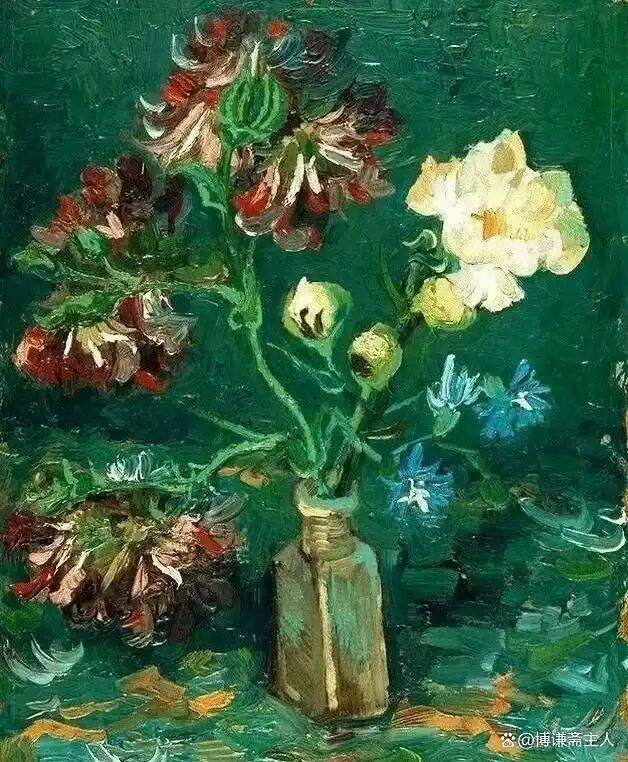
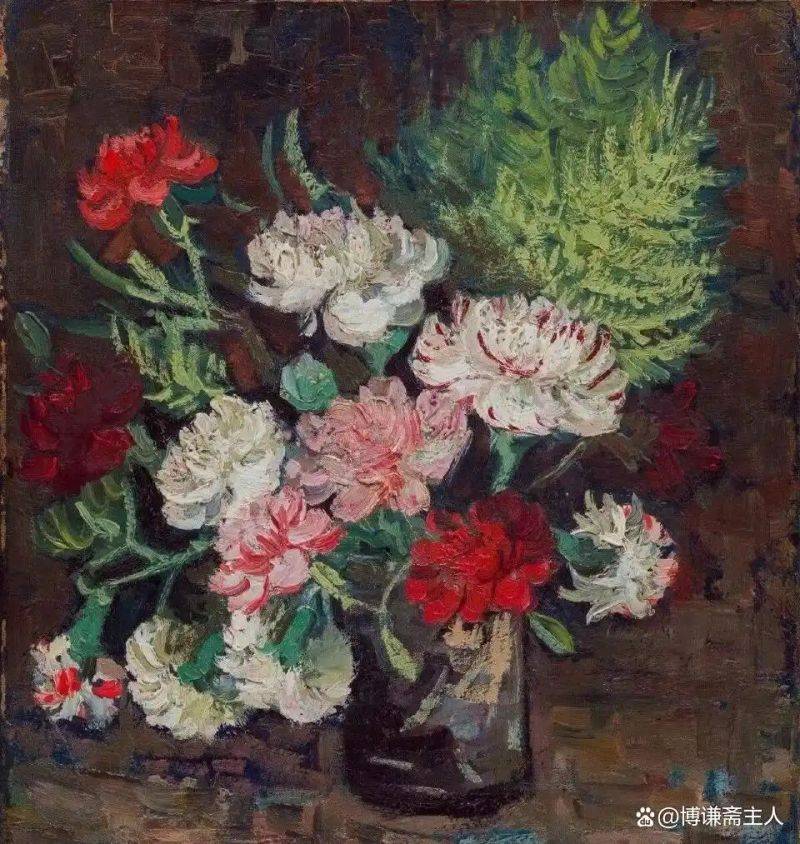
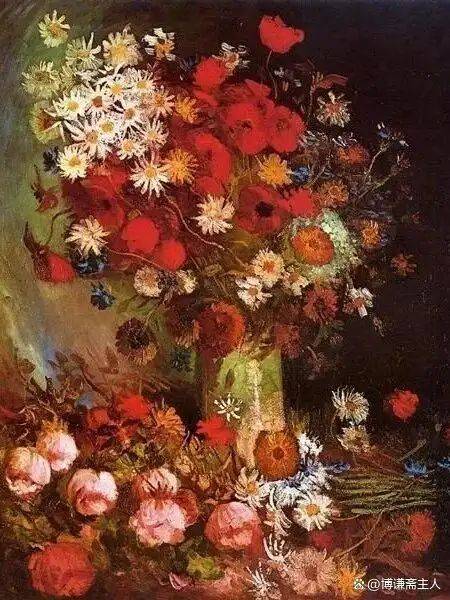
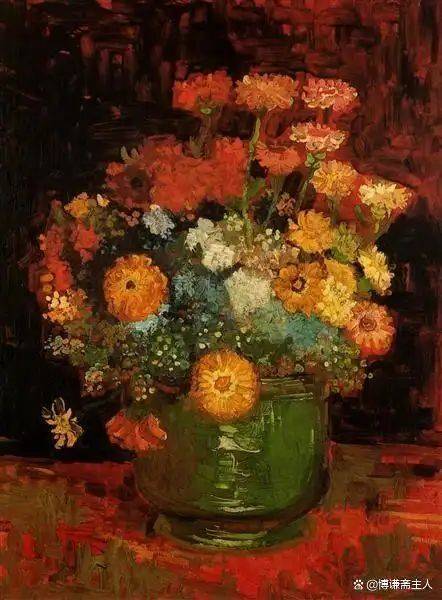
This is van gogh's most famous signature. He shapes shapes with thick, powerful, directed pens, and the background and leaves often spiral like flames, full of moving and energy。
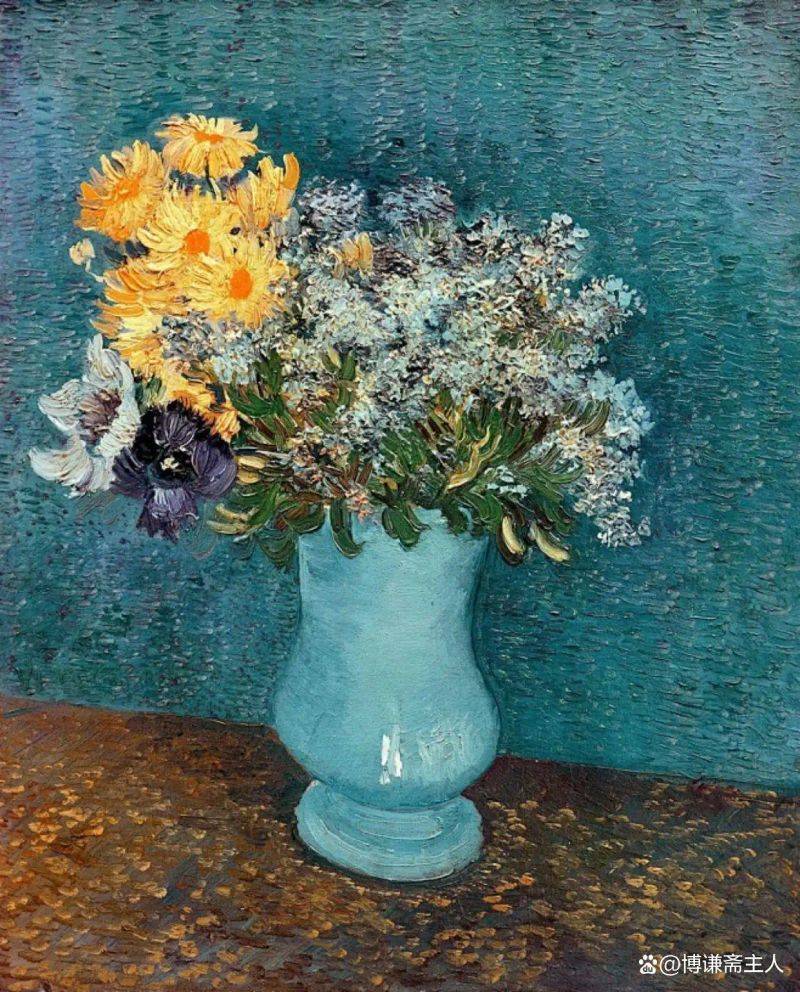
Colors and short lines are intensely organized: influenced by impressions and new impressions, he uses countless small, clear pens to mix colours in the eyes of viewers and to create a vibrating sense of light and air. This is particularly evident in the background and grasslands of the albula。
The contours are reinforced: he often uses dark colors (e. G. Blue, black) to outline flowers and branches, which both enhance the image's decorative sense and give the subject a strong profile from the background, with graphic power。
The revolutionary use of colour
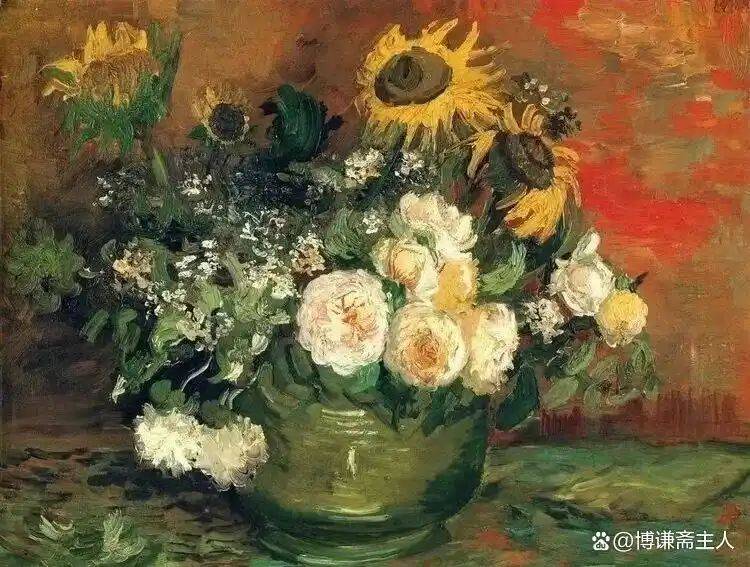
Van gogh abandoned the grey tone of traditional paintings and used the unreconciled pure colours extracted from paint pipes. Cobalt blues, chromium yellows, greens, reds ... These colours collide on their canvass and ring. He is familiar with the theory of complementarities and has the courage to apply it. The comparison of yellow to blue in sunflower, the comparison of blue to orange in arbortails, and the comparison of red to green in roses, are complementary and generate a strong visual tension that makes the picture bright and dynamic. Yellow was the colour of the sun, life and friendship for him (the arler period); blue symbolized depression, mystery and infiniteness (the st. Remy period). The color selection of the flowers is a direct reflection of his different stages。
It's a unique image and perspective: van gogh flattens the picture, reduces the depth of the three dimensions and makes it more modern and decorative. The vase, the desktop, the background wall forms a simple piece of colour。
Nearview close-up with the feeling of "foot-to-foot": flowers often occupy the centre of the picture, full of canvass, as if they were going to break through the picture and give the viewer a strong visual shock and insinuation. Van gogh learns the bold cutting, clear contours and peaceful colours of flowers, which are reflected in the design and application of flowers。
A representative image of a flower
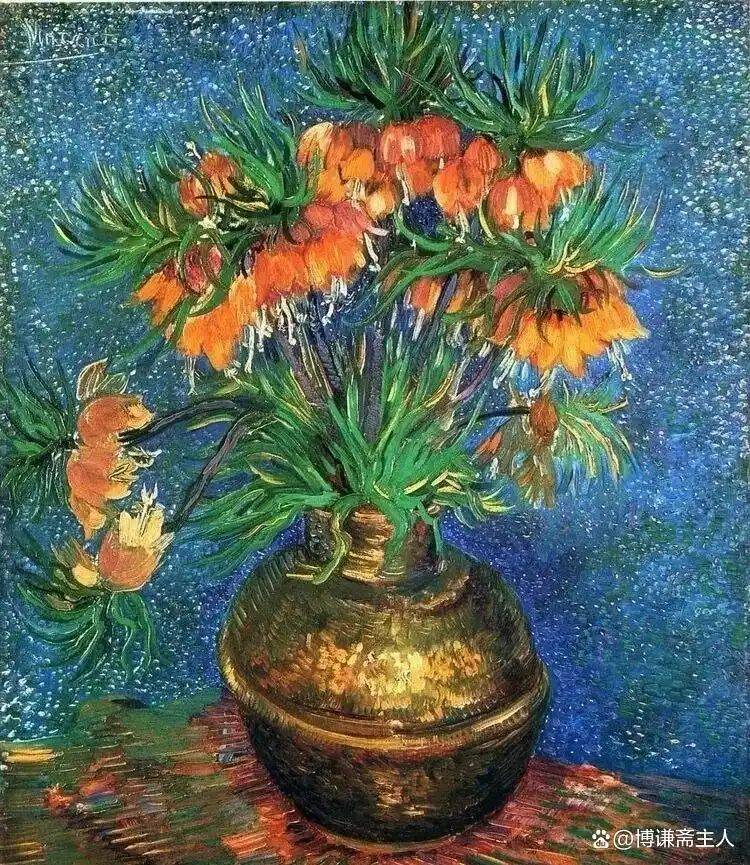
The theme of the monopoly series (1889, st. Remy period) is the obsession with natural vitality in loneliness and disease。
The strong blue purple tone contrasts dramatically with the background and the oranges of the land. The image is full of unsettling movements, and the pelican leaves are spinning like waves, while the flowers are moving in different directions, as if they were struggling in isolation and looking for direction. The white plume on the lower left corner is often interpreted as a picture of himself alone。
The subject of almonds (1890) is fresh, pure and quiet. It's for my brother, theo. It is a rare display of van gogh's inner peace and tenderness. In a clear blue context, the white and light apricot twigs are so beautifully stretching, the composition is clearly influenced by japanese paintings, the lines are clear, quiet and full of eastern rhymes. This is a tribute to hope and renewal at the end of his life。
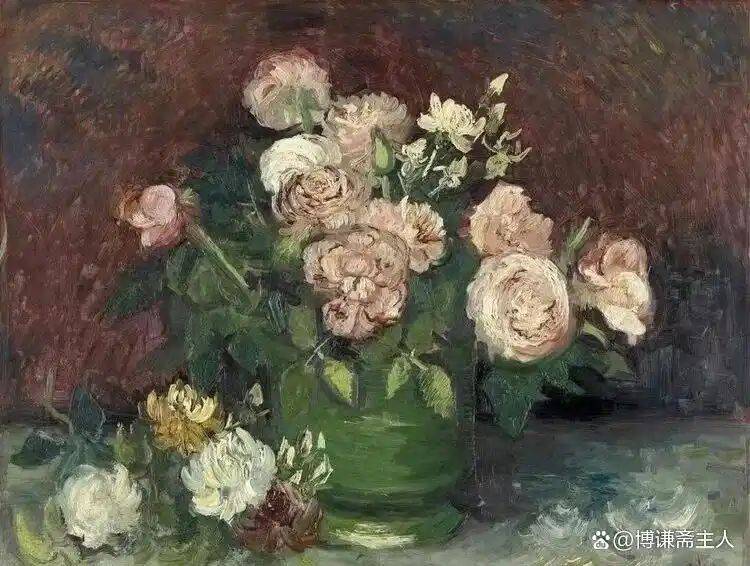
The theme of rose (1890) is the observation and comfort of nature in sanatoriums. The colour is relatively soft, but the touch is still alive. The green tone in the picture is rich and variable, in subtle contrast to pink, white flowers. He can be felt in relative calm, sensitive to plant patterns and colour relations。
Look at the essence of van gogh's art from the flowers
Van gogh's flower work perfectly condensed the core of his art:
It's more than a re-emergence, and van gogh's painting isn't a flower, it's a flower. In the midst of extreme mental suffering, these vibrant flowers are depicted as the way he confronts darkness and captures the light of life. Heavy paint, crazy brushes are in themselves a physical and emotional input, and drawing behaviour is as important as the final picture. Van gogh turned the worst and easiest part of nature — flowers — into eternal emotional symbols and colour monuments. Thus, to appreciate the flower of van gogh is not only to appreciate the beauty of the stillness, but also to witness how a lonely soul, with its most intense colours and brushes, calls out to the world his love for life. These flowers are forever blooming and are the most immortal symbol of life in the history of art。
The life force - the artistic style and character of van gogh: