Why do you say “enhanced” is the first line of defence against corruption
In the area of industrial preservation, there is a simple but often underestimated indicator: commitment。
Many people think that the key to corruption is “paint resistance to acid” “can it carry high temperatures”. While these are important, if the coating is “failed” and no chemical stability can be achieved — like a hardened armor, which, if it is not worn on its body, the enemy does not matter。
Investing is the “first line of defence” in the true sense of the system of preservation。
I. Ineffectiveness often begins with “detachment” rather than “corrosion”
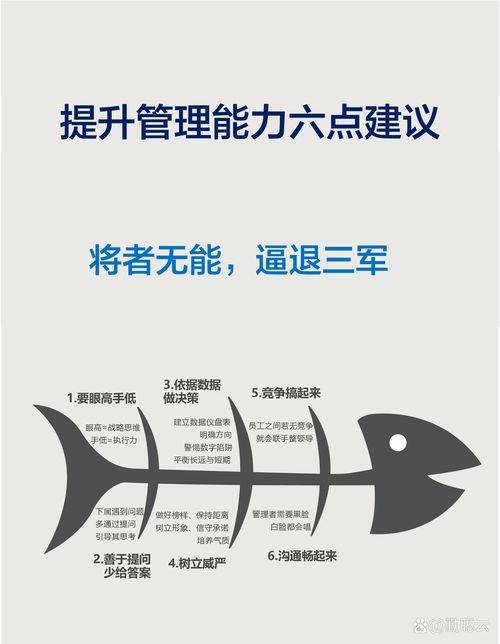
According to nace (international association of corrosion engineers (iace)), more than 60 per cent of the early failures of heavy anti-corrosive coatings were due to under-investment rather than to poor tolerance of the material itself。
Typical scenarios include:
The common denominator of these phenomena is that corrosiveness does not directly damage the coating, but is rather an intrusion from the cracks of “facility”. Once the interface is broken, the corrosive rate increases exponentially。
Ii. Focused “simplified”, instead of a system capacity
Many people mistook the idea of "can't get rid of your hands" as a favor. In fact, industrial-level investment needs to be quantified through standardized tests, most commonly through pull-off test, astm d4541:
To reach this level, it relies on three main elements of synergy:

Baseware treatment is in place (e. G., sand spray to sa2. 5, providing anchor threads); coatings are compatible with the base materials chemical/mechanical (e. G., epoxy base paint matches the polarity of carbon steel); and the construction environment is controlled (temperature, coating spacing, membrane thickness)。
Without any link, the effort would be much less。
Iii. A real lesson: save the spray and lose the whole can
A chemical plant was on schedule and the walls in the tanks were worn directly after they had been polished with electric tools only. The initial appearance was perfect, but after four months of operation, there was a large “fish eye” bubble at the bottom. The cut-off found that the coating was almost completely separated from the base material and that the rust was deep into the steel plate。
After-action: surface residual oxidation and salinity form a weak boundary layer, resulting in actual reinforcement of less than 1 mpa - far below the service requirement. The cost of the spray was saved and eventually replaced by a full tank shutdown + return to work, resulting in a loss of more than 10 times。
How can your project be judged as “enhanced or not”

You can ask yourself three questions: is the base material treated by a specialist spray or equivalent
Is the construction carried out according to the supporting system (bottom-central-side)
Did you do a spot test? (even if it's a scale of 1-2 points)
If the answer is “no”, the risk is buried regardless of how expensive the paint is。
Interactive time: did your project ever encounter a “scratch fall”