Some may already know why cement with water is hardened over time. Cement is mainly a mixture of compounds such as calcium silicate and aluminides, and when it comes to water, the small particles of cement are bound up with water molecules, and then they swell, and the gap between particles is reduced, over time, when the excess water between particles is evaporated and the particles become closer, and then the cement becomes hardened。
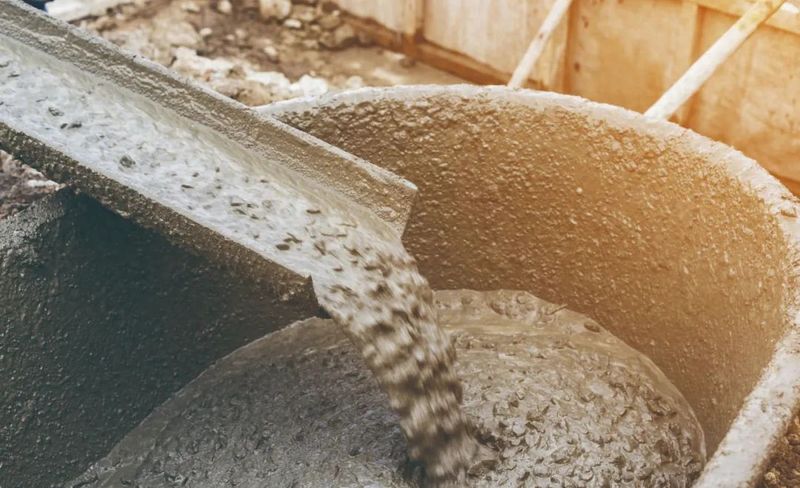
Paste cement gets hard in a while
However, scientists have recently found that there are deeper and more common reasons for the hardening of cement, the principles of which also apply to substances such as toothpaste, paint and clay。
The principle of a close connection between particles
Researchers from the united states and france, working together in experiments, found that the hardness of materials such as cement, toothpaste and silicon dioxide increased as a result of their contact and “connection” between their particles, thereby stabilizing the microstructure of the substance. But why are these particles connected?
The researchers found that the control of particle exposure occurred because the particles were carrying ions. The particles with the ion will carry a positive or negative charge, and the particles will then attract and connect to each other, based on the principle that “the particles with the opposite charge will attract each other”, while forming a stable microstructure。
Today, we know the reason for the hardening of substances such as cement and toothpaste. It's just that this theory seems a little simple, and why do scientists spend so much energy exploring it, and they know what's going on behind things like cement and toothpaste?

American professor eric foster, studying why paste material has become hard
Applying this doctrine to solve practical problems
Scientists can use the principle of close interconnection of particles to predict material performance. For material substances such as cement, we would like to know how hard they are; for substances such as paint and toothpaste, we would like to know how long before they become completely hard (the hard paint will fall off and the hard toothpaste will become difficult to use). However, for a variety of reasons, we are not in a position to make an accurate prediction of these situations. Therefore, scientists intend to use this principle to create a model to help people better predict changes in materials。
In addition, scientists may add certain chemical substances to material substances to prevent their hardening and performance. In fact, people have already done it without realizing it. For example, manufacturers add wetter to toothpaste, where molecules prevent contact between toothpaste particles, thus preventing toothpaste from hardening. However, scientists intend to apply this principle to a wider range of materials, such as toothpaste, ink and paint, in order to improve their overall performance and to make what is produced from these materials more viable。