The tile is good or the cement is good? Don't wait till the tile falls. The insiders tell the truth
In the case of renovations, many people will not go through it more than a few times in their lives, and because they do not understand it, they often suffer in detail。
For example, when you used to build a house, there was no tile glue. Isn't it all cement sand and water? I haven't seen it fall in decades. But now you're going to go around the market, the seller and the master, and you're being persuaded to use the tiles and the cement is out of date。
At this point, you may have a murmur: is this the way businesses make money, or is it really technological innovation? Where's the tile glue? Is it worth it
Today we're going to have to figure out who's carrying the tiles。
I. “cement is cheap and old: it can't, it's tiles have changed
First of all, we need to figure out how concrete sand is holding the brick. Traditional cement bricks rely on a principle of “eat in”. When the concrete sand is mixed, the water penetrates into the holes of the bricks and the holes of the wall, and when the cement is solidified, it creates a mechanical force to bite and grab the bricks。
The principle itself is not a problem, but the tiles have changed。
What were the tiles? It's clay bricks, with high water intake, rough backs, half full with a bubble of water, and the cement is plastered to death. So it was cheap and cheap to use cement。
But what about the tiles now? As the process progresses, the market is dominated by the production of the bricks, the whole tiles, the large rock sheet. These bricks are extremely hard and dense, with very low water intake (some even below 0. 5 per cent). Think about it, the bricks themselves don't drink water, and the concrete slurry principle of "capturing the bricks by permeating" doesn't work. Even if it's barely pasted, as the heat swells and freezes, the cement shrinkage rate is high, and it won't be long before empty drums and drops become inevitable。
It's like putting concrete on a new brick, trying to stick glue to a smooth glass, looking at it and blowing off the wind。
“decreasing impact” of tile: glued black technology
So what's tile glue? When many people hear the word "glue" in their names, the first reaction is, "is this formaldehyde going to be superb?" it's actually a big misunderstanding。
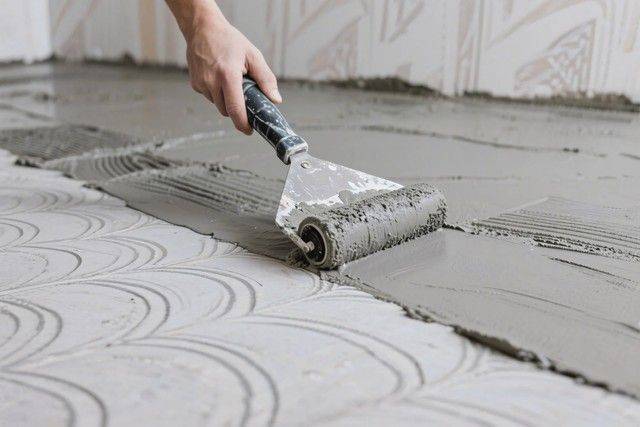
The essence of the tile is actually a “enhanced version” of cement or a “precision version”. Its main components are cement, quartz sand, but on this basis, additives such as high molecular polymers, cellulose ethers, etc., were added that doubled its performance。
It's just the same as flour, and you can only make pasta, with improved and purified pasta, and it's much stronger and more resistant to cooking. The advantage of tile is crushing:
Glue strength: 3-4 times the size of cement
Don't listen to people. Watch the data. High-quality tile glue bonding can reach 1. 0-1. 5 mpa, while the national standard requires only 0. 5 mpa and ordinary cement sand cannot reach this data. For those who “drink no water”, the tile glue is based on the dual effects of chemical adsorption and physical penetration, with the dead biting of the brick. Experiments have shown that after 48 hours of bubble water, the viscosity of the tile has decreased very little, and cement sand has long been “unbreakable”。
Low thickness, space saving, anti-aircraft drums
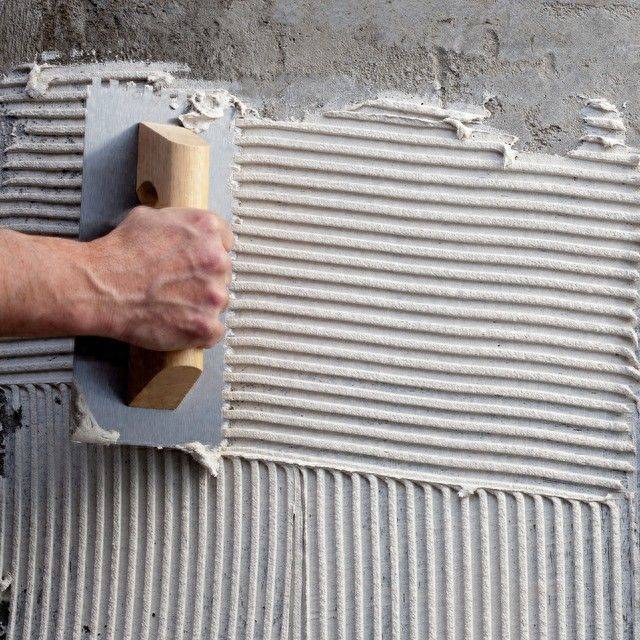
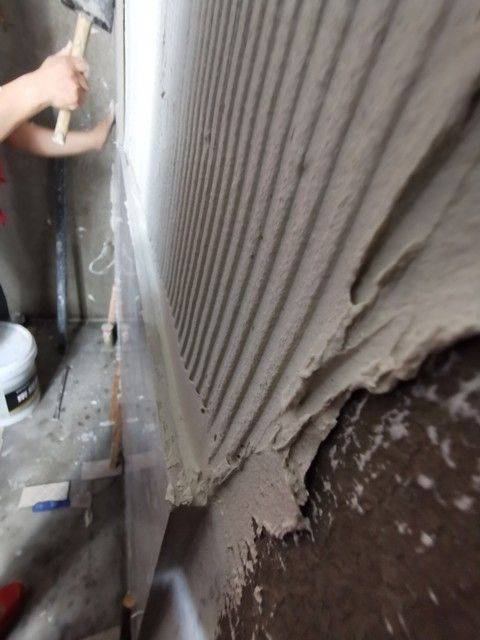
Traditional cement slurry, in order to ensure adhesive strength, must be thickened and usually thicker than 15 mm. The construction of tiles is based on a thin paste, which requires only a three-to-five-millimeter cortex at the base. This not only increases the physical space for indoor use, but more importantly, because the materials are thin and even, the contraction rate is extremely low, and the potential for empty drums is completely eliminated。
3. Double construction efficiency
Cement with bricks is a cumbersome step: bricks must be built early, walls must be wet, scenes must be mixed, dust must be thick, and masters must spend less than a square metre a day. Use tiles, i. E. Open, without bricks, with no water on the wall, with a sharp shaving and a three to fourfold increase in performance. How expensive is it now? The saved hours of work with tiles actually offset some of the material costs。
“accounting” behind the price: don't just look at it
Of course, one can't get around is money。
Indeed, tile glue is much more expensive than cement, depending on the unit price of the material. One bag of ordinary cement would be twenty-thousand, and a better bag of tiles might be 50-60 or hundreds。
However, a “sumbook” is calculated by the insiders:
• volume billing: cement slurry thicker with plenty of material; tile sheeting with little material. The cost of materials using tiles on a 100 m2 wall is in fact only slightly higher than that of cement, even even in some areas。
• maintenance: that's the point! Cement with bricks is extremely risky to fall after a few years. How much is it now? What if, one day in the shower, the tile in the bathroom is “blowed down” and the toilet is broken? The back-to-back labour fee plus the material fee plus the removal fee is enough to buy tile glue for decades。
• space bill: does it not smell good for a small household to save a few centimetres of thickness
Iv. Final recommendations: what are the options
Since it's so good, do all the bricks in the house need expensive tile? Not necessarily. As a practical practitioner, i would like to offer you a few concrete suggestions:
1. Watch the bricks:
• small-specified wall bricks/ china (high water intake): if you buy cheap piece of china (black bricks), you can use it on the kitchen wall, with limited budget, either by cement sand or cement sand + tiles to enhance and reduce costs。
• large-sized bricks/boulders/rocks (low water intake): tiles must be put on! If you use more than 600 x 1200 earth bricks in your home on the wall, or now popular rockboards, never use cement, that's for yourself. It is important to buy the corresponding levels of tile (e. G. C2, c2ts)。
2. Regional selection:
• bathrooms/kitchens (wet, high temperature differential): strong recommendation of tile. Because it is more waterproof, more resilient and resistant to the heat swelling and constricting。
• living room bricks: if just ordinary floor bricks are placed on cement for floors, the dry-painted (dry hard cement sand) is actually expensive and does not necessarily involve tiles。
3. Catalysing guide:
Don't put cement in tiles! Many masters, for reasons of economy or habit, put cement and sand in tiles. It's a big mistake. It destroys the polymer formula that the manufacturer already has. It significantly reduces the glue intensity. It costs money to do bad things。
At the end:
The renovation was not intended to save money, but to buy the longest peace within a limited budget. Cement slurry is like a functional cell phone, and solid leather can smash walnuts, but in the 5g era, it does not keep up。
It's a bit more expensive, but it's a lot of money. This bill, do you think it'll work
Have you ever had any trouble with the tiles falling out while you're redecorating? Or do you have any questions about using tiles? Welcome to the comment section