With the rapid growth of our economy and society
More and more young men march into the city
In rural areas, a special group of minors has been created
Children left behind
To this end, the joint district prosecution office of the district women's union
Special introduction of the "live love" home education guide for children
Full mentoring of all remaining child parents throughout the county
Together, help the child grow healthy
Seventh
Current coverage (primary)
Kids steal. What do we do

Current period
Contents
Kids steal. What do we do
Cases
Kobayashi went to fourth grade, where he had good grades and a lively character and liked to date his classmates. One day, at sports, the classmates went to the playground and only kobayashi stayed in the classroom for stomach pains。
After the class, the students returned to the classroom, and several of them found their skins missing. In science classes, students found that kobayashi had several more silks, but he did not admit that he had stolen from others and lied to his classmates。
Later, under the guidance of the classroom director, he admitted that he had stolen silks from his classmates in sports class. At the same time, he admitted that he had stolen books from the classroom bookstores, schoolboys' worksheets for schoolboys' stationery teachers, etc。

Analysis
Students inevitably make mistakes as they grow up, which are closely related to their normal behaviour. Such theft is more common among primary school students. Students make mistakes and education is the key. This theft, which is similar to that of kobayashi, is largely attributable to:

1. Strong possessiveness
Baby and child want to take what they like
The behaviour of the same is increasingly constrained and educated. This is likely to be reinforced by the fact that children, from an early age, have a bad habit of taking things away from others and that parents fail to stop and educate in a timely manner so that children are not aware that this is the wrong behaviour. The child's desire for possession is growing and can only be satisfied by stealing from others。
2. Be motivated by curiosity
Children in primary schools have a strong sense of curiosity, which, in addition to directing them to explore, forces them to do things they should not have done. If these lines..
Without an effective stop, they would be exposed to psychological development, which would be fun and would not be blamed until it was too late。
3. Driven by vanity
Under the influence of a negative social climate, primary school pupils are often disproportionately compared with each other in terms of clothing, supplies, etc. In contrast, some children with less economic means have feelings of envy and jealousy in their hearts, seeking ways to upgrade their clothes and objects, and stealing is often the fastest and simplest way to achieve their goals。
4. Repressing negative emotions
Some primary school students are deliberately responsible for stealing and express their dissatisfaction with their classmates or others by sneaking out their negative emotions or releasing pressure。
To avoid child theft, parents can do this:
Earning attention to “first time” education
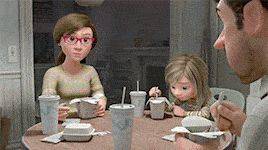
For whatever purpose, the theft of the child takes place, and parents are expected to devote sufficient attention to rigorous criticism and patient persuasion of the child. Making children aware that their behaviour was wrong and undesirable must be addressed。
If corrected in a timely manner, teachers, classmates and family members would also enjoy and trust him, and if not corrected in a timely manner, many friends would be lost and severely punished. Parents must be careful to protect their self-esteem, and they must not punish their children in such a way that they are aware of the gravity of the problem and that they feel the care and expectations of their parents。
2. Affordability
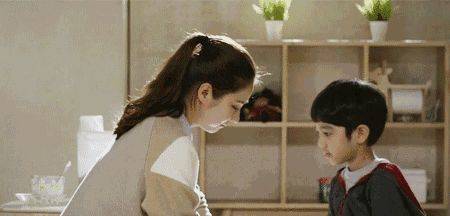
In the face of the theft of a child, there can be no one-size-fits-all harsh punishment or simple teaching. When a child steals, parents or temporary guardians should use it in combination, i. E., with severe punishment and patient education, so that the child can understand that no one has access to all that he or she wants, which can only be satisfied proportionately; that no one can illegally take possession of another's things and steals at a heavy cost; and that theft can have a bad effect on others and themselves and learn to do so。
3. Incentives and penalties
Psychological research has shown that direct reward or punishment for an act is an effective method of behavioural correction. In the case of children who have committed multiple thefts, parents may, on the basis of their education, enter into an agreement with the child, and if the theft does not occur within a certain period of time, they may receive a moral and material incentive to remain safe from theft。
When the child has committed another act of theft for a certain period of time, the parents shall give moral condemnation and material and operational restrictions aimed at discouraging the act of theft. The punishment of the child must be proportionate, and the temporary guardian must prevent, for example, the child's favouring or verbal abuse, resulting in the non-implementation of incentives and penalties。

4. Guide children to self-management
The parents of the children left behind first to help the children understand the motive for the theft and the unmet needs, second to help the children find the situation that most easily leads to the theft, and lastly to help the children find ways to overcome it。
The child is taught to change his or her theft by self-censorship, or by actively asking teachers and classmates to constantly remind him or her to report to temporary guardians, etc。