Condensation process for coal washing wastewater
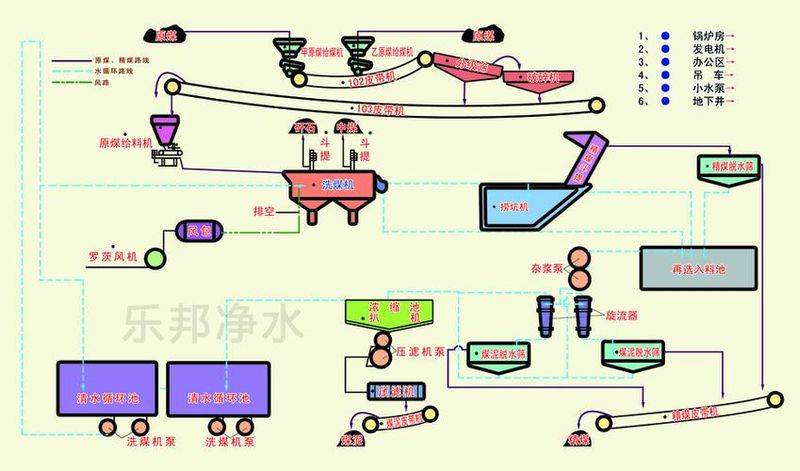
Coal-washing wastewater is a multi-system combination of primary, secondary and water. Coal-washing wastewater contains particles of coal mud (0. 5-1 mm for coarse mud, 0-5 mm for fine coal), minerals, clay particles, etc. Coal-washing wastewater is generally characterized by high concentrations of ss, codcr, bod5 and extremely negative levels of gills, so that coal mud water is not only of a slurry nature, but also tends to have adhesive properties; fine coal-slurry particles, clay particles, etc., are very small and unsettling, and these properties contribute to the heavy pollution and difficulty of treatment of this type of wastewater。
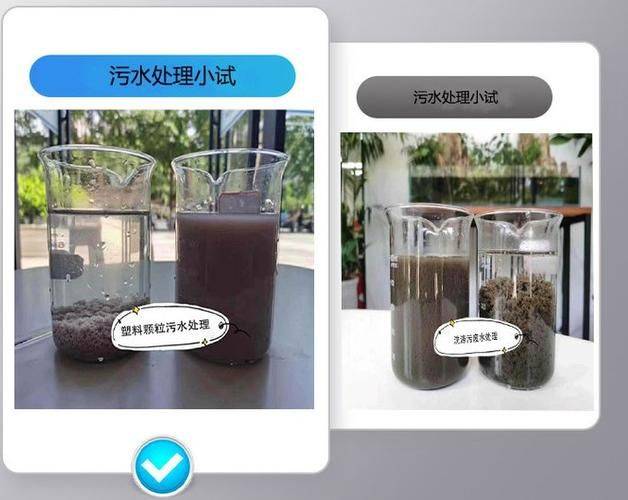
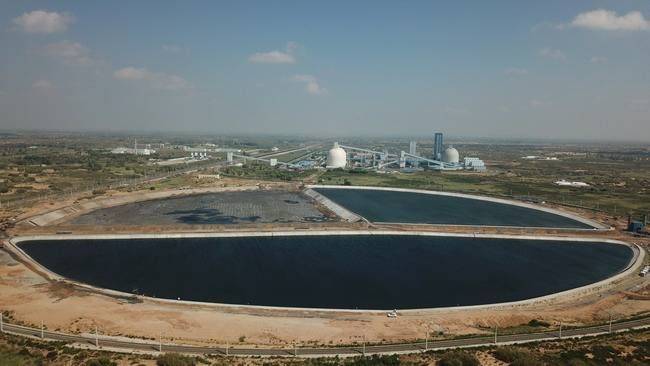
In the past, coal-selecting plants used coal sludge to discharge directly into coal-silver sedimentation ponds to clarify water recycling or excavation. Coal mud particles and clay particles in coal-washed wastewater are difficult to sink, and they are being refined during the cycle, resulting in higher concentrations of circulatory water ss, affecting and even disrupting the coal selection process. At that point, a portion of the high concentration of coal waste water had to be washed or diluted with a large amount of clean water, resulting in an imbalance in water washing and the failure to achieve a closed cycle of water washing, resulting in environmental pollution and loss of coal sludge and waste of resources。
Condensation machines and water quality in raw water
Condensed condensed as a new type of water treatment technology, mainly by increasing the density of the condensed body to achieve high-speed separation of solid fluids. The condensation process is a water treatment technique based on condensation dynamics, which aims at the efficient removal of suspensions by controlling physical and chemical conditions and power balancing conditions that allow the formation of well-structured conglomerates (pelletfloc) in coal-washed wastewater either in experimental devices or in actual process equipment. This process saves pre-treatment structures, treats the quality of the water that meets the requirements for clarification, has a short water retention period, has a high surface load and is well treated。
The experimental water sample uses coal powder from a coal-fired bridge power plant that falls on the surface of the corridor, sifted, taking fine coal grains below 400 m, fully impregnated with piped water at 10 g/l, ph 8. 86 for coal-washed wastewater, 32. 8 mv for a ph level, small size of coal mud particles (52% of coal powder below 30 m) and high inorganic carbon content (90% of total carbon)。
Experimental results and analysis
The conjunction process has two control processes: the ideal initial particle formation phase, and the group formation phase, each controlled by physico-chemical and kinetic conditions. The best conditions for condensation occur in the experiment by controlling the input of pac, pam, as well as the flow rate uw and the mixing rate n。
0264. Coal-coated condensation process for the treatment of coal-washed wastewater. Doc load
The site www. 99jianzhu. Com provides extensive information on building drawings, construction programmes, engineering books, construction papers, contract forms, standard codes, cad drawings, etc。