When google over 60% of the search is taken over directly by ai, when the key words that have worked hard to optimize to the front page are "jumping" by ai overview, countless independent station operators are all in the same anxiety: are the long blogs written late in the night, the long endings of the fine layout, and the continuous seo workflows useless
In fact, the bottom logic of the search industry has long changed from google gemini's ai summary answer to chatgpt, perplexity, bing copilot's global ai search layout. But this is not the end point of the independent station seo, but the starting point of the generation engine optimization -- ai is not replacing quality content, but re-screening quality content, and the change is an excellent opportunity for small and medium-sized independent stations to cross the curve。
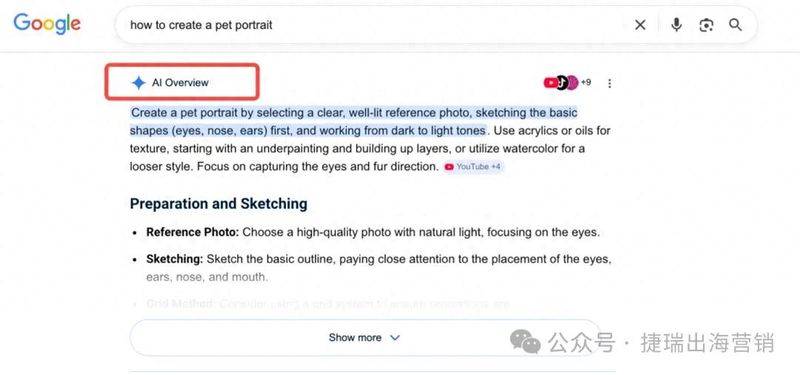
Most of those who are independent seos have had the same experience: insisting on daily blogs, deep tillage of pinterest distribution, weekly output of seo data, completion of product page seo optimization, watching keywords climb on google's first page, natural flows are steadily rising, and everything is moving in the right direction. But a daily search reveals that under the front-line keyword, google combines core information with ai, gives a complete answer, the user does not even have the desire to click down, and the hard-earned ranking becomes "set."。
This is not an example, but an industry trend of scale. By 2026, google super 60% of searches had triggered various ai answers, no longer the traditional ten blue links; in 2025, the number of website traffic generated by the ai search tool increased by 527% over the same time, and behind the speed was a sign that it was about to become the mainstream source of flows; and, more importantly, 58% of users had become accustomed to completing their products through the ai tool, finding that they were no longer limited to google search boxes, but rather directly asking for product recommendations in chatgpt, perplexity, where the brand name and link in ai's response became more valuable exposure than the front page - the "official endorsement" of ai and the entry point of the new era。

But there is no need to be deterred by a “60%” number, and ai overview does not cover all searches without distinction, and its trigger rate is strongly related to the user's search intent. This is confirmed by ahrefs' analysis of the 140 million google search results: information type search trigger 21. 4 per cent, business research 4. 3 per cent, transaction category only 2. 1 per cent, and navigation class as low as 0. 9 per cent. In short, the closer the user comes to “the next order of purchase”, the less ai intervenes, the more the stand-alone product pages are temporarily in the safe zone, and the content of blogs that aim at long lines of information, business research, becomes an area of focus for ai “takeover”, particularly for research-type keywords such as “best + product class”, with ai overview having a trigger of 83 per cent, an exponential increase from 5 per cent a year ago。
This is the core pain of the independent station seo: we've been pulling tails from blogs, and this is the type of content that ai's favorite covers. But the concept of geo, introduced by princeton university in 2024, gives us a direction to screw up -- geo is not a replacement for seo, but rather a super-up upgrade of seo, the core of which is to make it easier for content to be identified, quoted and displayed by the ai search engine。
Google's ai overview uses query fan-out technology to dismantle user searches to multiple sub-searches, and to integrate answers once you retrieve the entire web content. This means that the traditional seo decides whether your content can be “see” by ai, and the geo decides whether ai will “check and quote” when it sees. Without a solid traditional seo basis, content cannot be crawled and indexed by google, and geo cannot talk about it; good geo can maximize the flow of indexed content in the ai era。
More noteworthy is the fact that geo has an anti-intuitive character: it is particularly effective for a website with a low-ranked ranking, with a maximum of 115 per cent of visibility, while the traditional ranking is of limited benefit to large stations. The reason for this is simple: in traditional seos, large brands form barriers to outside chains, domain names authority, and new stations are difficult to counter; however, ai, when selecting sources of reference, does not look at domain names, but only the quality, information density and usefulness of the content itself, which allows small and medium independent stations to reverse traffic with quality content。

So, what does ai prefer to quote? Google's official statement that “doing a tradition seo is good without any need for additional optimization” is not a false statement - geo does not have new technical labels and protocol requirements, but its definition of “good content” is more precise and stringent than traditional seo. Both industry studies and the geo paper from princeton university point out that these core features are present in the content quoted by ai hf: 50 per cent of the release time does not exceed 13 weeks, and ai has a clear preference for fresh content; the first 40-60 words directly answer the core issues so that ai can quickly extract key information; each 150-200 words contains a specific data / statistics to enhance persuasiveness with hard-core information; authoritative sources are quoted, paragraphs are self-contained, and information density is high so that content can be quoted directly; and, at the same time, the traditional seo techniques embedded in key words are completely ineffective, and ai understands content by semantics and information quality, rather than the number of keywords appear。
On the basis of these characteristics, we can sum up the idea of a suitable geo content creation method, which is not a subversion of the traditional seo, but a refinement of its foundations, each of which can go directly:
1. Opening the core and rejecting invalid mattresses
The "scene start" of traditional blogs is no longer applicable in the geo era, and ai is not patient in reading the texture. Instead of writing, “a good backpack is essential in outdoor exercise”, it goes straight to the core issue of “using 1,000 d cordura niron material, supporting a 50-kg-weight, foot-appropriate, camping, etc.”, and the first 60 words go straight to the user, “how does the product fit for whom”, allowing ai to capture the value information at once。
2. Reinforcement of data density and substitution of generic description with precision
Ai has a natural preference for specific data, professional terminology, as such content makes the resulting answers more convincing. "producer durability, waterproofness" is an invalid formulation, and "through 100,000 zipping tests, ipx6 waterproofing certification, 30 minutes of continuous water shampoo" can be directly quoted by ai; "high-quality fabric" is not as good as "asm d6770 standard level 4 grinding fabric”, precise professional presentation and hard nuclear data are key to raising the probability of content being quoted。
3. Creation of separate paragraphs to enable re-use of content
Ai often extracts only 1-2 paragraphs when referring to content, and if paragraphs depend on context to understand them, they are simply abandoned. In traditional writings, the expression “as described above” “as compared to the previous product” is reduced in geo. Each paragraph would become a “stand-alone business card” and would be able to express a view in its entirety, such as a paragraph explaining the function of the product, which would be extracted separately to clearly describe functions, advantages, use scenes and allow ai to quote without additional interpretation。
4. Binding authoritative sources and conveying endorsements of trust
Trust can be passed on, and ai prefers to quote something with an authoritative endorsement. The authority here includes not only industry standards, professional bodies, but also well-known media evaluations, professional assessments and real user reputations. For example, the gearjunkie rating as the top 10 edc backpacks in 2026, "the top three of the top three of the top-heavy q1 rating data according to skycat outdoors, 2026" is much better than "the top-heavy consumer rating" and authoritative sources can double the credibility of the content and make ai more willing to choose your content as a reference。
5. Layout structured data to give ai clear semantic signals
The json-ld schema tag (product schema, faq schema, howto schema) is a “navigation guide” for ai to quickly understand content structure and core information. Of these, faq schema is a top priority, and ai particularly likes to extract answers from a question-and-answer text. Independent sites can set up high-frequency questions for users in blogs, product pages, and present them in a standardized faq structure that both enhances user experience and increases significantly the probability of being quoted by ai。
6. Keeping the content fresh and establishing a regular updating mechanism
Fifty percent of the content quoted by ai is published for no more than 13 weeks, which means that the age of "one creation, lifetime use" is over. Updates to product parameters, changes in industry data and adjustments to recommended lists need to be reflected in the content in a timely manner, along with a page at the end of the update, giving ai the signal of “continuous maintenance of content and timeliness”. New content is not only much preferred by ai, but also stable in traditional seos。
These requirements may seem cumbersome and one-on-one creation can be balanced, but when the amount of content reaches dozens or hundreds, they can easily be omitted. At the heart of this problem is the placement of geo standards into automated workflows to allow machines to complete standardized audits and free manual energy。
For example, a blog-generated workflow can be created with tools such as n8n, with a new geo-specific check item based on the traditional seo quality review: whether the first 60 words directly answer questions, whether data density is met, whether the paragraphs are independent, whether they contain authoritative sources, whether the faq structure is complete, set 7-point grid lines, if not the standard is automatically recreated and the last round of feedback is injected into the new pRumpt, allow aai precision optimization; at the same time, add steps for auto-injecting json-ld structured data to the workflow, which are created by the blogposting schema and faqpage schema keys, without manual manipulation。
The product page seo text could also follow this line of thought, with key word matching in the original workflow, diversity rotation mechanisms, which are highly compatible with the geo requirement for “specific parameters, professional terms, independent expression”, with only a slight optimization, allowing the product page content to fit both traditional searches and quick identification references by ai。
The maintenance of fresh content can be combined with existing seo weekly work streams. Automatically from google search coNsole and ga4 pull data, analyze key word rankings and traffic changes, prioritize pages with downgraded keywords as an update list, and create an automated closed loop "data monitor finds recessionary content updates to keep a fresh and continuous reference" to keep content in the ai's "hot pool"。