[whispering]
There's a rhythm in it
– the beauty of the twenty-fourth festival in gangnam
袁瑾 (associate professor, school of cultural communication and creative culture, hangzhou teacher university)
"the time of hanaki, the bird rang at four." in nature, animals sleep, recover, start, breed, migrate, plant buds, long leaves, flowering, results, fall, and frost condensation, digestion and so on, and they themselves become the symbols of seasonal rotation, known as “thems”。
In a long, primitive society, the method of determining time by means of physical means is widely used in hunting and early agricultural production. The ancients have incorporated their long-standing experience of observing plants, birds, insects and weather phenomena into the twenty-fourth gas-saving system to supplement the signs that mark gas-saving objects. Each gas-saving feature has a clear physical signature, broken down into “three-story” and “seventy-two” “waiting”. Twenty-four oscillations and seventy-two occupations should mark the timing of seasonal climate change, with precise nodes established in the time recognition sequence。
It's the best season in the world
It is the language of nature, and it transforms complex concepts of climate change, linear time, into a living phenomenon that is vivid, and gives a different kind of natural beauty and spirit。
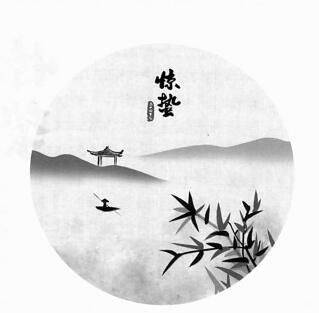
For example, when a shock comes, the earth warms, thunders, awakens the insects in the earth, and the natural life breaks out. Three times astonishment will be “one moment, two moments, and three weeks, the hawk will be turned into a hawk”. Not only do the insects wake up and the yellow tumbles, but they also fuel the rotten peach blossoms. Peach is the messenger of the spring, and the poems of "peach, burn, burn" in the poem "peach, burn, burn" have been chanted for thousands of years, and the legend of the love of "peaches of man" is still alive. And at the end of the spring, the green is covered in the fields of the suburbs, and all kinds of wild vegetables come out of their heads, one by the other, green and tender, and the people who have taken to the ground cannot resist a round. At this point, man is in nature, his steps are light and his heart is free。
In the qing dynasty, there was also a song called "the spring song" in the gangnam region, which was popular and popular, with the words: "the spring springs and the springs and the waters. Springers drink wine and spring officials whip cattle. "each of the eight consecutive springs, the hymns of the hymns, is very springing。
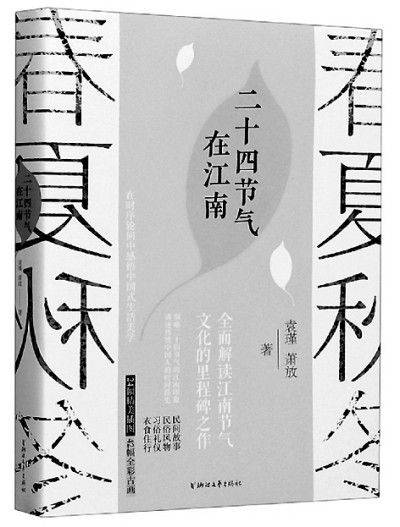
Zhejiang's zhejiang art is published in zhenan social
It was the most popular season, and there was the expression “twenty-four flowers”. With the wind blowing up the flowers of the season, one of the most accurate flowers is chosen as the representative of the festival, known as the "face wind", which brings the message of flowers. And the ancients took five days and three times as a part. Each year, from the beginning of the winter to the end of the next year's rain, eight accelerators are “twenty-four flowers”. The head of clubs, the end of flowers, seasons, different colors. Among them are the letters of plum, mountain tea and daffodils, plum twigs and high-profile gestures; the tea of the mountains is beautiful and fresh; and the daffodils are fragrance and fragrance. And the wind fills with faith the sky and the earth of the depression。
Life's going to be fun
The twenty-four festival is a unique system of time established by the ancient generations to observe the astronomical, physical, and perceptive of their own changes, to record agricultural production and social life, and a comprehensive knowledge system of the symbiotic, physical and human activities. In traditional farming societies, it is considered to be a time frame on which to rely, and the emergence of a distinctive flower plant, changes in weather, and the migration of insects and birds are seen as “negative” facts at the corresponding gas point. As a result, there is a growing link between the material and the production of people's lives, and it has become a meaningful form of existence that has been given the beauty of life in the dynamics of the functioning of society。
This living aesthetic experience is the joy and emotional identity inherent in the historically developed practice of life and the vitality that is born within the world of life. People draw resources from nature, while also integrating delicate emotional, modest life aspirations and visions。
Every year around autumn, farmers are busy “sun and fall” and, after the front room, the roof platform selects an open area, which continues to dry up the vegetables and cereals from the fields. At the same time, red peppers, golden daisies, yellow corn, soyy dry vegetables, green oil tea nuts, etc., were laid in sunbaths, tanned in the sun, spread out from house to house, as if a painting had been painted, the colours had become so thick, and the joys of the years had swung. And on the basis of the beauty of the grass, the joy of life grows。
It's the same spring map. Photo taken from "twenty-four gas in gangnam."
And it's like the summer's "three whites" in gangnam -- the platinum, the orchid and the jasmine. The flowers were carefully placed in the basket by the grandmother, who was ordered to sell them along the street, as if they were as white as the smell of the grandmother's dark hall. The girls made small lanterns with wheat straw, placed jasmine in them, or dressed in a basket of small flowers, hung in their own attics, and had a fragrance of pillows and dreams. Time is no longer a monotonous number, but a story of time that helps people reconcile with nature and life is full of joy and joy。
And the festival is the fifteenth day after the break of the spring, the sun and the spring, the sun and the spring, and in march, the heavens and the earth are clear, the people travel to the field, and they go up to the graves to sacrifice their fathers, dig springs, pick wild vegetables, fly kites, and all things are born alive。
The close connection between people and objects is also concentrated on their crisis warning function. The farmers' tradition of “scrutinizing the weather” in the belief that abnormal objects can be used to warn against a natural disaster in order to take preventive measures has led to a number of agricultural proverbs. For example, “water-spring bullheads, farmers are sad,” meaning that when it rains when it comes to the “whistling cow” ceremony, spring and drought occur. And there's "lishares singing, early rice pests." at this point in time, it is not just a matter of time, it is not just a matter of nature, but of the emotional projection of people based on a visual sense of life。
It's cultural philosophy
The object of a gas-conservative form symbol is constantly being strengthened and expanded throughout the life of people and is gradually moving away from specific natural scenes and becoming a spiritual cultural symbol, integrated into customs, legends, rituals, games, and intergenerational transmission。
For example, it is written that qiu is considered to be a messenger of autumn. In the night boat autumn, the man zhang tai believed that such a statement was derived from the ancient poem “the world knows all about the fall of the leaves”. "the autumn" used to be a court ritual. In the fourth volume of dream sing, it was recorded that the capital had planted tree trees in the palace, that on the autumn day, tai chi was wearing a tyrannical dress, that he was holding a dynasty with his hands, and that at the time of the tyucheng festival, the "autumn!" and that, in the sound of the convulsion, it was “two pieces of the twilight sound of its leaves”, which was a great response. The southern song cloth poet, liu zhui an, wrote a song in l 'autumn, with a cloud that reads, "sleeping in the sound of autumn, full of leaves, moonlight." it is spiritual, able to read "autumn."。
There is also a winter-to-singing game that brings together all kinds of material phenomena from winter to sun. This game means that from the winter to the coldest period of the world, from that point onwards, “until nine hundred and eighty-one days of coldness”, known as “nine years”, or “nine years of winter”. “seven songs” are rehearsing the local people's familiar weather to remember the summer, so there are different voices. “1929, calling on buddha. 3927, the fence blows. Forty-six, sleeps like sleep... Eight hundred seventy-two, cat and dog lie down. The poor suffer. I'm just trying to get my feet to sleep. It's a blessing that the song is linked to the nine. Between the hymns, the images of the natural changes between the winter and the sun。
Signs of objects with civic connotations are also popular with writers and are an important resource for the creation of traditional poems and novels. In the process of individual creative awareness and collective emotional resonance of writers, the aesthetic sense of gas-saving objects has been elevated to a new height and has become a highly condensed cultural aesthetic symbol. For example, once the frosts have fallen, the mountains of maple leaves, like flames, ignited deep and autumn rots, in response to the groaning of du sheng, “stop for maple night, frost leaves red with february flowers”。
The ancient vision of nature, the acquisition of wisdom from visions and images, and the application of symbols such as grass trees and birdworms to cropping and daily life have become important elements of the twenty-four gas-time regime. The long history of evolution and cultural heritage has evolved, condensed, elevated, and further transformed into symbolic symbols that are unique to chinese national cultural symbols, aesthetic objects and local traditions, and have developed into important spiritual assets in the life of one generation。
Even today, the notion of human beings living in harmony with nature is still very important. Because people live in the rhythm of the universe and nature, past, present or future. At the moment, the legacy of euphoria and the beauty of things, namely, drawing on traditional cultural resources in the new cultural environment, reshaping the harmonious relationship between human beings and nature and responding to the anxiety of people's cultural identity, lack of belonging, creates a new culture of life, aesthetic culture, and thus cultural confidence and well-being。
The day of light (15th edition, 2022)