The korean media revealed that the volley shiila was part of the seventh united states fleet in japan. “in the current context of intense competition among the central american navy, the united states navy needs to minimize the landing time for ships such as repairs”. As a result of the decline in the united states shipbuilding industry, which has resulted in a large number of united states naval ships waiting to be repaired, and the time it takes to cross the pacific to return from japan to the united states mainland, “the south korean shipbuilding company, which is closely associated with the united states, is more advantageous as a partner in the maintenance of united states naval vessels”. Earlier this year, when united states navy secretary carlos del toro visited south korea, he visited the modern heavy-worked korean shipyard of ulsan and the giji island shipyard of the korean ocean. According to the united states defense news, during a visit to the korean shipyard, the united states navy delegation led by toro was “shocked by the level of digitization and real-time monitoring of ship construction progress” and expressed a strong willingness to cooperate on “the united states naval ship to korea for repairs”. Modern heavy labour now applied for the united states naval vessel maintenance certification last year and completed its mission early this year; han wah applied for the certification in january this year and signed a certificate of certification with the united states naval maritime supply system command on 22 july。
According to the united states naval research institute, china accounts for nearly 50 per cent of the global shipbuilding market, while korea and japan account for nearly 30 per cent and 17 per cent, respectively, while the united states produces only 0. 13 per cent. Matthew finner, a senior researcher of the united states think tank centre for strategic and international studies, stated that, despite china's world's largest shipbuilding capability, korea and japan ranked second and third, respectively, because it was not difficult to understand the united states navy's subcontracting of ship maintenance operations to these two close american allies. In march of this year, toro also travelled to japan to visit the mitsubishi shipyard in yokohama and discussed the possibility of using the japanese shipyard to assist the united states navy in the maintenance of ships. During the visit to the united states of america of prime minister wen hung qiiti, the united states-japan summit also mentioned allowing the japanese shipyard to carry out additional maintenance work for united states naval vessels in order to consolidate the military alliance between the two countries. Under the relevant plan, the japanese shipyard would require only 90 days or less to maintain the united states naval vessels, thus avoiding their return to the united states for maintenance and saving about a month of sea travel. Zach cooper, a senior researcher at the american institute of business studies and former pentagon official, said: “it is clear that the united states is experiencing difficulties in keeping pace with the modernization of the chinese navy and with low-cost production vessels. One way to solve the problem is to work more closely with allies and partners to shift part of the maintenance responsibility to other allies”。
The united states navy had previously approached india on the issue of “requesting help with ship repair”. The indian l&t shipbuilding company, the cochin shipbuilding company and the mazagan shipbuilding company have been accredited and signed agreements for the maintenance of vessels by the united states navy. In 2022, for the first time, the indian l&t shipbuilding company completed routine repairs for a united states navy dry cargo tender。
How hard is it to maintain american ships
Although japan, korea and india all have considerable shipbuilding and maintenance capacity, the assistance they can provide may not be sufficient for the vast maintenance needs of the united states navy。
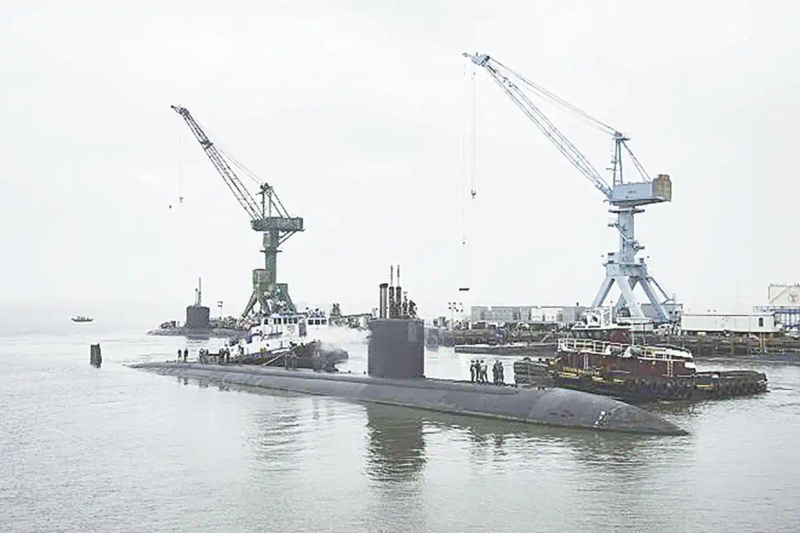
The boesy, waiting for repairs, attacked the nuclear submarine. (source: u. S. Naval academy website)
The united states naval vessels currently performing overhauls in korea and india are part of a supply ship rather than a warship, which is related to the united states navy's concern about the leaking of the core secrets of warships, but is subject to united states domestic legislation. As mentioned in the korean daily, under the merchant shipping act (also known as the jones act), which must be made of ships sailing in the united states, the maintenance of combat vessels by the united states navy is required on the mainland of the united states. It was explained that the so-called merchant shipping act, based on the experience of the first world war, had been enacted in 1920 to provide that shipping between united states waters and ports could only be carried out by vessels constructed by the united states, registered by the united states (on united states flag), owned by americans and operated by united states citizens or permanent resident crews. The united states shipyard must also provide maintenance services to the united states government fleet. Only merchant ships between united states and foreign ports are exempt from this restriction. The starting point of the merchant shipping act is the protection of the united states shipbuilding industry, the protection of united states commercial shipping and the use of protectionism to shield the united states shipbuilding and shipping industry, creating a favourable competitive posture with international competitors, but ultimately becoming a classic case of protectionism harming the nation。
Cooper stated that the united states navy's approach of relying on its allies to assist in ship repair was being strongly opposed by united states shipbuilding enterprises, which had been protected by the merchant shipping act from foreign competitors. But the undeniable reality is that the continued decline in the capacity of the united states shipbuilding industry to build and maintain ships has seriously affected the operational capability of the united states navy。
The united states foreign policy website criticized the fact that during the reagan administration, the united states effectively abandoned the commercial shipbuilding industry in the name of free trade. In the 1960s and 1990s, the united states navy shut down seven public shipyards, which are now mainly responsible for the maintenance of military vessels, namely, the four naval yards of norfolk, virginia, park andmouth, maine, pujet bay, washington and pearl harbor, hawaii. However, a large number of major vessels built during the cold war were ageing and the maintenance work required continued to increase, and the tasks of those naval yards were already saturated。
The current maintenance of the united states navy shipyard is reported to face three main challenges: poor infrastructure, insufficient skilled personnel and a shortage of related supply chains. For example, a 2023 report by bloomberg revealed that four naval shipyards responsible for the maintenance of nuclear submarines had accumulated a large backlog of work, resulting in nearly 37 per cent of attacks on nuclear submarines being decommissioned and awaiting repair, a percentage significantly higher than 28 per cent in 2017 and 33 per cent in 2022. According to the united states government accountability office, between 2008 and 2018, united states naval vessels lost 1,063 battle days — equivalent to more than 28 years — “due to delays in access to the shipyard”。
The main reason for this situation is that infrastructure, such as the dry docks of the four naval yards of the united states navy itself, requires extensive maintenance, repair and modernization. For example, dry dock no. 3 at the naval shipyard in pugate bay was established in 1919, without nuclear fuel treatment qualifications, and submarines had to be dismantled elsewhere; and the dock was shallow and could only complete the landing or exit of l. A. Class submarines at high tide. Statistics also show that the four naval yards together have 17 docks to provide maintenance and maintenance services for the old-style los angeles class nuclear submarines, but that the new virginia class nuclear submarines have a much larger volume of water drainage than the los angeles class, and only seven can be repaired. The only dry dock 6 on the united states west coast is available for the maintenance of carriers at the naval shipyard of the gulf of purge, which also contributes to the increasing “queuing waiting” of united states carriers。
Second, the continuing decline in the united states shipbuilding industry has resulted in a severe shortage of skilled manpower. According to the united states broadcasting corporation, it is difficult for the united states shipbuilding industry to employ skilled workers as experienced older workers retire. For example, the united states coast guard's new ice breaker was forced to delay service for four years, mainly because it used a high-intensity alloy steel and risked loss of quality if the welding process was not closed. However, the united states shipyard has not been exposed to such steel for many years, and the redevelopment of safe and efficient welding is a challenge。
In addition, due to the excessive length of time spent on active united states navy vessels, the relevant spare parts production enterprises have been closed down, which has significantly increased the cost of procurement and the time awaiting maintenance。
It's hard to tell about 20 years of pentagon planning
Nor has the pentagon been left without solutions to the serious situation of delays in the maintenance of united states naval vessels. In 2017, the united states navy launched a shipyard infrastructure optimization plan, which will take 20 years to modernize the four naval yards at a high cost of $21 billion。
According to a report issued by the united states government accountability agency, in fiscal year 2015-2019, the four united states naval yards had planned 51 maintenance tasks, with only 49 actual tasks, of which 38 were not completed on time, for a total of 7424 days. Of these extensions, 10 were extended by carriers for an average of 113 days and 28 by submarines for an average of 225 days. The united states navy, after an investigation, acknowledged that the ageing and inadequate layout of the shipyard facilities and the urgent need to modernize and upgrade were likely to increase the problems of inefficient work and phasing out. In particular, for the maintenance of united states naval nuclear-powered vessels, the infrastructure of those yards is already difficult to meet. Under the shipyard infrastructure optimization plan, digital models will be developed for the use of digital twinning technology for the welding, pumping, material storage, office space, etc. Of shipyards, to study best layouts to improve production processes, reduce inefficient working hours and improve operational efficiency, thereby guaranteeing efficient access to the docks and the completion of maintenance works by united states naval vessels. At the same time, most of the equipment in the shipyards was long overdue and could not be maintained by the original manufacturer. It is planned that the united states navy will develop specific programmes for the upgrading of critical equipment at the shipyard once the simulation is completed. The united states navy plans to invest $150 million annually in equipment upgrades and, after 20 years of continuous investment, to bring the average useful life of shipyard equipment to industry standards. However, the project also faces enormous challenges: the digital twinning technology currently in use requires a great amount of software and time, which means huge investments; the plan is too long and falls within the category of “near water cannot save near fires”; and the united states congress and the navy are constantly changing their plans, so it remains unclear whether the shipyard infrastructure optimization plan will continue。
In addition to upgrading the four naval shipyards, the united states navy is looking for other help — one of the efforts being made to reach out to overseas allies to help resolve the maintenance work of some of the logistics vessels. At the same time, the united states navy is attempting to use the docks of private shipyards for repairs. For example, the boissy attack nuclear submarines lined up for repair at the docks of the norfolk naval shipyard in 2015 but did not wait for a stopover until 2018 due to the accumulation of related maintenance operations. Since then, the united states navy has transferred its maintenance work to the private newportnius shipyard, and the submarine did not start repairing until february 2024, when it wasted nine years on the dock。
In order to address the shortage of skilled personnel, the united states navy, in conjunction with the national shipyard training college, and in cooperation with relevant technical schools, provided workers with the skills they needed to build high-tech ships. Additional subsidies are also provided for shipyards to retain these skilled workers。
In addition, united states media have called for the unsealing of the partially closed naval shipyard to increase maintenance capacity. The united states “pacific daily news” website called for the closure of the united states navy shipyard in guam in the 1990s and the closure of the facility to date. The report stated that the reopening of the shipyard could provide maintenance to united states naval vessels deployed in the forward western pacific ocean。