


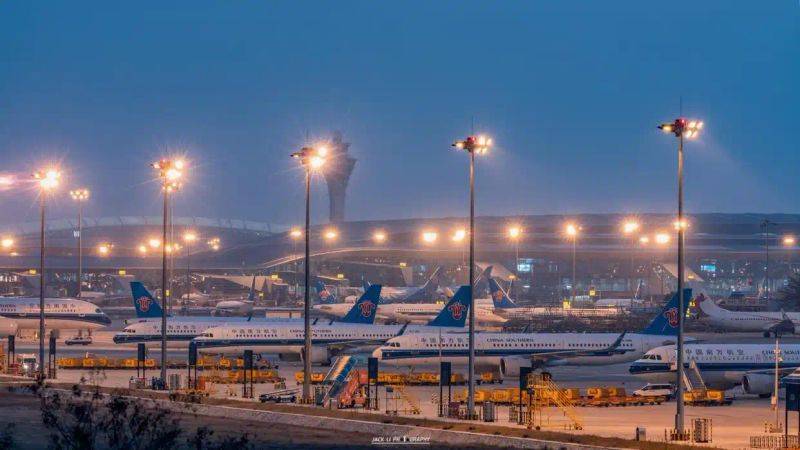
On 20 march, the ministry of commerce and others issued the policy measures for promoting the expansion of inbound consumption of exports of travel services, which set out 16 specific initiatives in the areas of expansion of inbound tourism consumption, facilitation of inbound business activity, activation of inbound consumption, flourishing of inbound consumption, expansion of inbound health consumption, development of inbound education and training consumption, improvement of safeguards。
For a long time, trade in goods has been the ballast of my foreign-oriented economy, but it continues to grow with weak global demand and increased geopolitical friction。
In contrast to trade in services, our deficit remains significant, with travel services accounting for the bulk of the deficit for a long time and becoming one of the short-term constraints on the optimal structure of trade。
At the same time, it is important to note that the global travel market is currently undergoing a period of profound adjustment. Geopolitical changes, the evolution of consumption habits, digital waves, etc. Are reshaping international tourism patterns. This is precisely the opportunity that has been given to our country to “turn the car”。
If we can seize this window now to stimulate market dynamism with institutional innovation and raise international reputations with high-quality supplies, it is quite possible to create new competitive advantages in the area of travel services。
There are structural contradictions on the one hand and significant opportunities on the other, and it is timely for the authorities to focus on how to promote exports of travel services。
The international competitiveness of travel services needs to be reshaped by moving away from the mindset of traditional tourism management。
In the past, immigration travel was dependent on natural endowments such as famous mountain daecheon and historical monuments, often focusing on site creation and route promotion. However, modern travel services go far beyond tourism, covering a wide range of areas, such as commerce, competitions, recreation, health, education, etc., and are integrated services export systems。
The policy clearly provides for the facilitation of business entry, the activation of consumption of entry competitions, the flourishing of recreational consumption, the expansion of healthy consumption at entry, and the development of educational and training consumption at entry。
This means that we are planning to move in the larger pattern of trade in services as an important platform for bringing together people, logistics, financial flows, information flows and a new pattern of integrated multi-business development。
At a deeper level, the export of strong travel services is also a crucial leap forward for my country from a “large trading power” to a “trade power”。
The expansion of trade in goods has established our position as the world's largest trade in goods, but the competitiveness of trade in services is also a core indicator of the success of the trading power。
Globally, the more prosperous a country's market of entry, the more its cultural influence and its voice in rules are. This is because, unlike trade in goods, trade in services, especially travel services, is not only a cross-border movement of goods and services, but also carries multiple functions, such as cultural exchange, national image-building and the export of rules and standards。
Translating policy dividends into development effectiveness also requires overcoming long-standing gaps。
Payments facilitation, visa facilitation, multilingual services, international medical interfaces, etc., appear to be “small cuts”, which are indeed “big problems” affecting the experience of international tourists。
The next step was to strengthen sectoral synergies and break down sectoral barriers. At the same time, emphasis should be placed on the role of market owners, encouraging collaborative innovation among tourism enterprises, airlines, financial institutions, cultural institutions, etc., to develop more high-quality products adapted to the needs of international markets。
It is envisaged that when foreign tourists come not only for tourism, but also for competitions, medical consultations, training and business negotiations, the economic benefits and spillover effects of travel services exports will grow from simple “shows” to “selling services, standards, brands”。
And an open, inclusive, modern china's full global demonstration was the successful shaping of “soft power”。



