The mahjong machine professional maintenance team, regardless of your brand? How many? When was it produced? Where did it come from? Any other problems, if you have a phone call to tell us, we'll do anything for you!
Note: some of the mahjong tables are used by a number of customers with instant power cuts, which often result in the absence of cards, which results in the laxity of the power supply and is caused by live objects. If you can't solve it yourself, call our professionals and fix it
Physical shop; downtown all automatic mahjong machine, downstairs at 7th floor, shaolin province, east river
Summary: whether it is a fully automatic mahjong machine or ** mahjong machine, or four mahjongs or one mouth. All mahjong maintenance methods are essentially the same and are often similar. So, what problems do these mahjongs often encounter? In order to avoid these problems, let's look at the usual problems of the mahjongg machine, to learn from the maintenance experience。
Fighting mahjong will be a hobby of many people, especially when they are resting or when it rains, and the people are always gathered together in a mahjong, both as a boring time and as a entertainment. After several years of development, from the first mahjong table we saw on the side of the street to the current fully automatic mahjong table, mahjong technology has been growing, and the enthusiasm for mahjong has become more intense, with people playing mahjong in the streets and in their homes。
Full automatic mahjong maintenance guide, 15 steps to repair the mahjong
1. Power switches are connected, switch lights are not on and the machine does not react。
Exchange of 220 v power sources without electricity;
2. Power plugs are unplugged and the power plugs are loose;
3. A power line or a part of the power source link opens the line;
4. Power fuse melting or poor exposure;
5. Power switch damage;
2. Operating disk sign lights are on, key-lifting operating disks are not moving and no lifting action is taken:
1. Unplugging, cutting or poor contact on the operating panel;
2. Checks whether the operating panel and the primary control panel are normal;
3. Check the lift-or-lift component electric units and hl switches。
3. When the machine works, press the lift-down button on the operating disk and no lifting action:
When the machine works, the plate light on the operating disk is extinguished, and in order for the operating disk to rise, two lifts must be pressed simultaneously。
In the course of the machine's work, while pressing two lift-down buttons to fill the cards, the large disks are still spinning:
When the machine is in a state of regular patches: at the same time press two lift-down buttons, the lift-down component, the magnetosphere component, the delivery component, and the electromechanical component shall cease to function and complete the patch, and the lift-down component shall be reduced by pressing only one lift-down button, and the magnetosphere component, the conveyor component, and the electromechanical component shall commence again. When there is a cardboard disk, transport, and electromechanical components, which indicate that the main core plate has been damaged, professionals should be asked to check for replacements and, in order to avoid such problems, choose a better mahjong brand product at the time of purchase。
V. Malposition of the operating disk:
1. A friction in the mechanical part of the lift-down component;
2. Bad fly-down key;
3. Hl is not installed or relaxed and of poor quality;
4. Inspection of components such as controllable silicon in the operative part of the lift-down component (note that inspection should be carried out by electrical professionals)。
Full automatic mahjong maintenance guide, 15 steps to repair the mahjong
Vi. No pusher actions for mechanical components:
1. Optical sensor s1 on an electromechanical assembly pusher or a signal is blocked by an alien;
2. Decides on the conversion of the level of the electrical power in the s1 working state;
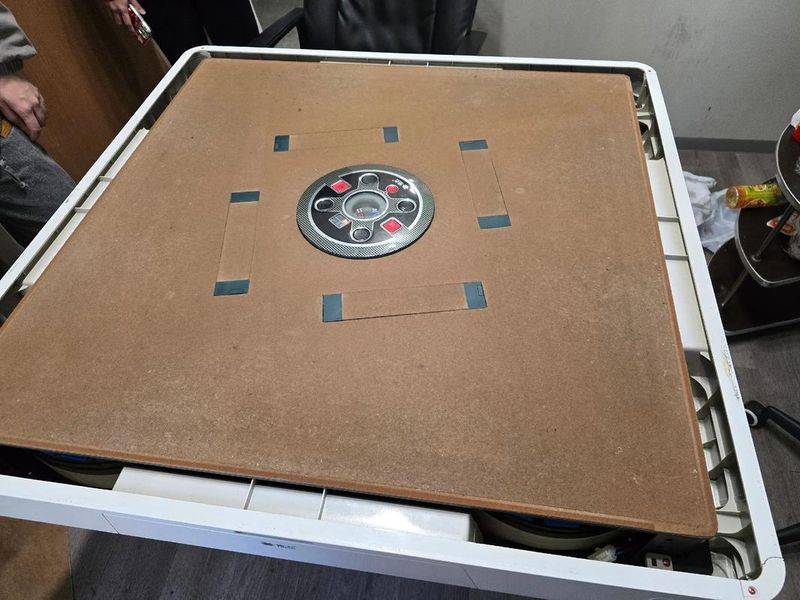
3. S1 works in a state that does not meet the requirement of being too sensitive and should be adjusted to meet the requirements;
4. The card is too dirty, making the s1 action shorter;
5. Unwinding or breaking of electrical plugs in electromechanical components;
6. Damage, variation, damage to electrical assemblies or transfer phase。
Vii. Machine and electrical components cards:
1. Poor assembly of electromechanical components;
2. Turn off the power supply, hand-to-hand the motored electrical component cam to check whether the lifting or drop at the lowest point is equal to the upper module guide;
3. The first card drops from the front to the second card drops from the top to the bottom 1 mm at the time the mechanical component is pushed;
S1-ray sensors are not well or are not installed properly。
Viii. Chain component generators are constantly moving:
1. When the first card has been fixed, the chain component electric unit works to the next lift board, after which the chain component electrical unit ceases to work. (b) if the chain component power is kept in motion, check if the positioning sensor s5 is not working or is blocked by another object;
2. When the chain component electric power is kept in motion after four plates have been fixed, the photo-sensor s4 should be checked for bad or blocked by foreign objects;
3. Check the presence of oily and dirty material on the surface of the plastic reflecting sheet of the chain pole。
Ix. There is an anomaly in the bearing of the board:
1. The four lift-down plate boards that are on board during normal times are synchronized, checking whether the limit switch is damaged if the board is not working;
2. If the plate keeps moving up and down, check whether the limit switch's plate remains under pressure;
3. If the plate is not up, the position of the limit switch is adjusted to allow release of the limit switch after the plate is fully up;
4. If the plate falls below its minimum position, the card will be created by removing the plate and checking whether the screws of the revolving arm (small feet) are loose, falling off, and turning arm (small feet) open or not deformed。
X. Transmission of components into cardboard or card not in orbit:
1. Remove the disk and check the size and height of the card. A slightly higher synchronous belt than the delivery component when the cards enter orbit;
2. Check for defects in the rollers, synchronous belts and electrics of the delivery components。
Xi. The number of cards at the end of the exercise is not consistent with the rules of the game:
1. Digital switches are not in place or are not functioning;
2. A change in the status of a digital switch when a machine adjusts a card creates inconsistencies between the number of cards after the board is completed and the rules of the game method. This is because the change in the status of the digital switch during the boarding process will only work when the next board is run. To change the status of the rules of the game, this should take place when the light for the card is on;
3. Multiple cards are generated when light is irradiated or refractioned on s2;
4. Pv sensor s2. 3 not installed or bad;
5. Poor electrical assemblies, shaking while working, abnormal speeds or inadequate installation;
6. There was an error ** due to an operational error, at which point it was only necessary to cut the power and re-open it。
12. Electrical work is irregular:
1. The electromechanical component is not functional: checking whether the s1 signal is too weak and adjusting the level of the electrical device on s1 to make it work;

2. Chain component electric blockage: check if the chain pole is stuck and if the s2 is normal. If the chain pole is stuck, the rewinding button can be used to reverse the chain for failure;
3. Unusual working of reverse machines: checking whether the reverse button is good, whether the steering line is broken or not; switching control panels or electric machines;
4. Non-rotation of electrical power: check if the electrical plug is in good contact and if the fuse is broken. Further determination of the operation of the external 220v voltage radio. If the power is working properly, the problem is that more is on the master plate, which should be inspected by professionals。
13. Do not turn the shuffle: the photo-sensor s6 is pre-reflective。
Xiv. Electronic transition wrong: inspection or inspection. The mahjong brand is usually better equipped with professional equipment, so contact the manufacturer or call our professionals in time for problems with the mahjong machine。
15. Multiple (missed) cards after power outages: blackouts occur in the course of the cut-off, followed by multiple (missed) cards as a result of electricity up. The machine has a memory of the power outage during the operation. :: in general, there will be no problems, but power cuts should be avoided as much as possible during operations。
What you might care about is the ten brands of mahjongg, the couch/furniture/matting industry front page, the mahjonger knowledge lobby, the sofa/furniture/matting lobby
Label: mahjongg, electrical maintenance
Majong tianjin
How do you fit the fully automated mahjong
(i) mechanical component
Mechanical partial failure and overhaul
1. Machine velocity over 80 seconds
Reason for failure: non-position of the disk, fall of the wheel tape, triangulation of the distance, adjustment of the plate entry, reconciliation of the roller, high and low alignment of the magnetic plate with the wheel, abnormal head speed, grotesque in the transfer tank, poor shuffle spring, speed of the wheel ahead of the disk。
The chain pole is stuck behind the board
Causes of failure: the degree of flexibility of the quadrilateral pusher, whether the quadrant plate has fallen, whether the stretch spring has fallen or broken the micro-move switch is inflexible。
Three, the pilot. Card
The reasons for the failure were: the control of the head and the direction of the transport tank (the distance between the general front plate and the conveyor slot is 1 mm maximum of the mahjong diagonal line), the poor performance of the chute light, the luminous distance of the k1 head sensor (the sense of light is 10 mm), the damage to the electric gear, and the disequilibrium between the header and the board. The front decks are adjusted to the position of the pushboard, the first shift slider is inflexible and the stainless cardboard is too low。
4. Raised the table and the desktop
The reasons for the failure are the fact that the rubber pad is not correctly applied or that the lifting arm is not vertical, the screw is loose, or the shield is too high or too low, the panel is loose and the panel is deformed。
Five, the last few cards can't wash up
Reasons for failure: spring drops or bad cards, no magnets, or the regulation of the location of the magnets in the circles, bad magneticity or location of the roller magnets, synchronization of the disks and large discs, loss of the glue。
6 the cards washed on the desktop are unstructured and scattered
Causes of failure: wide distances on board orbits and loose overall screws on board. The slider is not flexible and there is a card desktop when it rises。
7. Delivery with wheel dice
Causes of failure: the lead wheel dice pole is rusted, only to remove the wheel from the embroidery powder for refuelling。
8. Slippering belts
Reason for failure: the conveyor belt is not strong enough to lift the snails up to the following snail or spring to remove them; the carrier's active wheel deforms, etc。
9: sometimes there's a run-off on the trough
Reasons for failure: this phenomenon is mainly a function of the high and low position of the magnetosphere and the conveyor, with the upper and lower position of the magnetosphere being the best one millimeter, at which point only the small tortary of the magnetosphere will be reduced or the conveyor will be raised. (note: when lifting up the transport tank, be careful of the distance in front of the transport tank to the head。
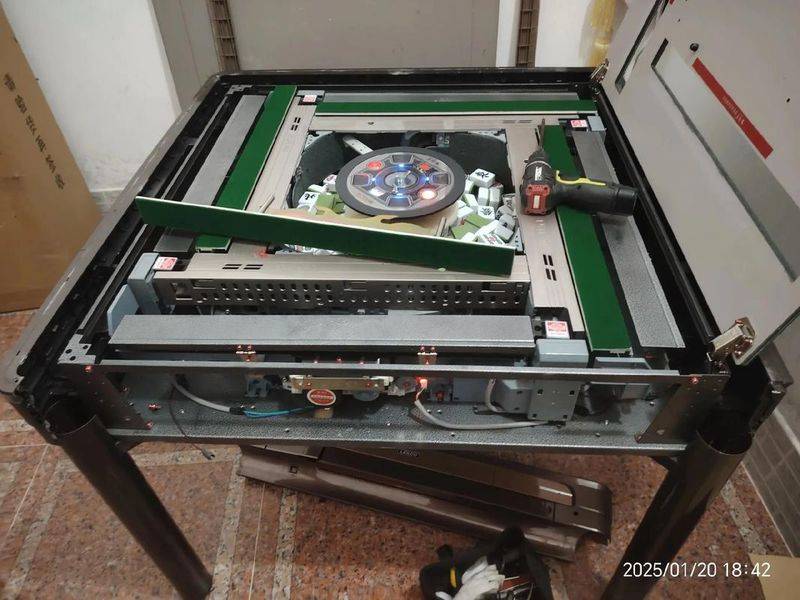
10. Intermediate control tray and desktop
Causes of failure: the high- and low-regulated screws in the electric control box are loose, and if the screws are not loose, the panel is deformed。
11, no push or push cards on the front deck cards
Reason for failure: this is mainly due to the high and low position adjustment of the k1 head sensor and the non-drive of the sensor range, mainly (1) the k1 head sensor is too dirty or disabled (2) the k1 distance is remote ... When a single card is pushed, (1) the low position of the k1 sensor is caused by (2), the square light is oiled or the square light of the trough sensor is close。
(note: the high- and low-position adjustment for k1 is mainly based on three quarters of the white of the first card, and the distance between the square light piece and the slot light is 0. 5 mm-1 mm) for the detailed reasons for pushing the single card, see section 26 of the circuit。
12, the head's running
Reason for failure: checking whether the lumber is blocked by something, the oil material is most frequent and the plug-in is in place; error in master plate control。
The chain won't move
Reason for the failure: 1, the chain power itself is not sufficiently spaced, 3 the pressurized plate is too tight, 4 too tight in the tight wheel, 5 in the gap between the turn and the board, 6 too dirty in the mahjong, 7 too tight in the chain, 8 in the urn in the chain track, 8 in the chain poles are bent around to the corner of the corner, 9 and 4 at the end of the board, and the sheet is slashed to 10 and the chain tooth plate is inflexible。
14, 16, 18 during cards
Causes of failure: 16 incidents may be turbo-coated pines or the corresponding pedals, 18 occurrences may be plaster-sensor insensitive or the position of the slot light optics in proximity to the head of the machine is oily。
15, chain pole break
The solution to the problem is to find a chain active interface, which will be parked at the head of the plane, and then release the springs, remove the live interfaces, and untie the small chain (because it will be easier to unload the chain, and only if the chain is a fixed screw). At the time of installation, you need to find a direct or indirect installation of the straight chain。
16, raise the table and not move
Reason for the failure: 1, whether the micro-switch is good2 and may not be up or down or up, and if the cards are pushed, they are stuck below and there may be mahjong or other miscellaneous 3 and sharp ears on the corner. Inhabitance under normal conditions is a control problem。
17, the first stage up, the other three are stuck. Stay
Reason for failure: the stoppage is not in the right place, mainly k4 is not in the right position, or the chain condom is occasionally unsensitized。
18. Do not sync when raising cards
Reasons for failure: the position of the micro-movement switch was not adjusted; the relationship between the rise of the table and the steering pole was not adjusted or the small gears loosed, etc。
One end and one end
Reason for failure: 1; gear not fixed; rotation arm not synchronized 2; sharp ear up to deck not set 3; steering rod loose, etc。
It's a sound when you're up in 20
Causes of malfunction: 1, small impact of 2 from the pusher pole and the front plate, tilt of 3 from the pusher pole, too big gap between gear activity, impact of 4 between the rotating arm and the riser shelf, rust of 5 from the cam column, friction of cards and boards
Cards are stuck on the panel when the cards are up. Let's go
Reason for failure: 1, cards not put in place, the relationship between the front and the panel is not fine-tuned or the steering board is moved as a whole。
Twenty-two. There's something going on when the deck drops
Causes of malfunction: the main cause of failure is the sound of the hooks touching the rotating arm。
23, raise the table
Reason for failure: the whole platform rises loose or the frame screws are too tight to pull the frame