The renovation is not a simple “wall-painting” exercise, but a combination of fire-fighting compliance, space utility, business image, construction security systems work, especially commercial public service, which is not only costly to return work, but may also be faced with problems such as failure to accept fire-fighting inspections and office inefficiencies. The five core dimensions of prior-period planning, compliance requirements, space design, construction landings and post-acceptance, combined with the practical experience of the public clothing industry, have focused the greatest attention of entrepreneurs, avoiding common pits in the industry and matching actual office requirements。
I. Pre-planning: setting the course and avoiding late return
At the core is the determination of needs in the context of enterprise size, industry attributes and office models, which do not blindly seek to be coloured and meet practical and long-term development。
• clear retrofitting: technology companies are more streamlined and efficient, creative and creative, traditional firms are more formal, styles and brand names are consistent, and styles are avoided. Planning space function: set the size of the workspace by number of staff (recommendation 3 m2 for office space per person), set aside conference rooms (sizing meeting rooms and meeting rooms), reception areas, tea rooms, storage rooms, separate closed office areas/archiving rooms for enterprises with confidential requirements, with exclusive areas for live broadcasting, experiments, warehousing requirements. Budget preparation and duration of work: the budget for public clothing must include hard-clothing, soft-clothing, fire-fighting, low-power engineering, furniture, household electricity, manual and quality insurance (recommended to reserve 10-15 per cent of the reserve to respond to sudden-onset modifications); the work schedule should be based on area (approximately 2-3 weeks for approximately 100 m2 and over 500 m2 for more than 1-3 months) to avoid the peak of the enterprise's office and plan in advance for temporary accommodation. Selection of public-clothes companies: priority is given to companies with public qualifications, fire-fighting designs and wages, local cases are abundant, denial of qualified guerrillas (late-fire inspection, after-sale insecurity) and formal contracts are concluded, specifying work schedules, payment points, quality assurance coverage, and back-to-work responsibilities。
Ii. Mandatory requirements for compliance: not to touch the red line, once accepted pass
Fire protection, residential and electrical compliance for commercial office renovations is the bottom line and is the most common “pit site” in the industry, and many low-cost refurbishment teams will ignore fire-fighting modifications, resulting in late acceptance and office space filing。
Fire-fighting modifications (most important) must be designed and constructed in units with fire-fighting design level b + construction level c and above, and the renovation programme must be submitted to the fire department for review (or filing) before it can be used after acceptance. Core requirements: evacuation route width 1. 4 m, safe export quantity set by area (at least 2 below 500 m2), strictly prohibited to block fire escape routes; adequate fire extinguishers, smoke alarms, spray system, spray head and ceiling distance are in line; meeting rooms, closed office areas require emergency lighting, evacuation signs and constant light. Avoiding pits: do not alter fire pipes without permission, seal fire embolisms and do not use flammable materials to make a tectonic / separation (the tectonic + plaster sheet is recommended to avoid full sealing to the top). Powered power and power engineering power: planning circuits according to the power of office equipment (separate circuits for workspaces, air conditioning, tea room appliances) to avoid jump-off; sufficient booths (at least 2 5-holes per workshop + 1 network entrance, additional space for conference rooms, reception areas) to accommodate off-site air conditioners in accordance with industry requirements and not in public areas. Weak electricity: network, telephone, surveillance, closed-door systems pre-wire, use of giga-net lines, reservation of surveillance points in critical areas (financial rooms, reception areas), videoconferencing-required conference rooms to be lined, all lines to bridge/breathers to avoid exposure. The property paper is pre-refurbishmented by submitting the renovation programme, qualification documents to the building/campus property, processing construction permits, paying a deposit for the renovation, observing the construction time of the property (generally avoiding construction before 8 a. M., after 6 p. M. And not on weekends), without unauthorized alteration of the building's mains (gravity walls, beams, columns) and external surfaces。
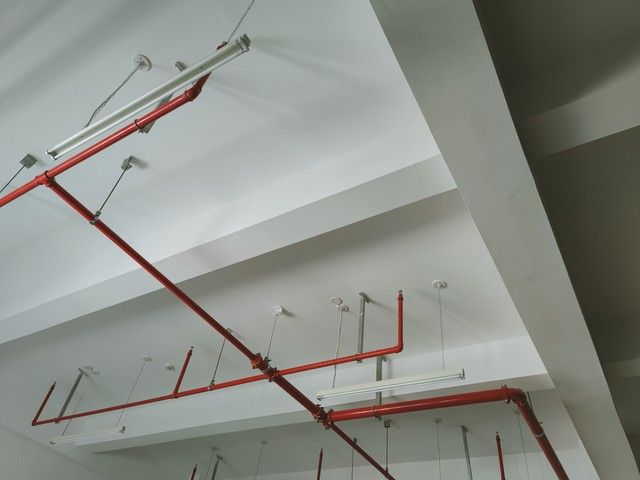
Space design: balancing practical, efficient and staff experience
The core of the design is “to make the office more efficient and staff more comfortable”, taking into account the hospitality needs of the enterprise and rejecting the false design。
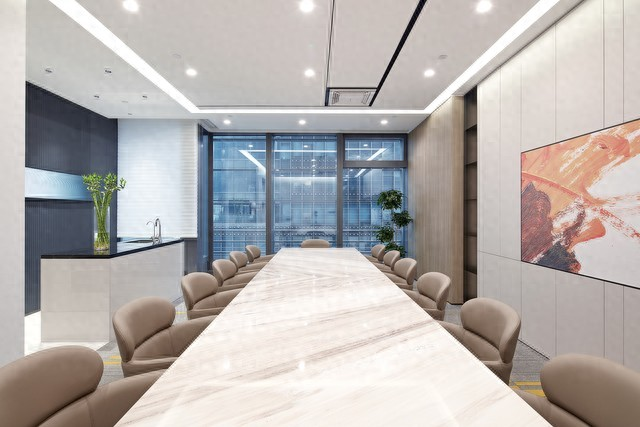
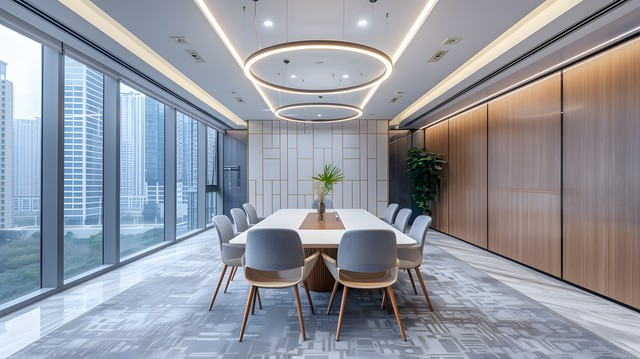
Lighting and ventilation: priority is given to natural light, back-to-winding (reflection) is avoided in the workspace area, mechanical ventilation/new wind system in closed areas (conference rooms, archives), tea room, bathrooms away from core office areas and ventilation. Interception and motion lines: open spaces are suitable for collaborative enterprises, closed partitions are suitable for jobs that require quietness (finance, design); office lines are fluid from the gate to the workspace, conference rooms, reception areas, and staff take items and communicate without going around. (b) wall: emulsion paint (simplified, retrofitted) or silica mosaics (environmentally friendly), which can be used as a cultural wall (branding) to avoid over-complex formation (ash, cleaning); environmental protection and health: refurbishment materials comply with national e1 and above environmental standards to avoid formaldehyde, benzene excesses and later effects on the health of employees; green plant placements are reserved, large spaces are designed for green walls and office environments are improved. The details are humanized: water purification units, microwave ovens, refrigerator spots and plugs are kept in the tea room and set up shelf; the bathrooms are dry and wet, equipped with induction taps / handbreaders; and the workshop areas are equipped with recharge cabinets, umbrellas, conference rooms with projectors, sound, whiteboards, recharge plugs. Iv. Construction landing: control details to avoid spoilage
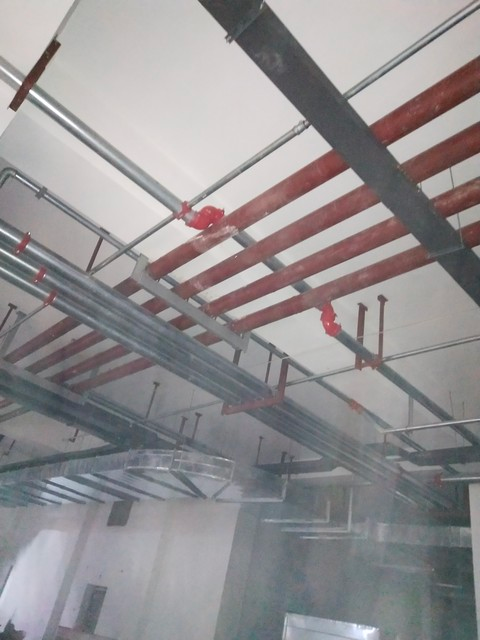
During the construction of the public clothing, site management, material acceptance and process control were key, and many problems were caused by minor negligence at the time of construction, which led to frequent later maintenance。
Material entry and inspection: the contract specifies the branding, model, specifications of the material, and the enterprise receives and accepts the material when it enters the site, avoiding the re-engineering team being filled in second place (in particular electrical lines, pipes, plates, fire protection materials). On-site safety and management: separation of construction areas from public areas, warning signs to avoid construction noise and dust affecting other businesses; construction staff wearing work plates and taking up work permits (especially electricians, welders, fire engineers). Process control: hydropower lines do not walk through walls, pipes do pressure tests (pressure 0. 8 mpa, 30 minutes without leakage), wire penetrating tubes are coloured (fireline red, zero-line blue, ground-line yellow and green); capped dragon bones are secured to avoid loosening; floor walls are prepared for flat, crack-proof treatment and emulsion paints 2 under cover + 2 under cover. Timely communication adjustments: design discrepancies (e. G. Point reservation errors, space size deviations) were detected during the construction process, correspondence adjustments were made to the renovation company in a timely manner, and the project changes were recorded in order to avoid later decoupling。
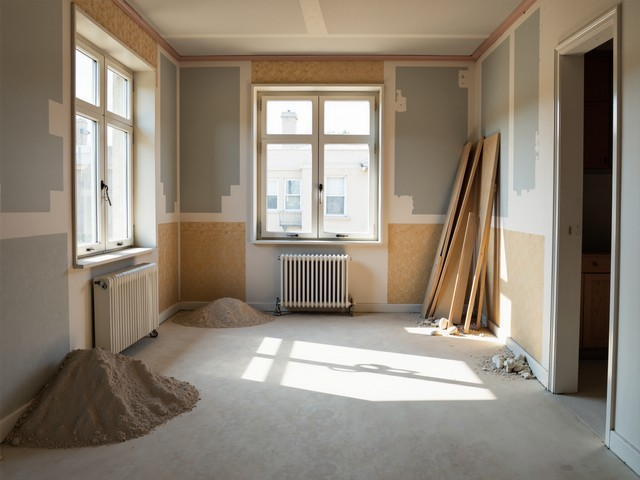
V. Last accounts and qualifications: a case-by-case examination without risk
Upon completion of the renovation, do not rush in, receive and receive on a case-by-case basis, and then sign for payment, while specifying the scope and duration of quality assurance and guaranteeing subsequent maintenance。
Overall acceptance: space layout, configuration and colour compliance are checked in accordance with the design programme and contractual requirements, walls, ground, ceilings are broken, drums are empty, paints are removed, doors and windows are opened smoothly and hardware is robust. (c) weak electricity: testing of networks, telephones, door closures and speed of grids; transfer of information: refurbishment companies are required to submit information such as fire inspection reports, weak electrical wiring maps, water and electricity completion plans, material certification certificates, quality assurance cards, etc., for later maintenance and re-engineering. Quality assurance and payment: pgus are generally two years hard-fit, five years waterproofing and waterproofing, one year firework, after receiving and inspection, after payment of the final payment, with 5-10 per cent of the qps set aside, and after expiry of the qps period, before payment. :: cleaning up of waste and settling in: professional cleaning of waste after acceptance, cleaning of waste and dust, ventilation of 1-2 weeks, and setting and debugging of office furniture。

Common industry pit avoidance reminders (entrepreneurs focus on) rejecting “low price winnings”: many of the refurbishment teams attract clients at prices below market prices, with later increases (e. G., fire protection, weak wiring, material upgrades) and contracts that clearly provide for dead prices and no hidden additions, all of which require written confirmation. Fire rehabilitation is not outsourced: fire rehabilitation is not outsourced separately to non-qualified units, preferably through a one-stop shop at the fit-out company to avoid disconnection between design and construction, leading to failure to accept fire protection. No unauthorized changes to the building structure: changes in the heavy wall, beams, columns and fireways of the writing building are strictly forbidden, even with the verbal consent of the property industry, in writing, to avoid subsequent changes. Focus on weak electrical engineering: once weak electrical lines, such as wires and monitoring lines, are placed on the wall/cap, it is difficult to re-engineer at a later stage to plan ahead, to use high-quality wires and to reserve sufficient points。