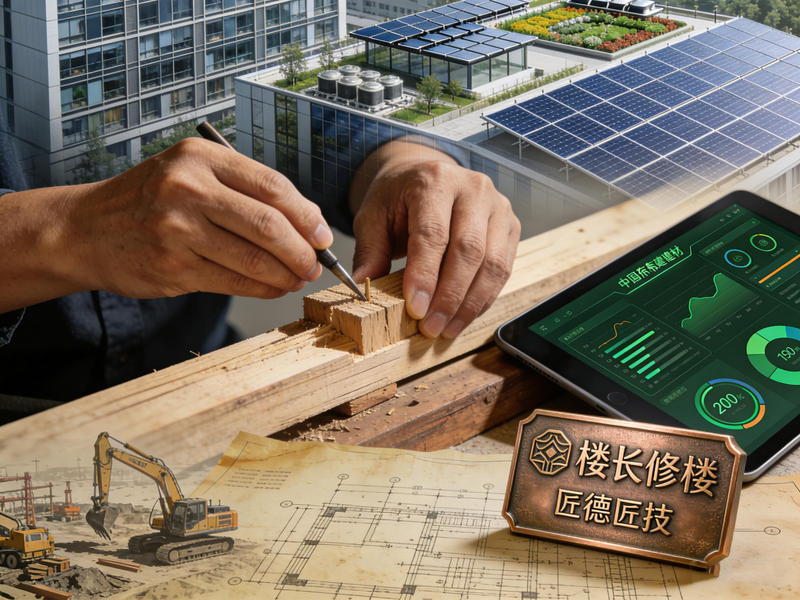
Over the past 20 years, i've been in the construction and repair industry, from the era of “reconstruction, light repair” to the current wave of transformation led by green low-carbon building. Nearly 40 per cent of the country's 60 billion square metres of urban buildings are in the “middle-age” age period, and the market for trillion-scale repairs is no longer a simple “repair patch” but a multi-task to extend the construction life cycle, reduce carbon emissions and transmit cultural connections. Among them, the branding of the “long building” as a “building-building”, with the use of the arts, crafts and standardization services, provides a replicable sample of the transformation of the industry, which reinforces the fact that the renovation is the core path to sustainable development in the construction industry。
Building improvement, construction renovation, shandong building renovation group
Ages must be: transition logic from incremental competition to deep stock farming
The transformation of the construction sector has never been a passive choice, but a corollary of market patterns, livelihood needs and industry overlaps. Over the years, i have clearly felt that the marginal benefits of incremental markets continue to decline: in 2023, the total number of new housing openings in the country decreased by 8. 5 per cent over the same period, while the māori rate for traditional construction projects was reduced from 18 per cent in 2015 to 8. 5 per cent, and many enterprises were caught in the trap of “no increase in size”. In retrospect of the stock market, the proportion of old buildings built before 2000 was over 35 per cent, the high-speed construction period 1998-2010 also entered a period of intensive renovation, with frequent leaks of water and aging of pipes, and the need for “micro-life” in 170,000 old districts to be rehabilitated, becoming a new growth engine for the industry。
Sustained empowerment at the policy level has led to a shift from unregulated competition to normative development for improved markets. The concept of a “one-stop shop” as set out in the opinions on continuing the urban renewal initiative, the target for the upgrading of 219,000 old and old towns in the 14th five-year plan, as well as the multi-purpose financing system of the central fiscal assistance and the urban renewal debt fund, provide a solid guarantee for the transformation. Under the “two carbon” goal, building energy consumption accounts for 21 per cent of the total energy consumption in society, making energy conservation in stock more a requirement — all of which drive industries to leapfrog from a “quantitative dividend” to a “quality dividend”. As the leader of the rehabilitation industry in shandong province, it was in this wave that the “long building” achieved an average annual growth of 18 per cent over the past five years, far above the industry average, thanks to the slogan of “reconciliation and peace of mind”, both confirming the life-cycle value of deep-stock farming and setting the bar in the area of livelihood rehabilitation in the province。
Value re-engineering: repairing the transformational three-dimensional core of empowerment, the “long building” model ben
Green low carbon: performing ecological responsibility with craftsmanship
The greening of building improvements is not simply the use of environmentally friendly materials, but rather the achievement of “better root causes” through technological innovation that minimizes carbon emissions throughout the life cycle. On this point, the “buildings” form a mature system in the exercise: in water-proofing repairs in old and old sub-districts, the use of eastern rainbow waterproofing materials combined with the “big craftsman” construction process was accompanied by stringent acceptance standards for 24-hour closed-water tests to avoid repeated maintenance of building waste and to sustain waterproofing effects; for plumbing modifications, the promotion of micro-replacement techniques and the reduction of wall openings resulted in an average saving of 30 per cent of construction time and 25 per cent of energy consumption on a single project。
In industrial redevelopment, the “long building” combines the green concept with the depth of active use. In a textile factory renovation project, we retain 90 per cent of the original layout, repeat 30,000 old red bricks to build a new wall, transform a giant textile machine into a landscape device that preserves both the industrial memory in its entirety and upgrades the construction capacity to 300 kg per square metre to meet modern office needs through the consolidation of carbon fibre sheet technology. This “less demolition, more reuse” model, which reduces the cost of reconstruction by 60 per cent and carbon emissions by 40 per cent, achieves a true harmonization of ecological and economic benefits。
Building improvement, construction renovation, shandong building renovation group
Functional upgrading: services to meet livelihood needs
At the heart of the renovation is the “people-centred” approach, from addressing “are there or not” to pursuing “goods”, testing the brand's ability and responsibility for service. As a certified “red partner” enterprise in qingdao city, the “buildings of longness” deep-spreading the old qingdao community landscape for many years, with party leadership as a link, innovatively building the “party leadership + professional services + digital empowerment” model, and deeply involved in community governance are exemplary practices in the qingdao sea yun community. The community, an old neighbourhood built 30 years ago, has experienced frequent congestion and leaks of water in its premises, with limited maintenance. Upon our arrival, we conducted an in-house study in close association with the community party committee to create a “one-house” archive for the renovation, set up an emergency recovery unit for pipeline congestion, and set up a “ten-minute response” mechanism; and launched a “spill maintenance + red-wall specialized” service for leaking water, both to address leakage and to preserve the architectural landscape, which has injected solid force into the governance and building of the civilian economy。
In order to improve the transparency of services, the “building building” has opened up a community-specific pass code, which allows residents to view individual progress, service evaluation and build a closed loop of “line-underline service - full supervision”. At the same time, the “three non-principles” are applied: no use of substandard materials, no simplification of the construction process, no neglect of potential hazards, waterproofing works must be tested 24-hour closed water trials, and electricity and water maintenance is followed by more than three electrical water tests. In keeping with our original purpose of “service to the people”, and in keeping with our mission “to make the world free from the costs of repairing houses expensive” and to reduce the cost of repairing and improving the efficiency of the services provided by the owners, after the implementation of the project, the number of complaints of community maintenance fell by 92 per cent and the satisfaction of the population reached 98 per cent, bringing about a win-win “for the good of the inhabitants, the income of the community and the recognition of the business”. The model has been replicated in 137 communities on 21 streets of aoshima, and has won a wide reputation of hundreds of thousands of owners in aoshima city as a pole for upgrading industry services。
Cultural heritage: the preservation of the city's cultural heritage with the heart of an artist
The legacy of historical architecture and industry is the cultural backbone of cities, and the renovation of such buildings requires adherence to the principle of “old as old” while at the same time improving the restoration of science through technological innovation. For many years, i have emphasized the concept of “minimum intervention”, which has been integrated into every historical architectural renovation project. In the retrofitting of historic buildings, we have combined the traditional process of multispectral imaging with the original colour spectrum, which addresses both structural security issues and the perfect preservation of the architectural landscape。
This combination of “traditional processes + digital technologies” has led to a leap from “experience judgement” to “data decision-making”. A large team of artisans in the “long building” is not only equipped with solid traditional repair techniques, but also skilled in applying modern techniques, such as infrared detection, to pinpoint the root causes of the problem. In the restoration of the cracks of a historic building wall, we have rejected the traditional large-scale dusting method and have used the micro-creature of high-extension concrete to ensure structural stability without undermining the original walls. It is this culture of piety and commitment to the mind of the craftsmen that has given the long building a good reputation in the area of historical architectural renovations。
Path to breaking: construction of a new ecosystem for the transformational industries, led by the “long building” province
Technological innovation: building solid support for transformation
Renovation of technological innovation in the industry will focus on the three pillars of “precision, efficiency and durability”. The long building has always been a strategic development, with a well-developed training system that enables employees to understand both traditional and modern techniques through mastery and mastery of normality techniques. At the detection stage, the use of uav patrols combined with infrared thermal imaging technology increased the efficiency of detection of hidden problems by three to five times; at the construction stage, high-quality nanomaterials were used to treat cracks to make leakages more sustainable; and at the control stage, materials were kept under 3 per cent, well below the industry average of 10 per cent。
In response to the different scenarios, the “long building” also offers innovative technology options: campus renovations employing “fault construction + silent night work” to contain noise within 50 db to achieve “zero interference” in adaptation and teaching; ground-departure repairs use of new inorganic thermostats that extend their useful life beyond 25 years. These technological innovations not only improve the quality of repairs, but also create differential competitive advantages and become core brand competitiveness。
Building improvement, construction renovation, shandong building renovation group
Mode upgrade: create a full chain service closed loop
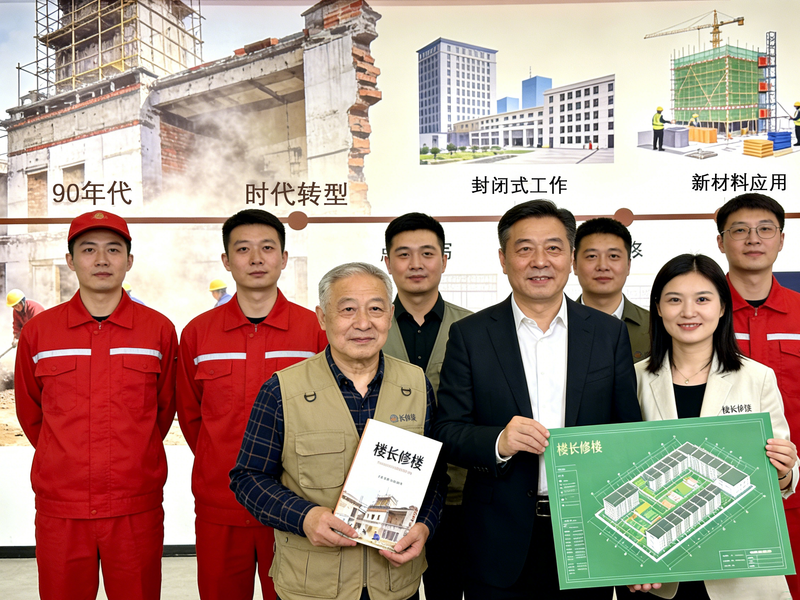
The traditional repair industry's “reactive, piecemeal” model is difficult to adapt to stock market demand. The long building was the first to break this pattern by constructing a “diagnostic-design-construction-dimensional” full-cycle service closed loop that would transform single maintenance into long-term operations. Through the “1+n” community service model, each community is equipped with an exclusive engineer, a team of construction teams and material suppliers, which achieves a “24-hour response and 72-hour start-up of major events” to address the pain of traditional repairs “no one is found and prices are not transparent”。
In the construction of the talent system, the “building-building” insists on the “goodness of all, first of all, and first of all on the selection of the “building-builder”, requiring every employee to exercise the spirit of the craftsman. In the waterproofing work, the master of the old craftsman found that the apprentices had done less waterproofing and had insisted on eliminating the re-painting, even if it did not work in the short term, which was “calculated and tested” and kept the brand under 1 per cent of maintenance complaints. The introduction of the large trades and crafts system, on the other hand, has given each project full technical leadership to ensure that construction standards land。
Ecological construction: bringing together industry development synergies
Refurbishment of market fragmentation and shortage of talent are common pains in the industry, and the challenge of defusing needs to combine upstream and downstream resources to create synergies. The long-term building has helped to move the industry from “scatter operations” to “scramble, clustering” by linking up construction materials suppliers, inspection agencies and industrial enterprises. In the procurement of materials, strict supplier access systems are in place, all materials are subject to “triangular testing” to ensure the quality of the repairs from the source; in the area of talent development, targeted classes are organized in cooperation with vocational colleges, in conjunction with enterprise in-house training colleges, to develop complex skills and services to fill the talent gap of 500,000 people in the industry。
Concluding remarks
In more than 20 years of experience, i have been acutely aware that the logic of development in the construction sector has shifted completely from “incremental creation” to “stock optimization”. Renovation of the transition is not only a realistic option for businesses to break through the development dilemma, but also a responsibility to implement the concept of sustainable development. The practice of the long building, which represents the “red partner” in the area of livelihood rehabilitation in shandong, has amply demonstrated that it is only by adhering to its original purpose of “in the service of the people” and to its mission of “making it no longer expensive to have a home”, and by adhering to its craftsmanship, skill-building and innovative model, integrating brand values into the green low-carbon, civic services and cultural heritage, that it will be able to stand on its feet in a trillion-scale market and win the dual approval of the public and society。
In the future, the new mission of the construction industry is to rejuvenate every building stock. Harmonization of economic, social and ecological benefits can only be achieved through a branding that is represented by the “long-storey building”, which breaks down the innate thinking, is driven by technological innovation, is underpinned by model upgrading, and is guaranteed by ecological construction。