After a tailings accident, the owner was most afraid, usually not of the car being broken, but of how it was fixed after the repairs。
That's what happened to mr. Bear. When the vehicle was tailed, he reported on the insurance according to process and sent it to a brand 4s store as recommended. The repairs were completed and the vehicles returned, all of which appeared to have gone through the procedure. Until he was ready to sell the car, and the used car dealer looked at the tail and reminded him that the taillight was not changed。
This sentence brings things back to the maintenance list。
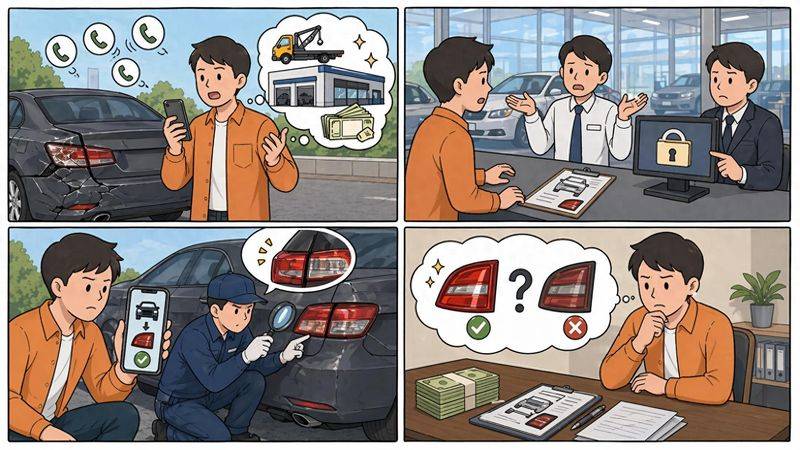
Because the maintenance of the left taillight was clearly stated in the insurance settlement records: replacement. In other words, on the books, the lamp was changed; however, according to the information later available to the owner, the physical condition of the vehicle gave him further suspicion。
If so, the maintenance records, the spare parts records, and if not, explain why the purchase order was replaced. It was not complicated, it was difficult, and mr. Bear kept asking questions and never had a happy answer。
He went to the 4s store, where he said he was looking for the person who was working at the time; he asked the insured person, who was told that the change was recorded in the system; he wanted to look at the complete maintenance records and found that many of the staff members in the store said that they had “no authority”. One taillight was changed, the owner could not find it, the regular staff could not find it, and the rest of the shop could not find it, and in the end it seemed that the answer was hidden only on the computer of one of the handlers。
It's kind of ridiculous。
A taillight, living like a confidential document。
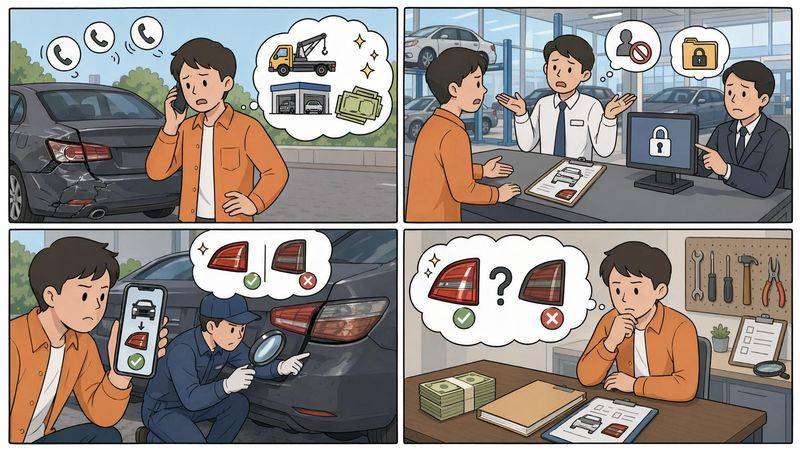
More subtlely, mr. Bear later spent dozens of dollars on his own to track vehicle crash records through third-party platforms. The report, which came out of the cell phone for a few minutes, was clearer than he asked him at the scene of the 4s: the left taillight, marked “replacement”。
This means that the problem is not “no record”, but that it is difficult for the owner to get a record directly from the formal maintenance chain that he can see and verify。
The owner was not a professional mechanic and it was difficult for him to judge whether a taillight had been changed. The insurance company has a system, the maintenance shop has a system, the caller has a record and the spare parts should have access to the warehouse. But when the owner starts asking questions, the information is blocked by a layer of doors. Those outside the door can only hear: it's done。
But it's done, not the answer。
Later, there appeared to be a clear result of the matter: mr. Bear was paid $2,000. He says it's sort of settled, but the most critical question is still hanging -- have the taillights changed
The journalist then asked the insured person, who did not reply positively; he did not answer positively when he went to shop 4s; and the client's uniform was able to find the report number, but asked the claimant for details. In a circle, everyone was standing next to the answer, but nobody wanted to hand it over。
It's not a taillight anymore。
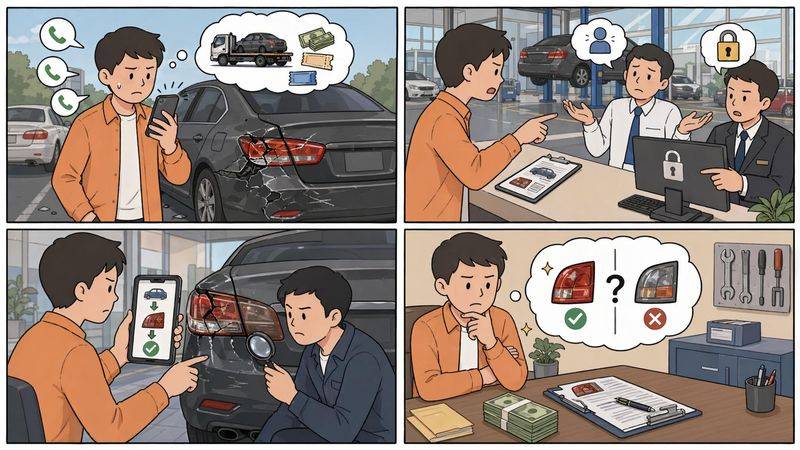
It's more like a small cut, cutting off an ecological set common in accident maintenance: after the owner had reported insurance, the site had begun to compete for customers; some had used “back-point” “road fees” to attract the owner; once the vehicle had entered the shop, how would the repair project be reported, how would the spare parts be fixed, and how the working hours were counted, the owner had become the least informative person。
Sounds a little weird. While the car was owned, the accident was experienced by the car owner, and the repairs directly affected the future sale, use and rights of the car owner. But throughout the chain, the owner often gets only one result: fixed。
As for how it was repaired, it was often not transparent what had been replaced, what had been repaired, what had been replaced, what had been paid for materials and what had been paid for working hours。
It is even more realistic that most people do not open the check when they finish repairing the car. There are many problems, and it is only when used cars are traded, again repaired, annualized or evaluated that others say, “this is not like changing”. By then, the original receptionist may have left, maintenance records may have access, insurance claims may have been processed according to the system and 4s could have been processed。
In the end, the owner stood in front of a bunch of “normal processes”, asking the simplest thing: is that changed
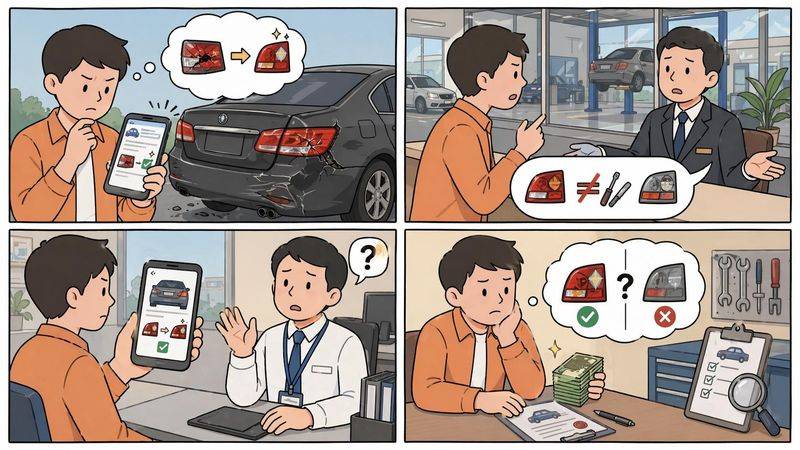
It looks small, but it's really important. It does not test the attitude of a particular employee, but the general transparency of the entire maintenance chain。
If there is a change on the books, the physical aspect should be able to withstand the question; if there is no change, it should explain why the books are so recorded; and if the owner of the vehicle needs to pay for the cost of the third-party platform to see the risk maintenance information on his vehicle, the information chain is not friendly to the real owner。
The incident ended up paying $2,000。
But i always felt that $2,000 wasn't the end. More like a stop, it tries to fall ahead of a story that is not clear。
The period that really should have passed was really simple: changed, or not。
Unfortunately, so far, the simplest question has become the hardest to hear。
So the question is left to you: will you ask for complete maintenance lists and accessories when you fix the car? If it says "replacement," how do you know it's really changed
Uniform description: part of this account article, from previous interviews and reorganization of writing material. The location, subject, identity and part of the particulars of the text are subject to varying degrees of ambiguity, reorganization or rewrite, based on the need for individual writing to be published, and the content is focused on the record and expression and does not correspond to any single realistic object。