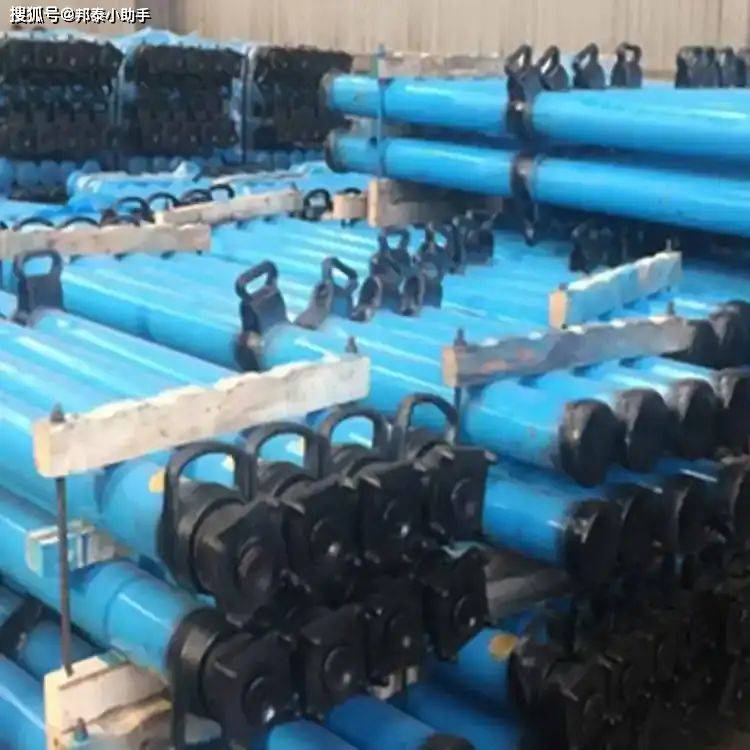
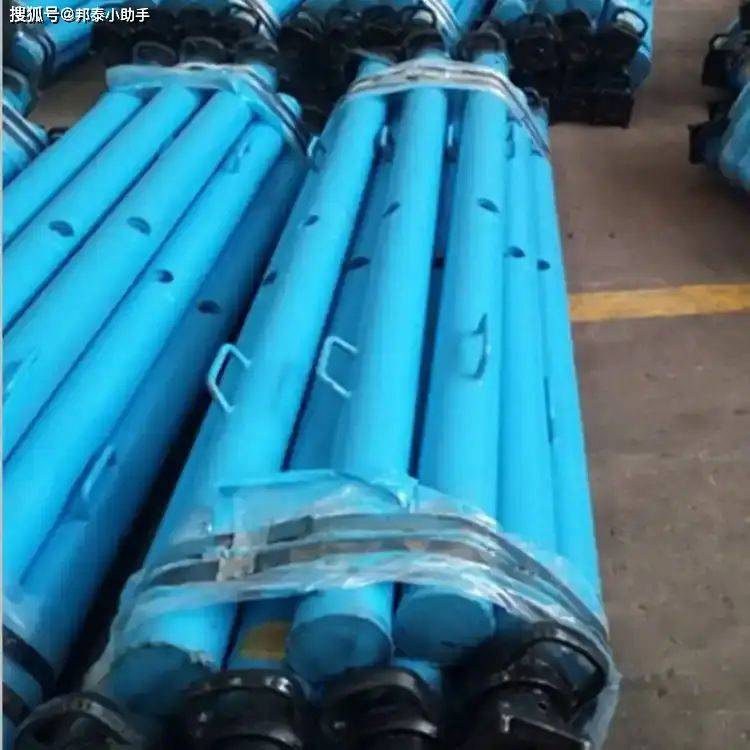
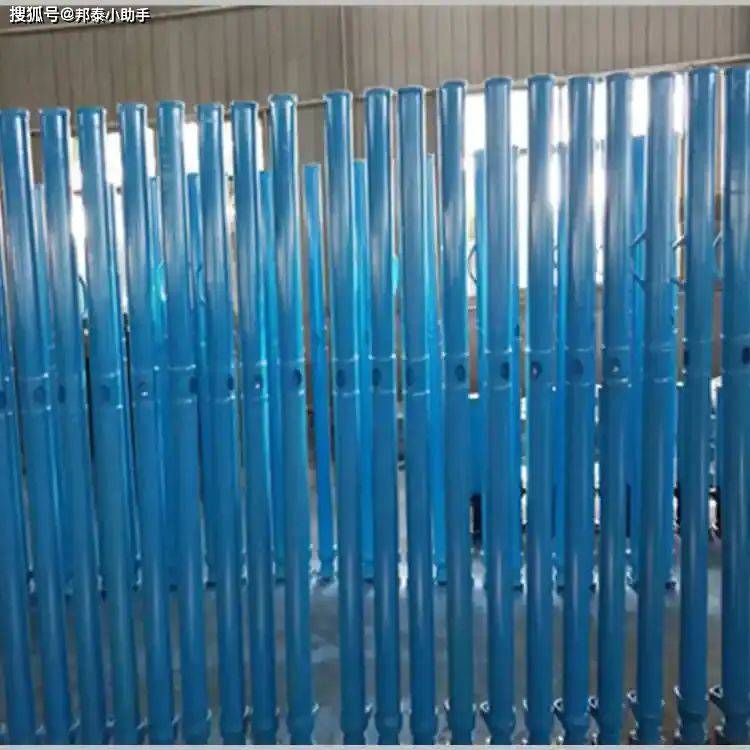
The single-body hydraulic pillar, as an emerging environmentally friendly support equipment, has demonstrated remarkable performance in today's industrial arena, and has been able to perform a remarkable role in many complex and variable scenarios。
Numerous studies have shown that it has been able to work in tandem with metal slings to build a stable support system for high-quality, general and artillery mining. For example, in some large coal mines, a combination of single-body hydraulic pillars and metal slings successfully responded to complex geological conditions and heavy mining pressures, which ensured smooth mining. At the same time, it has also performed well in terms of end-of-service support for all the jobs. The end is the interface between the working surface and the alley, where stress is concentrated and complex, where the single-body hydraulic pillar can provide strong support, effectively control the sinking of the roof and provide security for personnel and equipment。
In addition, the single-body hydraulic pillar has a high degree of flexibility and can be used as a single dot or other temporary support. It can be rapidly deployed in some sudden-onset or temporary areas of operation, providing critical support. This pillar is uniquely adaptable, especially in the tilted coal layer retrieving surface, where the tip of the coal layer is between 25 and 35 degrees. In terms of historical data and practical application cases, the single-body hydraulic pillar is capable of responding to the tilt angle of the coal layer, stabilizing the ceiling and creating a safe environment for mining operations. Its application, however, is subject to certain conditions, requiring that the ceiling conditions allow recovery of the pillar and that the floor is not too soft to ensure that the integrity of the floor is not compromised when the pillar is pressed. If necessary, this requirement could be met by increasing its stability by broadening its base。
When used in the surface of coal-soft cannon mining, special protection of the plating surface of the active column is required to prevent its collapse. For example, in certain specific areas of gun mining, effective protective measures must be taken because of the impact and impact of the blast, which can easily cause damage to the plating of the active column. When the pillar is used in conjunction with the wood beam or as a dot, the cap should be replaced with a cap, a design that effectively prevents damage to the beam, prolongs its useful life and improves the overall reliability of the support system。
Single-body hydraulic pillars can be clearly divided into different types based on different classification criteria. For example, it can be divided into external and internal liquid pillars, depending on the mode of supply and the work fluid. The external liquid pillar is usually applied to large-scale centralized liquid supply systems, while the internal liquid supply pillar is more advantageous in some decentralized scenarios. Depending on the course of work, it can be divided into single and double stretching pillars. The single stretcher pillar structure is relatively simple and applies to situations where the work schedule is less demanding; the double stretcher pillar provides a larger work schedule and adapts to more complex work situations. Depending on the material used, it can be divided into ordinary steel pillars, high titanium alloy pillars, etc. The high titanium alloy pillar is more intense and corrosive, and it is performing well in bad circumstances. In addition, in structural form, it can be divided into piston and piston floating pillars. The piston pillar works in a simple and straightforward manner, while the piston float pillar has unique advantages in terms of stability and carrying capacity。
The function of a single-body hydraulic pillar as a resistance support device for external fluids is diversified. It can be used either as a silo or other temporary support to provide stable support for high-quality general and artillery mining. It has a wide range of effects and applies to a wide range of scenarios, including the tilted coal layer retrieving surfaces between 25 and 35 degrees, and the softer coal-based gun mining surfaces。
In addition, the monomer hydraulic pillar has a number of significant advantages. From a mechanical point of view, it has a strong anti-fouling capacity, capable of maintaining a stable support effect with uneven stress; good stability, which does not tend to be tilted or unstable during long-term use; high reliability, which is certified by rigorous quality tests and practical applications, allows for continuous and reliable work in harsh environments; and low weight, which facilitates transport and installation and reduces human and material costs. At the same time, it has a large schedule of work and is widely used to meet the needs of different work situations。
On the cost side, the monomer hydraulic pillar has easy access and low maintenance and maintenance costs. It has a relatively simple operating process, with workers having short-term training to master it, which has greatly improved its efficiency. Moreover, the relatively low cost of spare parts for their repair and maintenance reduces the operating costs of the enterprise. At the same time, the single-body hydraulic pillar uses only neutral water, which to some extent saves operating costs and reduces reliance on special liquids。
Key parts for the single-body hydraulic pillar include seals, fuel tanks, live cylinders, hand handles, columns, roofs, floors, pistons, cylindrical distribution, wire connections and record springs. These components work together to ensure the proper functioning and excellent performance of the pillars。