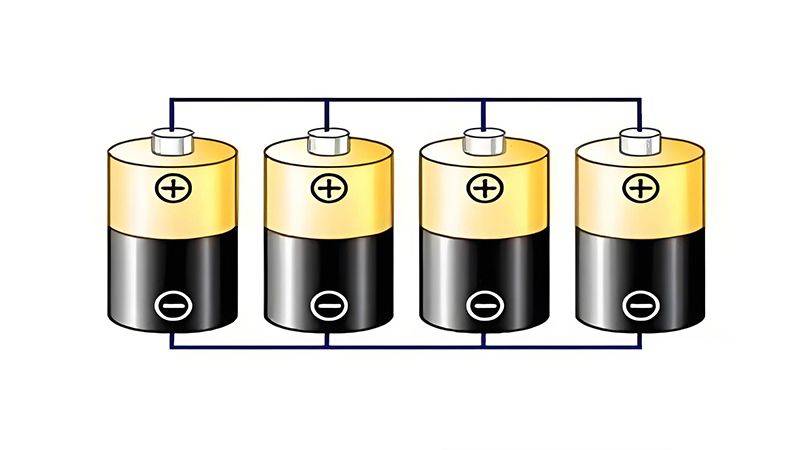
It can be combined, but only if the key preconditions are met and the effects and risks associated with it are understood, so long as all batteries have exactly the same voltage at the moment when they are connected (preferably within 0. 1 v) and the “same voltage” is in a state of instantaneousity, the more central problem being the cell's chemical properties, internal resistance, capacity, self-discharge rate and state of health, if these differences are significant, and then some problems arise.
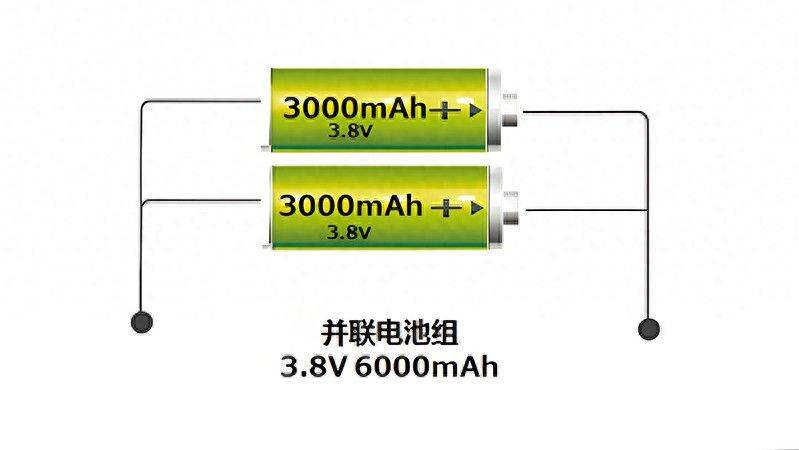
Key preconditions: pre-link operations
1. Accurate measurement of voltage: before connecting to any conductor, the opening voltage of each cell is measured separately in a tensile table to ensure that they are absolutely equal (ideal state) or that the margin is very small (e. G. 0. 1 v).
Charging to the same voltage: if the voltage is different, each battery must be charged to the exact same voltage (e. G. To 13. 2 v) with a separate charger, and then joined.
3. Use of an average pressure line or balanced connection: for multiple sections combined, it is recommended to first connect and connect the bus, and then connect the positive and negative poles of each battery separately to the bus, instead of simply “close the tails together and then join together”, which helps to reduce circulation.
Problems and implications that may arise when linked
1. Self-balancing and circulation:
• when combined, the cells with high voltage charge to the cells with low voltage, which is called "circulation".
If the battery voltage is very close, the circulation is very small, and the system's voltage will be balanced very quickly.
• but if the combined pre-voltaic voltage varies significantly, it produces a large instant circulation, which can damage batteries, cause overheat and even be dangerous.
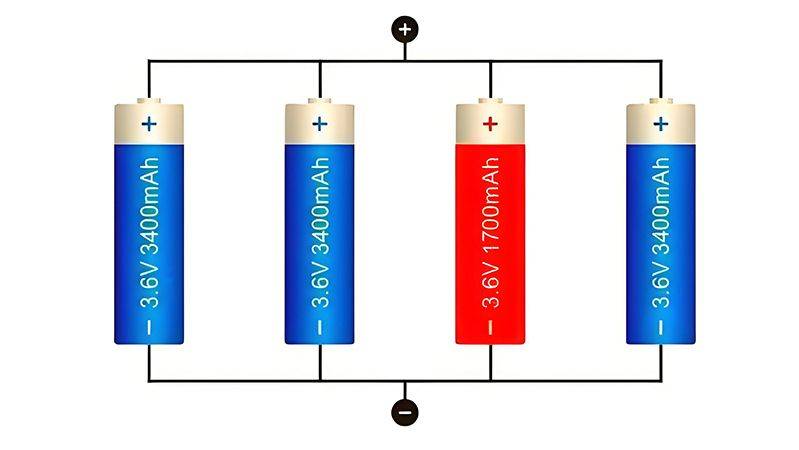
Impact of differences in capacity:
· when power discharges occur: cells of different capacity are combined, amounting to a “big bucket” and a “small bucket” being discharged simultaneously. Because the combined voltage remains the same, they share the discharge in proportion to their internal resistance, and small inner-retarding batteries (usually newer or healthier batteries) produce more currents and carry more burdens, which may lead to faster deterioration.
· when charged: similarly, chargeable currents are distributed by internal resistance, smaller cells absorb additional currents and may be filled first, and small-capacity batteries may be overloaded if the system is not managed independently.
Long-term operation: characterization differences can lead to a constant small circulation between batteries, acceleration of battery ageing and reduction of overall system efficiency and reliability.
3. “bride effect”:
The total available capacity of the combined battery is theoretically the sum of all battery capacity ...
• in practice, however, because of the need to avoid any single-cell overloading, discharge termination depends on the cell that was first discharged, and therefore, if the battery is old and new, it may not be possible to fully utilize the full energy of the large-capacity battery.
Similarly, charging is limited by the first full battery.