


I. Basic concepts of thermal electrical resistance
Thermal resistance is a temperature detector that is often used in low- and medium-temperature zones and is based on increased resistance with higher temperatures using metal conductors. Thermal resistance is characterized by high measured accuracy and stability. Among them, platinum thermal resistance is the most accurate measure and is widely used for industrial temperature measurement and standard instrumentation。
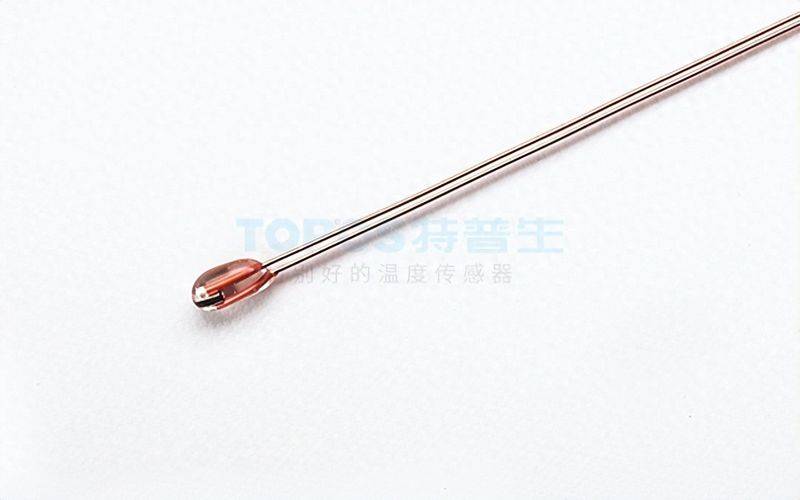
Thermal electrical resistance is mainly made of pure metal materials, commonly used in the form of platinum, copper and, more recently, nickel, manganese and zirconium. Of these, pelicans are the most commonly used heat materials. In addition to platinum, metal thermal and electrical resistance materials such as copper, nickel, iron, iron and nickel are used in industrial measurements。
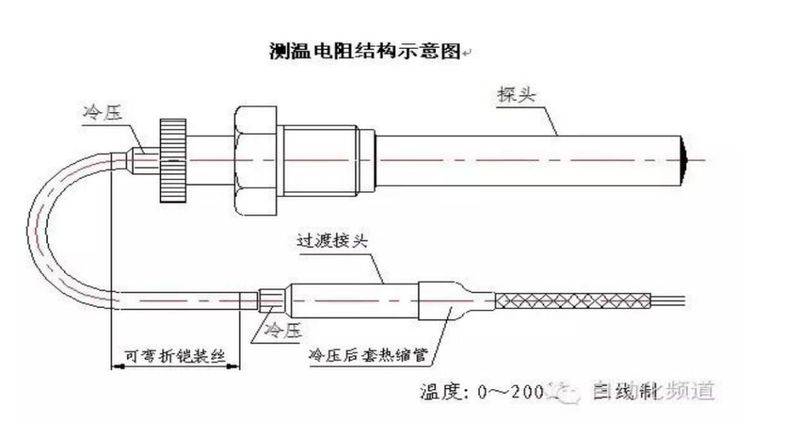
(2) thermal resistance works
Thermal electrical resistance is a device that measures temperature and associated parameters using the properties of electrical resistance in conductors or semiconductors that vary with temperature. It is mainly made of pure metal materials, most commonly platinum and copper, and has recently begun to produce heat and electrical resistance using materials such as nickel, manganese and thorium. In order to transmit a resistance signal to a computer control device or other secondary instrument, it is usually necessary to use a lead to connect the thermal resistance。
(3) main types of thermal electrical resistance
1 general type of thermal electrical resistance
Temperature measurements of thermal resistance suggest that changes in measured temperature are directly measured by changes in the thermal resistance values, and therefore changes in the conductive resistance of various types, such as thermal resistance line, can affect temperature measurements。
2-heat resistance
Thermal resistance is a solid entity made up of a combination of thermogenic elements (temperature retardants), fuses, insulation materials, stainless steel casings, typically with a diameter of 2 - 8 mm, with a minimum capacity of up to mm。
Compared to the normal type of heat and electrical resistance, it has the following advantages: a. Is small, has no air space in the interior, is thermal inertia and is measured with a small lag; b. Is mechanically effective and resistant to shocks; c. Can bend to ease installation; and d. Has a long useful life。
3-end thermal resistance
End-side thermal resistance temperature element is bypassed by specially processed electrical resistance wire, which is attached to the end of the thermometer. It more accurately and quickly reflects the actual temperature of the measured surface than the general axle-to-thermal electrical resistance and is suitable for measuring the end temperature of the axle-wall and other parts。
4-explosive thermal resistance
The blast-proof thermal electrical resistance, through a specially constructed wire box, limits the explosive composite gas inside its shell to explosions occurring as a result of effects such as sparks or electric arcs, and does not cause explosions at the production site. Explosive-proof thermal electrical resistance can be used for temperature measurements of explosive hazard sites in the bla-b3c class area。
(4) temperature measurement
Temperatures of thermal resistance differ from those of the thermoelectric dolls. Thermal resistance is measured by temperature based on the heat effect of the resistance, i. E. The resistance value of the resistance varies with the temperature. Temperature values can be determined by measuring the resistance to temperature thermal resistance. There are two main types of metallic thermal resistance and semiconductor thermally sensitive resistance。
The electrical resistance value and temperature of metal thermal resistance can generally be expressed in the approximate relationship pattern, i. E
Rt=rt0
1+α (t-t0)
In formula, rt is the resistance value for temperature t; rt0 is the resistance value for temperature t0 (usually t0=0°c); and alpha is the temperature factor。
The resistance and temperature relationship of the semiconductor thermal sensitivity resistance is rt=aeb/t
In form, rt is the barrier value when temperature is t; a, b depend on the constant of the structure of the semiconductor material。
In comparison, heat-sensitive resistance has a higher temperature coefficient, with a higher electrical resistance value at constant temperatures (usually over several thousand euros), but is less interchangeable and non-linear, with a temperature range of around -50 ~300°c, which is used extensively for temperature detection and control in domestic electricity and automobiles. Metal thermal electrical resistance is generally applied to temperature measurements in the range -200 ~500 °c, which are characterized by accurate, stable and reliable measurements, with very wide application in range control。
In industry, while most metal conductors are of a temperature-modified nature, not all metals are applicable as thermothermal resistance. Metal thermal electrical retardants typically have the following requirements: the highest possible temperature coefficient, the high resistance rate (to reduce sensor size and remain sensitive), the stable chemical physics within the temperature range used, good replicability, and a clear function between the electrical resistance value and temperature change (preferably linear)。
Practical application
Currently, platinum and copper are the most widely used heat-retardant materials:
1. Platinum resistance: platinum resistance has high accuracy, applies to neutral and oxidizing media, and is stable. It is somewhat non-linear at the time of temperature change, and the higher the temperature, the lower the resistance rate。
Copper resistance: the value of copper resistance in the temperature range is linear with the temperature and has a high temperature linearity. It applies to an environment free of corrosive media. However, copper is vulnerable to oxidation when it exceeds 150°c。
The two materials have respective advantages and limitations in different applications, and the selection of suitable thermal resistance material depends on specific temperature measurement needs and working environment conditions。
In china, r0 = 10, r0 = 100 and r0 = 1,000 are most commonly used, with fractional numbers pt10, pt100 and pt1000; and copper = 50 and r0 = 100, with fractional numbers cu50 and cu100. Pt100 and cu50 are the most widely used。
Connect
Thermal resistance is a component that converts temperature change into a change in electrical resistance value, usually requiring the transmission of a resistance signal through a lead to a computer control device or another instrument. Industrial thermal resistance is installed at the production site at a certain distance from the control room, so thermal resistance leads have a greater impact on the measurement results。
There are three main ways in which thermal resistance can be directed:
Two-line system:
The two-line system, which connects a conductor at each end of the heat resistance to elicit a resistance signal:
This route is simple, but because there is an inherent resistance r, r size associated with the mass and length of the lead line, this route only applies to situations where the precision is less measured。
Three-line system:
At one end of the root of the thermal resistance, a lead line is connected, and at the other end the two lead lines are referred to as a three-line system, which is usually used in conjunction with the bridge and which can be better used to eliminate the effect of the wire resistance, which is most commonly used in industrial process control。
Four-line system:
The method of connecting two lines at each end of the root of the thermal resistance is called the four-line system, two of which provide constant current i for thermal resistance, convert the r to a voltage signal u, and then lead u to a secondary instrument through two other lines. This mode of lead can be seen to completely eliminate the electrical resistance of the line, mainly for high-precision temperature detection。
Thermal resistance is often based on a three-wire approach, which is designed to eliminate measurement errors caused by resistance from the connection. As the circuits used to measure thermal resistance are usually unbalanced bridges, thermal resistance is a barrier to the arm of the bridge, and the connection of the guidance lines also affects the bridge, leading to measurement errors. A three-line system would solve the problem. One of these is connected to the power source end of the bridge, and the other two are connected to the arm of thermal resistance and the arm of the adjacent bridge, respectively, so that the error caused by the electrical resistance of the circuit is eliminated and the accuracy of the measurements is improved。
(5) thermal and electrical resistance structures and production process characteristics
The structure consists of thermal electrical retardants, extracting wires, insulation skeletons, protective tubes, wiring boxes, etc. Thermal electrical resistance = electrical resistors + insulation tubes + wiring boxes。
Production process characteristics
Thermal electrical resistance
Thermal electrical resistance to masts: 0 in diameter. 03-0. 07mm pelican, double-wire-free. Round
On the cascading cavity, two sides of each are insulated with clouds, which are made of nails and ceramic cards。
When a protective tube is installed, the two sides of the thermal resistor of a cloud mast are tied to a complete semi-circle, the effect of which is to bind the resistor in the middle of the protective tube, which increases the resistance to earthquakes and shocks, and also enhances thermal conductivity and reduces the post-temperature and self-heating effects. Using temperatures below 5000c。
Insulation skeleton
Effects: entanglement, support and stationary thermal electrical barriers. Its quality affects technical indicators。
Materials currently in use: clouds, glass, stone, ceramics, plastics。
(1) thermal electrical resistance of cloud masts
(2) thermal resistance to glass skeletons
(3) thermal electrical resistance to ceramic skeletons
(4) thermal resistance to plastic skeletons
Lines
Definition: connection conductor from thermal resistor to the end of the connection is referred to as the extractor。
Question: lead wires have electrical resistance values and affect measurement accuracy。
Solutions:
A. Select a specific material, with a high purity of the internal extraction line, with a low heat power generated between the electrical barrier and the end of the wire, and
** the use of non-volatilizing, antioxidizing, non-modified materials at temperature. Industry uses platinum as a barrier to extract wires from silver wires and, at high temperatures, from nickel wires. Copper and nickel resistance can be elicited by copper wire and nickel wire. The diameter of the extraction line is much larger than that of the electrical resistance wire, which reduces the electrical resistance of the extraction line。
B. Changes in wiring
Teppuan, founded in 2011, is a state high-tech, specialized and new enterprise. Mainly, ntc chips, heat-sensitive electrical resistance, temperature sensors, energy storage liners, energy storage ccs integrated collection parent platoons, etc. Have been developed. The competitive advantage of service-based technology to achieve customer value is clear: self-development of ntc chips and heat-sensitive electrical resistance to achieve minimum containment size and maximum temperature accuracy in the country; patenting of 100 items, retention of 2 items of closed technology; and one-stop service to customers for temperature control products。



