Just after spring festival, the annual goods in the refrigerator continue to be “posted” — frozen meat unfrozen with blood, fried firewood, frozen shrimp with black head, frozen fish shrunk, behind the “one-time difference” in the freezer area。
The ordinary refrigerators, which are frozen at 18°c, 25°c, can only “freeze” foods but cannot be locked in fresh; and -40°c, -60°c, -65°c deep-cold technology, which allows foods to remain alive for one year。
For a long time, very low-temperature core technologies in the temperature technology industry have been monopolized abroad and deep-cold demand for domestic refrigeration products has not been effectively met. Behind this seemingly small temperature differential is a technology that has been in existence for decades in china’s refrigeration sector. China’s firms have broken foreign monopolies and run from a trail of hot blood to a lead。
And grind a "key" that opens the cold door
For refrigeration technology, there was a difference between the two。
This sentence is not an exaggeration in industry, but the truth that lies in every technological breakthrough — especially in the cold, low-temperature field, where the sinking of every temperature is a test of technology。
In terms of the nature of food preservation, the difference at one point determines whether the “locks” or the “scatter”. The 18°c of daily consumer contact is essentially designed to slow the water in the food cells - – ice crystals expand by about 10 per cent, like countless little knives, plunging the food cells to the ground, causing a massive loss of cell fluids when they are unfrozen, with the attendant problems of bleeding water, firewood and black hair。
Theoretically, when temperatures reach -150°c and below, the water enters a “glassed freeze”, ice crystals fail to form, food cells remain intact, unfrozen and fresh. As a result, the freezing of domestic temperatures is also constantly challenging deep cold temperatures. But for a refrigeration system, even a once-in-a-life test will be faced。
The core of refrigeration is “controlled temperature accuracy”, which increases geometrically the requirements for compressors, refrigerants and insulation materials at a 1°c decrease. For example, from 24 °c to -60 °c, compressor cooling efficiency will decline in a straight line and the problem of cryogenic condensation of refrigerants and clogged pipes will be addressed. Thermal insulation material is more likely to be “extremely temperature-preserving”, otherwise even a small temperature leak will result in a doubling of energy consumption and temperature control failure。
It is also because of these technical barriers that, before the fourteenth five-year plan, my country stayed at 18°c to 24°c with the main cooler temperature, which is also a source of frozen meatwood and frozen fish in many households. For reasons of high cost and technical complexity, low-temperature technologies below long-lived locks are being used in areas such as laboratory and medical care, with the aim of becoming widely available in day-to-day home scenes。
From home refrigerator to winter oscillation
Let the people eat fresher, safer, more affordable. Down — this platitude is the starting point for china's refrigeration industry to break the monopoly。
As an example, after countless r & d workers have taken off day and night, in 2016, after an old temperature technology company, akuma launched a domestic cashier - 40°c home freezer - for the first time showing chinese families the possibility of "frozen meat." the unfrozen pork is still red and elastic, and the water is locked in the meat, and the market triggers a rush to buy it and gives hope for a break-in in domestic refrigeration。
But the r & d team didn't stop, and they knew that -40°c was the starting point, and to truly break the monopoly, it had to go to -60°c, -70°c. - refrigeration equipment below -60°c has been dominated by overseas enterprises for many years, creating multiple barriers to technology, patents, supply chains, making it extremely difficult for domestic firms to break through and a long commercial cycle。
It's hard work. In 2020, the australian corma reached -60°c cooling capacity six times higher than that of the traditional freezer; the 70°c deep freezer, introduced in 2023, allowed frozen shrimp to remain in the dark and seafood to remain waterless, with the market share of 36% of the bedroom deep freezer to remain stable in the country。
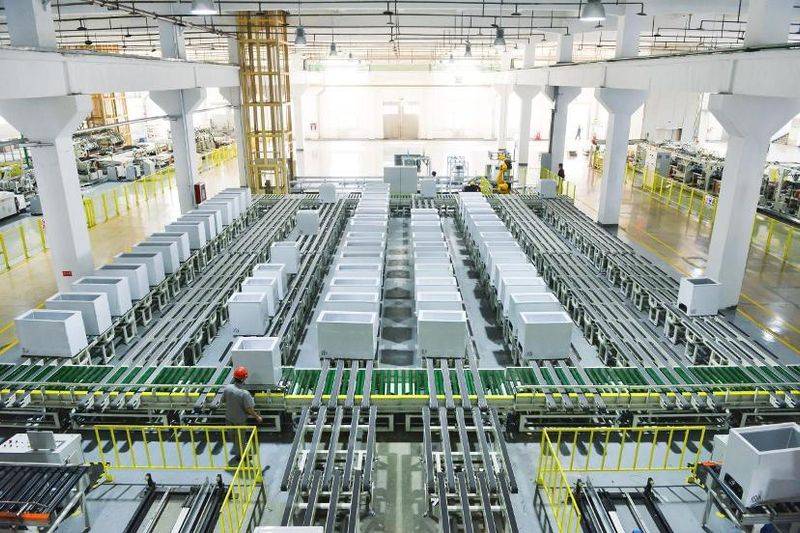
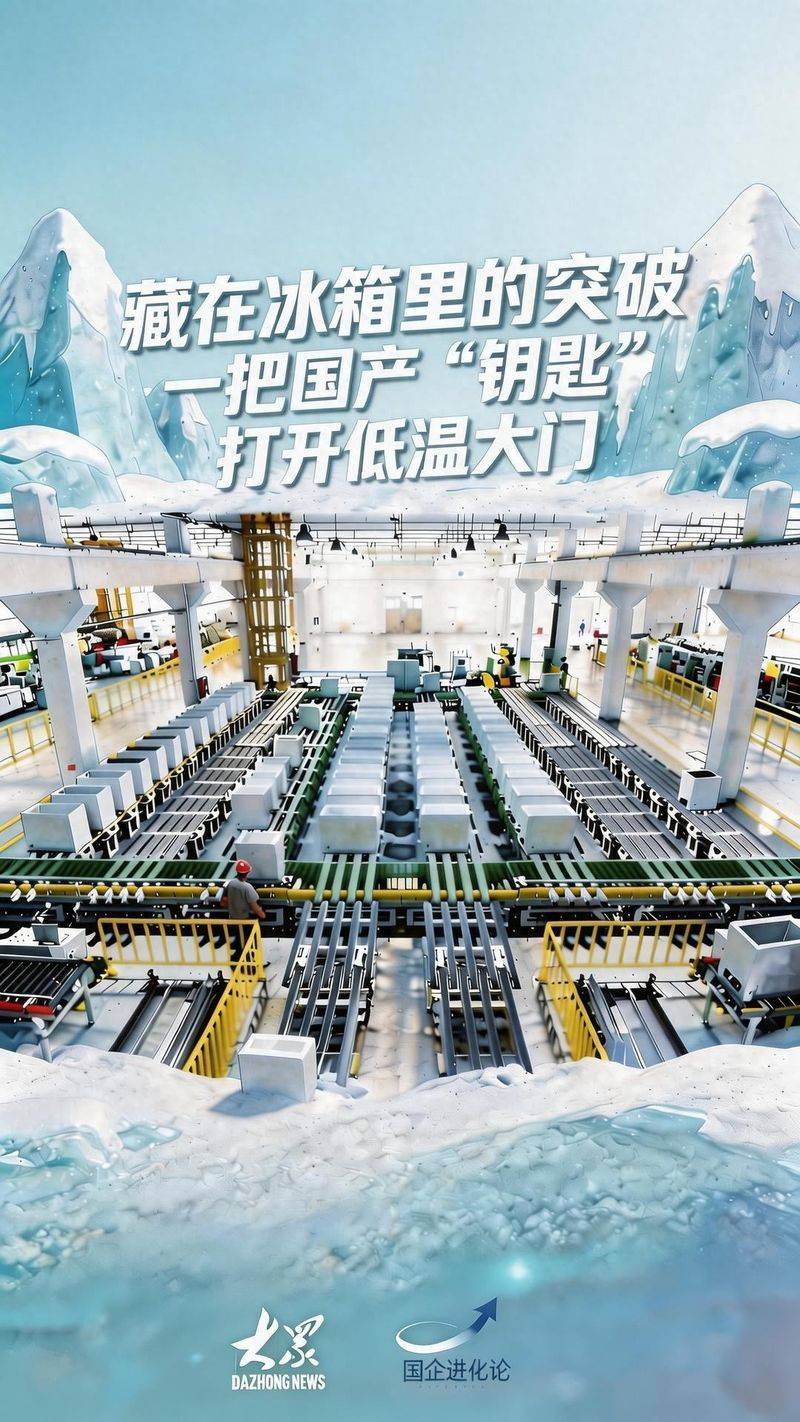
(figure of austrocoma's smart box production line)
In 2025, in the domestic market, the australian koma family had been on the list of names for 11 consecutive years, making it a trusted choice for millions of families。
The need for hypothermia never stops at home. This breakthrough in domestic technology has not only changed the table of chinese households, but also allowed china's temperature technology to successfully take up the global stage。
At the beginning of 2021, an emergency mission was placed in the hands of the australian comar research and development team: the development of a deep cryogenic cold module for the beijing winter olympics, which requires a rapid drop to -180°c and equipment. This is a technical wall that europe and america have blocked for almost two decades, breaking through, not only as a product, but also as china’s temperature technology has been pushing for extreme temperatures。
The choice of technology path is a gamble. The team eventually decided to challenge the industry's scarce liquid nitrogen refrigeration programme. The greatest difficulty is that liquid nitrogen at 196°c is very condensed into ice and clogged systems in the cycling windway. To this end, the project team tested repeatedly in the laboratory。
The real test is human testing. To obtain real physiological data, team members rotate into the deep cryogenic module. "ears, arm, frostbite is a common occurrence," the australian comar researcher dune just remembered, "but we recorded almost 10,000 data, which provides the core support for equipment optimization."
The first prototypes were delivered on time on 15 september 2021. At the winter olympiad, the equipment cooled for almost 30 seconds from its foreign counterparts. Chinese enterprises have managed to tackle the technological bottlenecks in extreme temperate areas and have sharpened a key “national technology key” for the entire industry。
China's temperature program to the world
The technical maps expanded in the laboratory, and the market maps were subsequently distributed overseas。
South-east asia, on the other hand, is the key to this global expansion. On october 20, 2025, the kendall industrial park, sanbao city, indonesia, officially laid the foundation for the indonesian smart plant in aokoma, which is also an important illustration of china's global strategy for temperature technology. This intelligent plant, which not only has a scalable capacity, but also integrates the entire chain of r & d, sales and services, directly irradiates the entire south-east asian market and truly achieves “china technology + local manufacturing” by allowing domestic temperature technology to take root and serve the area. In the future, half a million coolers per year will be locked at depths of -65oc, moving from here to the world for the benefit of consumers in more countries and regions。
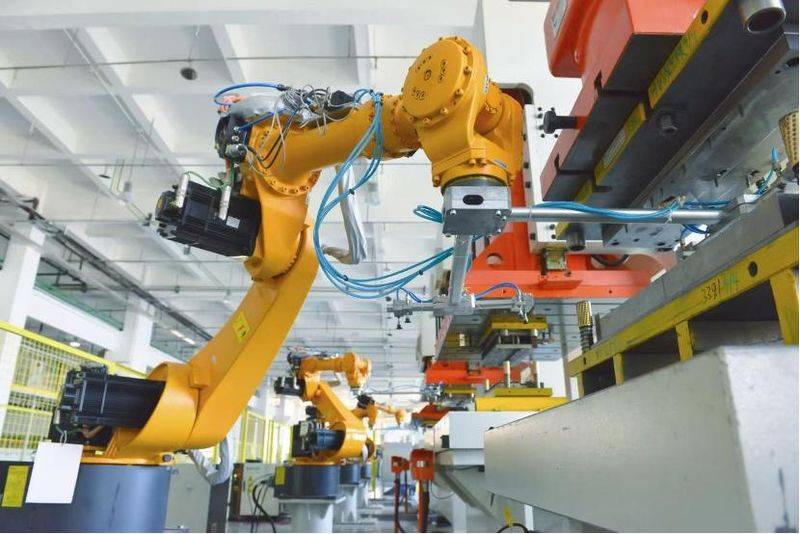
"the austro-kurma smart plant, the golden line."
Not only in indonesia, but also in the middle east, latin america and africa, the footprint of china's temperature technology continues to expand: in 2025, auckoma, in cooperation with head agents in yemen, will cover the entire country through more than 30 outlets; in latin american markets such as mexico, income and profits have increased by more than 100 per cent
A group of bright-eyed data shows how china's temperature technology has crossed the sea: in the first half of 2025, australian corma had a 63 per cent increase in overseas brand income over the same period, with air conditioners and washing machines growing at a high rate of 94 per cent and 349 per cent, respectively。
Today, chinese enterprises are not just exporting a cooler, but a set of intellectual temperature management capabilities. In the case of auckema, for example, the cold chain full-life management system has served over a million units worldwide; the ais recognition of smart retail terminals exceeds 99 per cent. In 2025, data from world branded laboratories showed that the australian corma brand was worth $7,7928 million。
In the innovation hall of auckoma, a huge e-world map flashes. Each point of light represents a group of operational aukoma cold chain equipment, spanning the five continents and the four seas, woven into a global temperature safety net. This is the "temperature map" that unlocked the temperature key。
"no best, only better." it was born 39 years ago of a simple promise that is now written into the wider ocean. In the case of temperature, the main actor was never just a business, but the chinese refrigeration industry itself, which kept asking “what else to do”。
Zhang da chen xiao wan