Key issues in sofa tourism
Security issues
The current sofa tourism is mainly networked, and there is more or less some danger in the virtual world. Since its inception, there have been different international voices challenging its security and viability. The threshold for sofas to become members is currently lower, and additional members can be added only through online registration. While credibility can be enhanced through network certification, membership evaluation guarantees and so on, the network world and real society are too unpredictable. Unlike other traditional forms of tourist tourism, sofa tourism is based mainly on mutual respect and integrity, and the safety and security of sofa users, particularly free accommodation, is of greatest concern to the vast majority of chinese. My country is currently not well connected to this kind of sofa self-service tourism, including supervision, management and the most basic legal safeguards, which do not adequately guarantee the safety of sofa tourism, and where legal proceedings are highly controversial and there are some security risks。
2. Question of confidence
Currently, human relations in china are relatively commercialized, and complaints about the lack of trust between people are often heard in microblogging, forums or the media. China is a well-known society, where trust is more limited to family members and acquaintances, where people are accustomed to differentiating with different subjects according to their level of sophistication, and instinctively have a sense of preparedness and mistrust towards strangers. And sofas travel is premised on mutual trust. The crisis of confidence prevailing in today's society has made chinese sofa owners less trusted and tolerant in accepting sofas than the countries of europe and the west。
3. Language issues
The main obstacle to the integration of chinese sofas into intercontinental sofa tourism is language. At present, while china ranks tenth among the world's largest sofas, chinese sofas are not the main group of international sofas. Couchsurfing's global sofas can be found mainly in english, where the information of the sofas is mostly in english, which is the most used language for online and offline communication. Although chinese is among the top ten statistical languages on the sofatist website, it is mainly limited to the chinese region. The low level of english language among most chinese sofa owners has to some extent affected their in-depth interaction with international sofa players. There are problems such as the slow growth of chinese sofa owners and the gradual withdrawal of many old sofa owners from the sofa circle。
4. Cultural differences
The purpose of sofa tourism is intercultural communication and communication. Although china has also had the words “reading a million volumes of books, miles of roads” since ancient times, most people are still used to traveling with groups, walking around with sightseeings or with a mind to travel here, with little cultural depth of communication. Against the background of cultural differences, which are often more cautiously closed to chinese than to westerners in terms of cultural traditions, a sense of trust and distance from strangers, it is difficult for chinese sofas to accept uninformed situations, either objectively or subjectively。
Sofaer tourism development response thinking
1. Sofaer tourism can drive tourism volunteer services
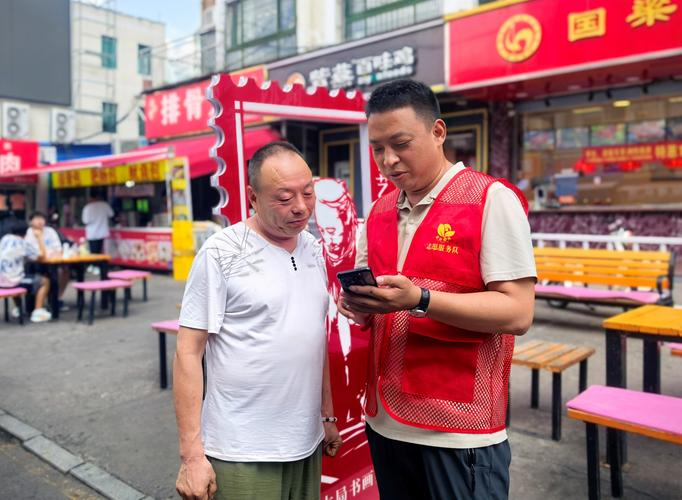
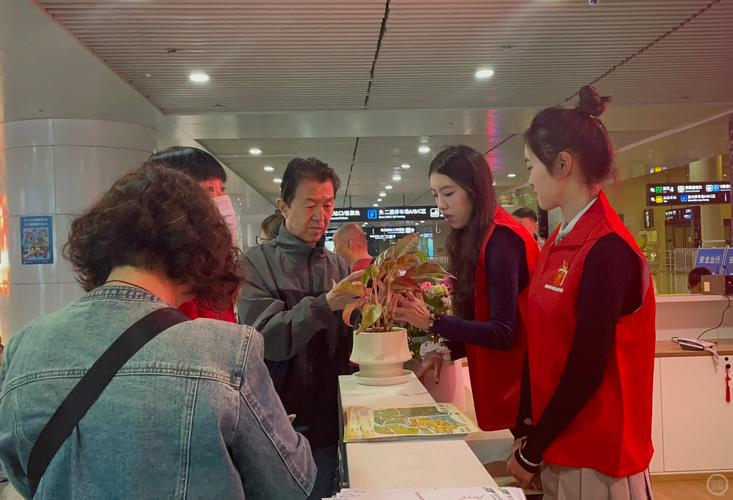
A tourist volunteer is a person who, in the tourism service, provides services such as guidance, counselling, lectures and so forth, the main characteristics of which are voluntary, unpaid and personal participation. Volunteer tourism has contributed to a certain extent to the development of local tourism and has facilitated visitors everywhere. Free accommodation, guided tours, etc. Provided by the sofa owners are to some extent similar to volunteering, and their main features are voluntary and pro bono, such as the sofa-eater event “sleeping in my home in asia” launched by asian shipping volunteers in guangzhou. With the rapid development of tourism in china, particularly with regard to the increase in the number of tourists entering the country, the development of high-quality sofa owners who are familiar with indigenous culture and who understand a certain foreign language join the tourist volunteer corps, which will facilitate the in-depth cultural exchange between the main clients and help to raise the profile of the country. The sofa tourism model can be promoted through volunteer tourism services to the extent of awareness and participation in major tourist cities in china。
2. Sofa tourism can link the tourism industry through online tourism platforms
The launch of the sofa tourist website is less funded, and its work is largely carried out by volunteers. As a not-for-profit organization, the sofa tourist web site is mainly maintained by voluntary contributions from its members and is open to the financial position, financial disclosure and transparency, which are worthy of some domestic tourism sites. In a sense, the sofa tourism website is a self-help online tourism platform, where information on tourism can be disseminated between sofas and sofa owners via the sofa online platform, thus releasing the tourism culture from virtual space into a realistic tourism product. Sofa tourism is also a tourism resource and a product of the tourism industry. Networks are an important vehicle for the rapid spread of sofa tourism in today's world, but their construction also requires government support, industry promotion, business involvement and tourism. Sofaer tourism can facilitate the development of local tourism industries and improve the tourism market environment。
3. Sofa tourists can facilitate linguistic and cultural exchanges

In the 1990s, when the term “alternative tourism” emerged, some scholars considered that a combination of tourism development and community-building would contribute to sustainable socio-cultural development. There are also scholars who, from a tourist perspective, believe that the motivation and experience of tourism will have an important impact on tourists, such as the acceptance of some destination cultures through exchanges of experiences for each tourist arriving at a new destination, while necessarily taking local cultures and having some impact on destination cultures. These phenomena contribute to the strengthening and protection of indigenous cultures and thus their development. Sofa tourism is a unique cultural phenomenon of tourism, the purpose of which is to promote communication and understanding between destinations and destinations, with both sofas and sofa owners being able to fully appreciate each other's rich and sophisticated cultures and thus promote cultural exchanges. When the couchers were treated with the warm hospitality of the sofa owners, they were impressed by the hospitality of the locals and had a greater interest in a better understanding of local culture. Cultural exchanges and integration between peoples bring closer to destination and destination, thus making relations more harmonious among the nations of the world. The sofa tour site is not just a site for free accommodation during tourism, but a cultural exchange park based on trust. As a mutual aid tour, sofa tourists can conduct cultural exchanges similar to aupair (reciprocal) or homestay (hosting families) through specialized and operational facilities, providing tourists from around the world, especially young people, with an opportunity to experience culture and learn language in their families in the destination countries, while also creating opportunities for locals to learn more honestly about foreign cultures。
4. Improving the legal regime for sofa tourism
The development of modern society has made tourism behaviour increasingly complex and fraught with contradictions and conflicts of interest. Sofa tourism is largely sustained by mutual respect and integrity, and the relationship between principals is delicate, with some unforeseen security risks behind it. As an emerging culture of mutual aid travel, though it has developed over the past 10 years, the size of the overall tourism industry and its impact have shown that sofa tourism is still relatively small and still in its infancy, the concept and model of sofa are of some practical and promotional value in terms of the development of cross-cultural exchanges in the globalization process of the information age. At present, while the practical conditions for the spread of sofa tourism in china are not yet in place, the normative development of this model is to be expected if online tourism platforms (websites) are able to verify their qualifications, assume corresponding responsibilities and provide more free services and security management in conjunction with organizations such as chinese volunteers and non-governmental organizations。
From "https://wiki. Mbalib. Com/wiki/%e6%b2%99%e5%e8f%91%e5%ae%ae%a2%e6%97%e6%b8%e6%b8"