Quantum mechanics, an important cornerstone of modern physics, has evolved from purely theoretical research to a wide range of practical applications since the beginning of the twentieth century, profoundly changing human perception of the material world and driving the rapid development of numerous scientific fields and technologies. From the strange behaviour of microparticles to the physical phenomena of the macroworld, the principles and theories of quantum mechanics permeate every corner of everyday life, with far-reaching implications for scientific and technological progress and the development of human society。
As science and technology progress, quantum mechanics is increasingly used in modern life, covering a wide range of key areas, such as communications, computing, energy and health. In the area of communications, quantum communication technologies, using characteristics such as quantum entanglement and distribution of quantum keys, have achieved the safe transmission of information and provided completely new solutions to network security in the information age; in the field of computing, the emergence of quantum computers is expected to break the computational capacity limits of traditional computers and can bring about revolutionary changes in scientific research and engineering applications in a short period of time, such as code breaking, optimization issues, molecular simulations, etc.; in the field of energy, quantum mechanics has provided theoretical support for the development of new energy technologies, such as solar cells, superconducting materials, which can contribute to energy efficiency and sustainable energy development; in the field of medicine, the application of quantum mechanics has contributed to the development of magnetic resonance imaging (mri), quantum sensors, etc., and has improved the accuracy and early detection of disease diagnosis and made an important contribution to the cause of human health。

Quantum calculations
Quantum calculations show great advantages in practical applications. In the field of drug development, quantum computers can accelerate the process of research and development of new drugs by simulating molecular quantum mechanics and rapidly and accurately predicting the interaction between drug molecules and target points. While traditional methods are large and time-consuming to simulate complex molecular structures and interactions, quantum computers can use their powerful computing capabilities to perform complex simulation tasks in a short period of time to provide greater possibilities for drug research and development. Google, for example, used quantum computers to simulate the electronic structure of organic molecules, providing key information for the design of new drugs。
Quantum computers also have important application value in financial risk forecasting. The complexity of financial markets makes risk forecasting an extremely challenging task, with traditional computers often facing computing capacity constraints when dealing with large amounts of financial data and complex models. Quantum computers can rapidly analyse and process big financial data through quantum algorithms, predict market trends and risks more accurately and provide strong support for decision-making by financial institutions. Learning algorithms through quantum machines, for example, can more efficiently exploit potential patterns and patterns in financial data and improve the accuracy of risk predictions。
Quantum communications
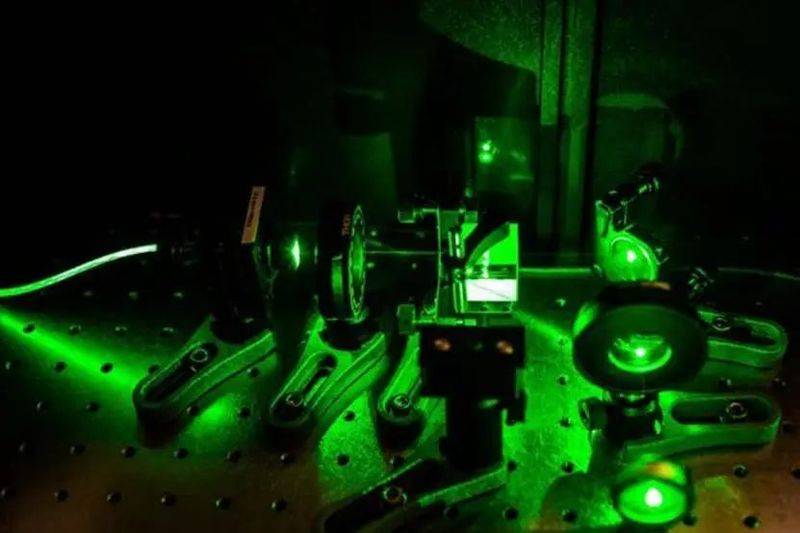
Quantum communication is the product of a combination of quantum mechanics and communications technology that uses the characteristics of a quantum state to achieve the safe transmission of information. The core principles of quantum communication include quantum entanglement and distribution of quantum keys. Quantum entanglement is a quantum mechanics phenomenon where there is a non-local correlation between two or more tangled quantum particles, one of which is measured in such a way as to affect the state of the other. Quantum key distribution is the sharing of safe keys between the communication parties, using the non-clonicity of the quantum state and measuring the collapse。
In quantum communications, quantum key distribution techniques, such as the famous bb84 protocol, are most commonly used. The underlying principle of the agreement is that the sender (alice) randomly selects the status of the quantum bit and sends it to the receiver (bob), and bob measures it after receiving the quantum bit and records the results. By making part of the information publicly available, alice and bob were able to detect the presence of wiretaps. Since any measurement of quantum bits would interfere with their state, based on the principle of uncertainty in quantum mechanics, wiretapping by wiretaps would inevitably lead to a change in the quantum state, which would be detected by both communication parties. This security based on the principle of quantum mechanics is incomparable to traditional means of encryption of communications, which in theory carries the risk of being broken, while the security of quantum communications is based on physical principles and is unconditional within the existing theoretical framework。
Quantum communications have important applications in the financial field. Financial transactions involve a large amount of sensitive information, such as account funds, transaction instructions, etc., and the requirements for information security are extremely high. The high security of quantum communications ensures that financial transaction information is not stolen or altered during transmission and protects the interests of financial institutions and customers. For example, a number of banks and financial institutions have begun piloting the application of quantum communication technologies to secure online transactions, creating secure communication channels for both trading parties through quantum key distribution and preventing hacker attacks and information leaks。
Quantum communication also plays a key role in the political arena. The transmission of information between government departments often involves important policy documents, confidential information, etc. And requires a high level of security. Quantum communication technologies can provide a secure network for government communications and enhance the security and confidentiality of government information systems. For example, my country's “kyoshi main line” project for confidential quantum communications, which connects cities such as beijing and shanghai, provides secure quantum communication services in areas such as government, finance and so forth, and secures the transmission of vital information。
Application of quantum passion to medical diagnostics
Quantum sensors are new sensors designed on the basis of quantum mechanics to achieve high sensitivity detection of physical quantities using the same quantum properties of quantum supersing and quantum tangling. Compared to traditional sensors, quantum sensors have super-sensitivity and resolution, can detect extremely weak signals and display unique advantages in the field of medical diagnosis。
Quantum sensors play an important role in early detection of cancer. Early detection of cancer is critical to improving treatment success and patient survival, but traditional methods of detection tend to be less sensitive at early detection. Quantum sensors can detect minor changes in biomarkers and provide strong support for early cancer diagnosis. For example, the quantum point sensor is a quantum sensor based on quantum point material, which is a semiconductor particle of nanoscale size with unique optical and electrical properties. When a quantum point is combined with a specific biomarker, its fluorescent properties change and the high sensitivity of the biomarker can be detected by detecting this change. Studies have shown that quantum point sensors can detect cancer-related biomarkers at very low concentrations, such as oncological marker proteins, micro-rnas, etc., and can help detect pathologies at early stages of cancer。
The high sensitivity of quantum sensors is also fully reflected in biomarkers. Biological markers are molecules that indicate biological processes or state of disease, and accurate detection of biological markers is important for diagnosis, treatment monitoring and pre- and post-assessment of disease. The superconductive quantum interferator (squid) is a magnetic sensor based on quantum effects capable of detecting extremely minor magnetic field changes. In biomarkers, squid can detect biomarkers by detecting magnetic changes in biological molecules. For example, when magnetic nanoparticles are combined with biomarkers, the concentration of magnetic nanoparticles changes when the biomarkers exist, leading to minor changes in the magnetic field, which squid can accurately detect and achieve high sensitivity detection of biomarkers. In addition, atom-based quantum sensors have demonstrated potential in biomarker detection, and atom sensors are very sensitive to minor changes in the surrounding environment and can be used to detect changes in the presence and concentration of biological molecules, taking advantage of their quantum-compatibility and fine energy-level structures。
The quantum mechanics of mri
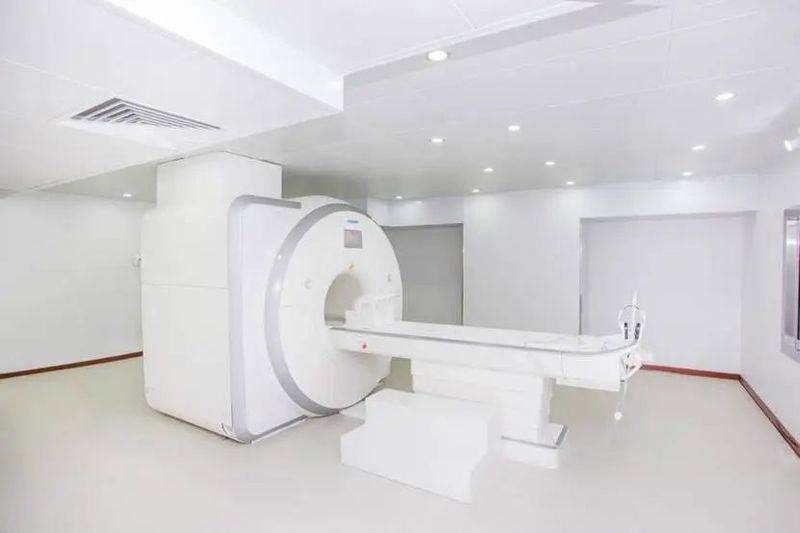
The mri is one of the key diagnostic tools in modern medicine and is based on the mri phenomenon in quantum mechanics. In mri, the human body is placed in a strong magnetic field, where the hydrogen atoms (protons) in the human body are like a small magnetic needle, and are organized in the direction of the magnetic field under the influence of a strong magnetic field. When rf pulses are applied at a specified frequency to the human body, the hydrogen atoms absorb the energy of rf pulses, leaping from the low to the high energy level, and are in a stimulating state. When the radio frequency pulse ceases, the hydrogen atomic nuclei will gradually return to the low energy level, releasing the absorbed energy and generating a radio frequency signal。
Mri uses the ramare evolutionary principle of quantum mechanics to determine the location and density of the hydrogen atomic core. The ramal movement means that, in a strong magnetic field, the atomic nuclei move around the magnetic field, with a positive frequency relative to the strength of the magnetic field. By detecting the frequency and intensity of radio frequency signals released from the hydrogen atomic nuclei at different locations, mri equipment can recreate images inside the human body, showing the structure and shape of different tissues and organs。
Mri is important in medical diagnosis. It provides high-resolution internal images of the human body and is of great value for the diagnosis and assessment of multiple diseases. In the diagnosis of diseases of the nervous system, mri clearly shows the structure of the brain and spinal cord, helping doctors to diagnose diseases such as brain tumors, brain infarction and multiple sclerosis. In the diagnosis of cardiovascular diseases, mri provides information on the form, function and blood flow of the heart, helping to diagnose myocardial infarction, myocardial disease, congenital heart disease, etc. In addition, mri is widely used in the fields of oncology, osteoscience, diseases of the urinary system and provides an important diagnostic basis for doctors. Mri does not use ionizing radiation compared to other methods of visual inspection, is relatively safe for the human body and can provide a rich comparison of soft tissues, and has unique advantages for early disease detection and diagnosis。
Quantum imaging applications in security and industrial detection
Quantum imaging, also known as ghost imaging, is a new imaging technology based on quantum mechanics. It uses characteristics such as quantum entanglement and quantum association to achieve imaging of objects. Unlike traditional imaging techniques, quantum imaging can capture image information of objects without direct contact with the object through measurement and correlation analysis of the quantum state。
In quantum imaging, entanglement photo pairs are usually used. There is a close quantum correlation between the two photons in the permutation, and even if they are separated from space, the measurement of one photon will affect the state of the other. During imaging, one photon (signal photon) of the tangled photon pair is directed to the target object, while the other photon (reference photon) is received directly by the detector. When the signal photons interact with the target object, their state changes and the information of the target object is carried. Images of the target object can be reconstructed by matching the reference photons with the signal photons following the object, i. E. By measuring certain physical volumes of the two photons simultaneously and analysing their connection. For example, information on the shape, location, etc. Of the target object can be obtained by measuring the association of physical amounts such as entanglements of the photon-to-polymbolic oscillation, phase, etc。
Quantum imaging has unique advantages in the field of security control. Traditional security surveillance cameras are often heavily affected in the quality of imaging in low-light, complex environments or under cover, resulting in the inability to clearly capture the characteristics of the target object. Quantification imaging techniques, on the other hand, allow high-quality imaging under very low light conditions, taking advantage of the characteristics of the quantum state. Even if the target object is partially shielded, quantum imaging can restore the information of the hidden part through quantum correlation analysis, thus providing more comprehensive and accurate surveillance images. Quantification imaging techniques are more effective in detecting intrusions, identifying suspicious persons and improving the reliability and safety of security systems at key sites。
The development of quantum mechanics has shown us a future full of infinite possibilities. Despite the many challenges, as long as we respond positively and innovate, we must be able to fully exploit the advantages of quantum technology and contribute more to the development of human society. It is confident that, in the near future, quantum technology will be widely applied in more areas, bringing more convenience and surprise to our lives。