This newspaper's correspondent, liu lin, reported in beijing
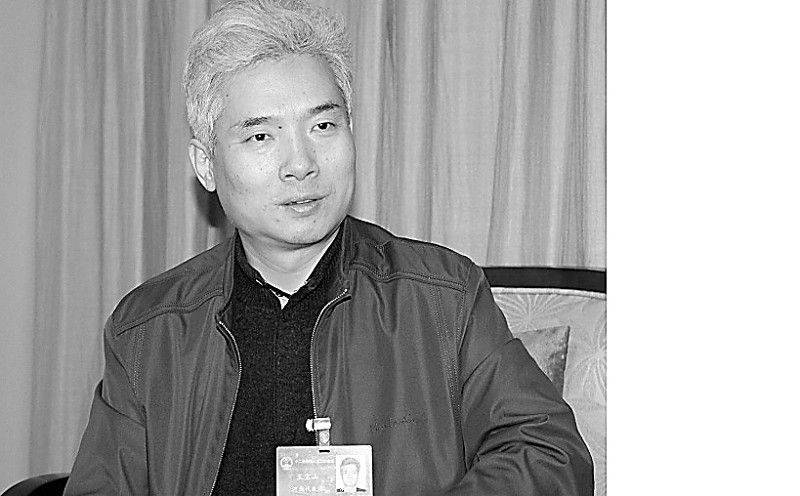
The use of the special residential maintenance fund was not easy because of problems in the commercial housing sector. The use of the fund is extremely low owing to the cumbersome procedures for applying for it and the stringent conditions for applying for it. The deputies of the national people's congress, the vice-president of the hebei provincial council of the rural labour party, and the vice-president of hebei medical university, wang baoshan, recommended that this “sleeping fund” be awakened by simplifying the procedures, reducing administrative intervention and encouraging ownership autonomy。
Status: the house has gone wrong. Maintenance is a problem
“the first problem with house maintenance is who spends money during the warranty period?” the representative of wang baoshan explained that the law provided that the special maintenance fund paid by the owner could only be used after the expiry of the warranty period, and that the maintenance of the commercial house during the warranty period was the responsibility of the developer and the cost of the maintenance was borne by the party responsible for the quality deficiencies. The management requested that the owners pay the special maintenance fund prior to processing the property certificate, but did not make it mandatory for developers and construction units to prepaid the special maintenance fund. In practice, there have also been cases where developers have been able to dissolve the company after the sale of the house and become unattended as soon as problems arise with the common property during the warranty period。
Outside the warranty period, the use of special funds is also a challenge. Under the specialized fund scheme, applications for the use of the special residential maintenance fund are subject to three requirements: first, the establishment of a landlord's committee; secondly, the payment of the public maintenance fund must be made by all owners; and thirdly, access to the fund requires the signature of two thirds of all owners。
The representative of wang baoshan stated that the three conditions were too demanding and unreasonable, and that, with regard to article 1 alone, it had been investigated that there were currently approximately 30 per cent of the national commission of owners, i. E., two thirds of the subdistricts did not have one。
In addition, the procedures for applying for the use of the special maintenance fund are cumbersome. Walking down the whole process, one month less, three or four months more, and six months more, with numerous sectors involved. In reality, many of the repairs needed were urgent and could not wait or afford to be spent, so in the face of cumbersome procedures, the owners tended to pay for them。
The inadequacy of the special funds system has led to very low rates of use. According to the relevant data, by the end of 2012, the national public maintenance fund, which had been deposited in excess of hundreds of millions of yuan, had been used by less than 1 per cent, and was therefore known as the sleeping fund。
Recommendation: reduce administrative interference and encourage ownership autonomy
How can we wake up the sleeping fund? The representative of wang baoshan suggested that a legal obligation be imposed on the developer to pre-finance maintenance to ensure that the developer has maintenance responsibilities during the warranty period. “the introduction of a new housing special maintenance fund management scheme, which requires developers to pay maintenance funds upon completion of the project's acceptance and acceptance, to cover the problems that arise in the common property area of the commercial housing complex during the warranty period, in order to prevent developers from
In applying for the use of the fund, flexibility should be exercised depending on the circumstances of the region. In the case of sub-districts where there is no owner's committee, an application may be made through a residential board; in the case of sub-districts that do not pay for the maintenance fund, a building-by-house fund may be used to maintain the building, with separate funding for maintenance matters relating to the entire sub-district; in the case of “two thirds of all owners' signatures”, consideration should be given to the question of the actual occupancy rate, or a majority consent。
Procedures should also be simplified for the use of the fund by omitting unnecessary review steps, reducing the number of handlers and personnel and, to the extent possible, scheduling certain audit steps after maintenance. In the case of sudden public maintenance, special procedures may be provided for dealing with urgent matters such as leaks in roofs, leaks in small-area cisterns and hazards of falling walls, which should be reported to the processing unit within one day and taken up。
In addition, there should be less administrative intervention to encourage ownership autonomy and a gradual shift from government to ownership, with owners overseeing the collection of funds by property companies. The government needs only to establish the corresponding rules defining the duties and powers of property companies and foundations, and the role of a good supervisor. This would ensure that owners would be more easily able to use the fund and would also benefit from value added。