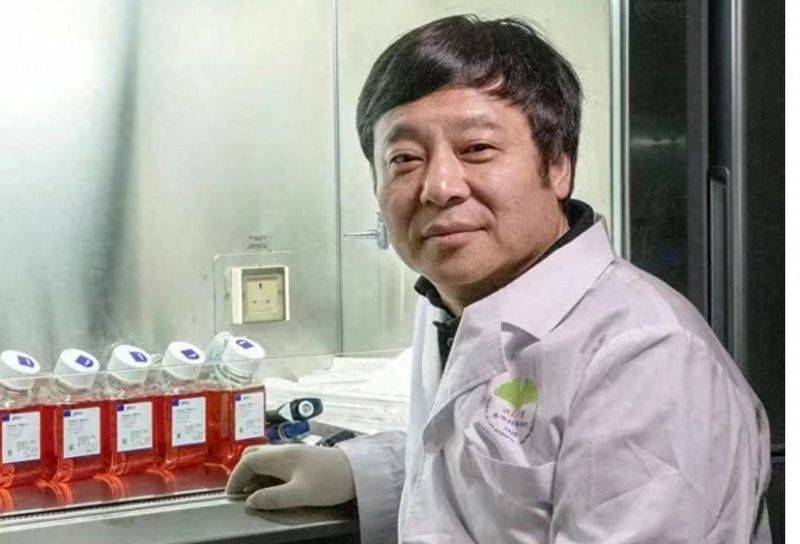
16 august, 2024 science for the future award was unveiled. Professor at beijing university and leading scientist at changping laboratories, deng hongquai, has been awarded the life sciences prize for his outstanding work in reprogramming body cells into multi-energy stem cells using chemistry。
The single prize for the grand prize for future science is $1 million. Other awards include the material science award and the mathematics and computer science prize。
The groundbreaking work of deng hongqai, published in 2022 in nature magazine, was the first time that his team had reported internationally on the chemical reprogramming of human cells, successfully using chemical molecules to induce human cells to be directed and polarized, and gaining access to multi-energy stem cells (cipsc) to provide hope for the treatment of various diseases。
Cipsc has great potential for application in cell therapy, drug screening, disease models and is also the most critical “seed cells” in the field of regenerative medicine。
For a long time, the fate of cells in their development has been considered one-way irreversible, yet the creation of cytological reprogramming techniques has broken this inherent awareness and opened a new era of stem cell and regenerative medical research。
In the 1960s, the british developmental biologist john gurdon demonstrated the reversibility of the development process through “nuclear transplant” cell reprogramming techniques. In 2006, shinaka yamayama, a japanese scientist, established the ips technology to induce multi-energy stem cells (ips), reprogramming body cells to a multi-energy state similar to embryonic stem cells, using genetically modified transgenic expression factors。
“ipsc provides not only a seed source for disease treatment, but also an important tool for studying mechanisms for biodevelopment and regeneration. Prof. Shinaka yamayama received a nobel prize based on ipsc technology. The past ipsc often uses a virus vector approach, compared to the advantages of prof. Deng hongqai's chemical small molecule reprogramming method, which is a significant boost to stem cell basic research and future clinical applications.”
In addition to the advantages of non-integrative genomics, zhu hongming states that it is easier for small molecules to perform standardized treatment, especially with regard to internal reprogramming, and that it is possible to achieve multiple interventions in the body. “in terms of the potential for drug development and the autonomous intellectual property rights, it is a vivid expression of the writing of scientific papers on the land of the motherland.”。
At the same time, he stressed that, as in many frontier biotechnologys, the ultimate transformation and clinical application of multi-energy stem cell technology required a process in which more financial and policy support was expected for the early benefit of clinical patients。
The team has made progress in treating type i diabetes. Last year, the beijing university stem cell centre and the first central hospital in tianjin city successfully completed the first international chemical reprogramming of diabetic type i patients to induce multi-potential stem cells (cipsc) to be divided. The first person tested was an 11-year-old diabetic type i patient who was able to return to normal activity on the day after transplantation and who survived well insulin cells. The team stated that their scientific goal was to create a treatment that would be truly applied, more effective and new in the future。
At present, chemical reprogramming has been widely used in stem cell and regenerative medical studies, such as the in vitro conversion of fibre cells into neurons, cardiac and liver cells, which provides new means for the in situ regeneration of organ tissues in the body and also allows for the long-term maintenance of functional cells in the body, such as old liver cells, blood stem cells and intestinal organs。
Looking ahead, chemical reprogramming is expected to provide new solutions to major problems such as regeneration of tissue organs and combating ageing. Animal studies have found that in the process of reprogramming the body cells in their state of maximum performance, the appearanceal genetic markers associated with ageing are erased, indicating that it is possible in the future to reprogram the body cells from older individuals into polyenergy stem cells, thus reversing the possibility of the appearanceal genetic markers associated with ageing。
According to deng hongqi, research on ageing is an area of great interest to him, and issues related to ageing and the development of new treatments for multiple ageing-related diseases are important. He revealed that the recent development of a pre-medicacy strategy based on increasing the activity of β-slucose enzymes to selectively remove ageing cells, together with a collaborative team, provided new ideas for developing anti-age interventions。