The electricians think they have a little bit of knowledge and can't remember? You're not stupid, you're not right. No more hard-back formulas, drawings, operating codes, grasping the core logic, linking all points of knowledge into a line, and allowing zero to enter the door quickly, to learn, to use, and to learn easily from electricians。
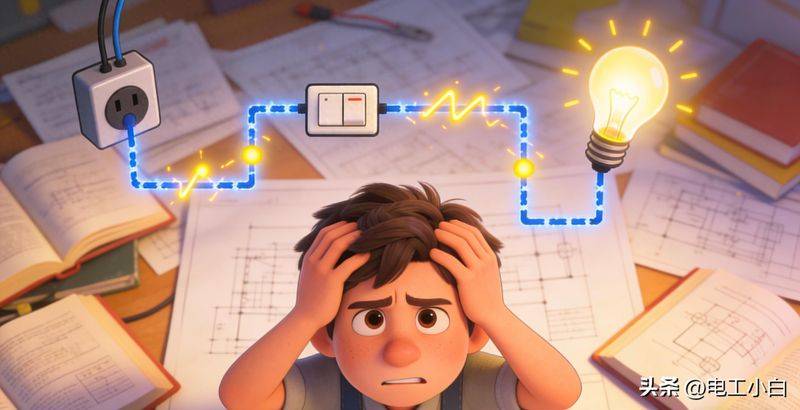
First to the core: the general framework for electrician learning — “electricity + safety floor”
1. 1 forget the complexity and understand the basic direction of electricity
A lot of people learn electricians, go up against om's law, recognize the device, and write down the wires. In fact, all electrical knowledge revolves around ** the core direction of where electricity comes from, what goes through, where it goes, how it controls, how it protects.** power flows are like currents, power sources are water sources, wires are water pipes, switches are valves, loads are water sources, protective devices are leak-proof, congestion-proof safety devices that understand the flow, and all knowledge points belong。
1. 2 hold tight: security is always the first prerequisite
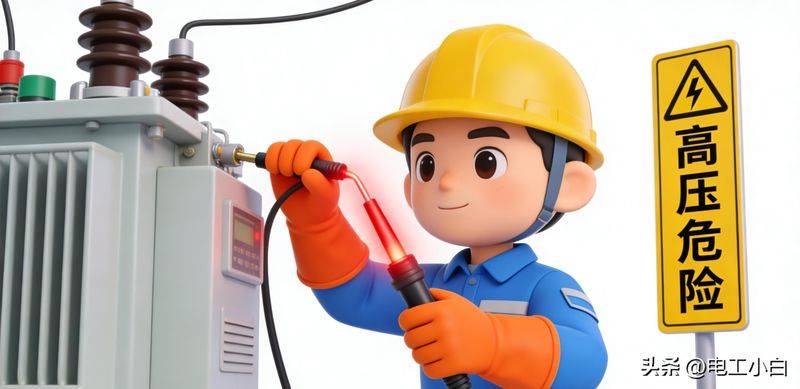
Electricians are high-risk industries, and safety is not an additional knowledge point, but the bottom line through the entire process. Both theoretical learning and physical exercise must be kept in mind: power outages, electric testing, wearing protective gear, non-violation of wires, and all electrical principles and operating techniques must be based on safety, which is the primary criterion for learning an electrician, and must not be allowed to fail。
Disaggregation by process: from basic to practical, step-by-step response to knowledge points
2. 1 first step: recognition of circuit “three cores”
Following the flow of electricity, the three most basic types of components are first eaten without needing to be greedy. The first is power supply, communication, direct flow, home-based 220v, industrial 380v communication, battery-based direct flow, understanding the basic relationship between voltage, current and power, without a deadback formula, bearing in mind that “the voltage pushes the current, the power is how much power to use”; the second is control components, switches, contacts, relays, which are essentially “valves” to control electrical disruptions and shutdowns; and the third is loads, all circuits are a combination of these three components。
2. 2 step 2: understanding simple circuits and eating complex circuits
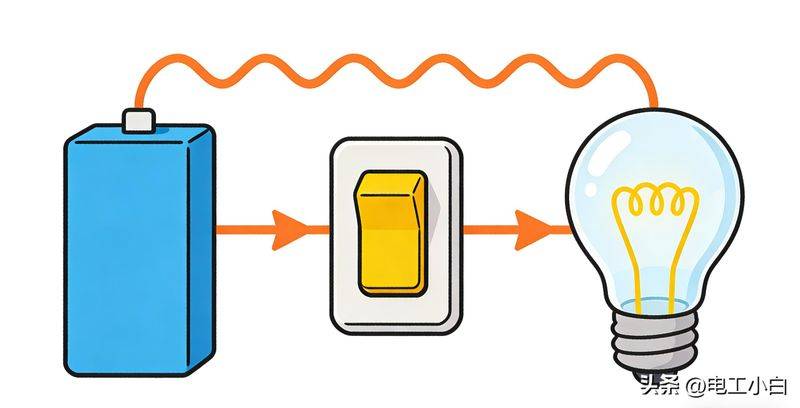
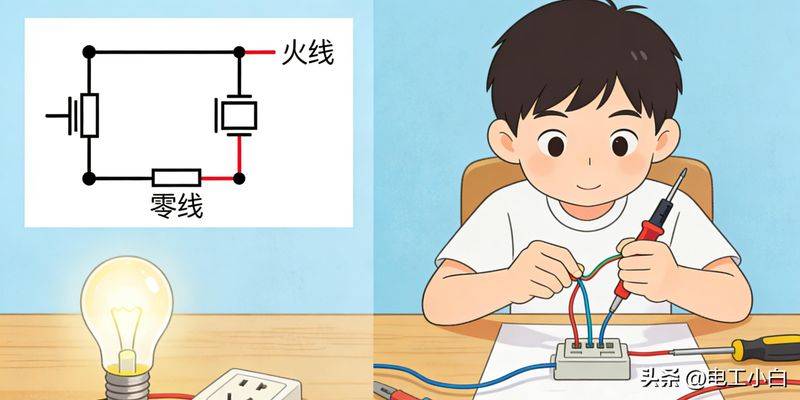
When the components are identified, they start directly from simple cascades and connected circuits, such as domestic light circuits and plugs. Following the current path: the fuse goes through the switch, the switch is broken, the load is reloaded, the final line goes back to zero, and the combo is done step by step. Complex electrical controls and distribution cabinet lines are superimposed by simple circuits, which, without fear, are split into small circuits, which are broken down along the lines of “power control and load protection”。
2. 3 step 3: practical exercise follows the theory and does not move blindly hands
It's not a blind connection. It's a theory. For example, by passing a light, you go through the current course in your head and determine the location of the wire, the zero line, the switch, the power is cut, then wired, and finally checked. Each step corresponds to theoretical knowledge of the consequences of such a transition and error, which is more useful than ten blind exercises, so as not to be able to understand the principles and to be blind in case of failure。
Iii. Freedom classing: a core approach to solving all problems
3. 1 all-power logic of failure detection: breaking through electricity points
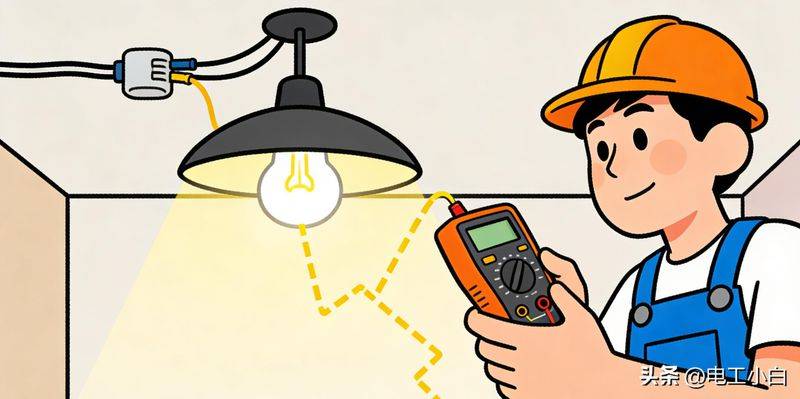
The most painful thing for an electrician is to fix a malfunction, and instead of remembering cases of failure, he uses the idea ** “the current doesn't work, looks where it broke,”**. For example, if the lights are not on, check if the power is powered, then the switch is broken, then the circuits, loads, one step at a time, from the source to the end, following the current path, all circuit failure can be solved this way, without the death-recording method。
3. 2 distinguishing between common malfunctions: short circuits, break-ups, electricity leaks
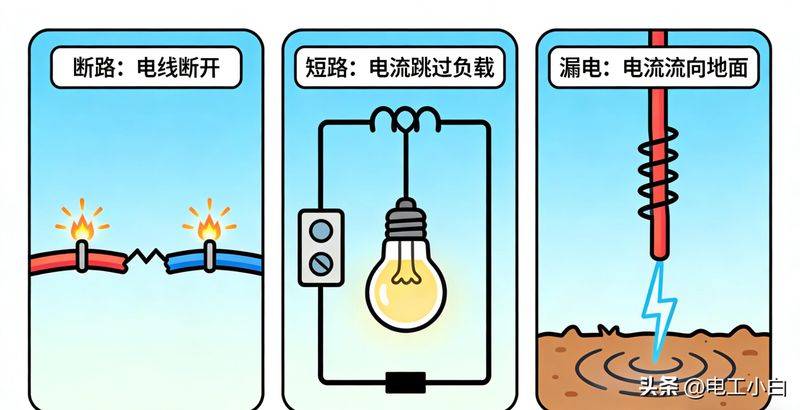
Categorizing the faults into three categories, easy to remember: broken circuits, broken circuits, broken switches; short circuits, unloaded, directly forming circuits, jumps and burns the circuits; and leaks of electricity, which snuck to the ground. Understanding the difference between the three, combined with the direction of the current, allows for a quick determination of the type of failure and a quick solution。
Iv. Egration: comprehensive comprehensive knowledge
4. 1 formulas, norms, understandings
Om's laws, power formulas, wiring norms, do not die back. For example, to calculate the size of wires, combining the power used at home, and knowing the size of the current, you can select the wires; the “fire wires into the switch, left-right fire” in the connection code is all for safety and ease of repair, and is understood in conjunction with the use of the scenery。
4. 2 from home to industry, the logic is universal
Whether it is a household electrician or an industrial electrician or an electrical distribution, the core approach is exactly the same. Industrial 380v circuits are only two-phased electricity, with current direction, control logic, failure screening, or following the process of “power control load protection”, and learning one scenario can be applied to all electrical works。
4. 3 learn and practice to develop their own learning logic
Electrologists do not copy points of knowledge, and each new element of learning is placed in the chain of “flow-to-power” to see what role it plays in the circuit and where it is placed. Accumulated slowly, a complete knowledge system is formed, with no need to remember backs, and any electrical circuits, problems, can be quickly sorted out and easily dealt with。
It's never about memory, it's about logic. Abandoning the stupid approach of tumbled knowledge points and grasping the core idea of "electricity + safety first" ranged from understanding the components, understanding the circuits, running the wires, troubleshooting, connecting all the content, step by step, and learning. Whether it is a zero-basin approach or an attempt to upgrade skills, it is possible to make less of a curve, to learn, to learn, to learn, to be fast and steady and to become a reliable electrician。
# maintenance electrician # # electrician exchange # # electrician knowledge # # electrician business # # electrician base # # electrician # # electrical technology # # electronics # # electronics # # electronics #