Beijing industrial university $92 million, central south university $104. 8 million, sichuan university ($310 million) and shandong polytechnic university ($500 million) this exciting number is not a game of capital, but a song of innovation. In recent years, the party centre, the state council, has been very forward-looking and planned for the use of higher education patents, with a series of heavy-heavy plans and intensive deployments to enhance patent conversion; colleges of higher education have been active in building patent conversions, which are the “gold key” that opens up the reservoir of innovation and markets, thus increasing the motivation of researchers to implement patent conversions。
Implement policy. Activate the power source of innovation
In may 2017, tzuji university and yunkun (shanghai) optical science and technology ltd. Signed the transfer agreement for technology patents, which transferred six inventions of “high-performance laser thin-film devices and devices” developed autonomously by wang zhangshan, a professor at the school of physical sciences and engineering, totalling $38 million. Eighty-five per cent of the proceeds were in the amount of approximately $32. 3 million for the scientific team to support further scientific research at the school and incentives for teachers and students。
In fact, the scientific team received not only a “red package” of the proceeds of real money and silver, but also a long-term policy of “red envelope” — the day the contract was signed, the regulations on the implementation of the transfer of scientific and technological results of the university of toji was published. The rules provide for the attribution, transformation process, decision-making system, etc. Of scientific and technological achievements, which stimulates students and teachers to follow up on the development, application and dissemination of scientific and technological achievements and to develop new technologies, processes, materials and products. Article 7 reads: “the school encourages the completion of scientific research that is oriented towards the needs of socio-economic development, and the timely discovery and nurturing of valuable scientific and technological results through colleges or third-party intermediaries. The faculty shall assess the patent or other scientific and technological results applied by the faculty, identify the scientific and technological results of potential market value in a timely manner and make a major public presentation.”
The same university is not an example. For a long time, high levels of idleness and low conversion rates have been common problems in higher schools in the country. In recent years, the national intellectual property administration, which is deployed by the central party and the state council, has been actively working with the relevant departments to reform the ownership, disposition and rights to benefits of scientific and technological results, to establish scientifically sound mechanisms for the distribution of benefits and to mobilize the fundamental motivation and initiative of the entities and inventors to effect the transformation of patent transactions. In response, the universities explored ways of transforming the results of science and technology according to local conditions: the university of south-west transport introduced the south-west transport university patent regulation, which creatively proposed a combination of scientific and technological results in higher education; zhejiang university focused on the full chain of conversion of scientific and technological results and made a useful attempt to bridge key transformation links; the shanghai university of transport established the intellectual property management company ltd. As a market-accessing technology-in-equity route to achieve regulatory management through an intellectual property replenishment ... “the data show that the total number of expired patents in our universities in 2016 was nearly 68,000, and that a large number of patents were not converted and were not maintained even after they were granted, which is a serious waste of the value of scientific research.” in an interview with the present newspaper's journalist, prof. Xiaogang, shanghai institute of international intellectual property of the university of toji, pointed out that for various reasons, many scientists had previously submitted patent applications for job titles, awards, etc., and that many of the results were of poor quality and lacked conversion value. Universities of higher education need to adopt policy guidelines and patents that promote more and better results to be valued, including through transformation, in the nature of a market economy。
Intensive management, turn to the golden key
“in order to transform results, researchers in ivory towers often need the intellectual property rights managers to `get a match'. However, deficiencies in the previous system had left managers afraid of mistakes rather than responding proactively.” li chang au, director of scientific research at the university of central south china, told the journalist that it was difficult to quantify the conversion of scientific and technological results, so that many higher education institutions failed to evaluate the work of managers of scientific research and intellectual property, that they were not penalized for “doing nothing” and that there was a risk that the “active attack” would lead to less than satisfactory transformation and that it would entail responsibility, thus neglecting to promote patent conversion. Li chang sou introduced the intellectual property management scheme, the provisional provisions for the financing of scientific and technological outcomes and the distribution of equity and interests in technology, and continued to improve the mechanisms for distributing the benefits of scientific and technological transformation. At the university of central and south china, job management, job evaluation, evaluation and wage incentives have been established in line with the characteristics of sti work, the test process has been improved, and a test publicity system has been set up, which requires 15 days on the campus network for the transfer of stis that are priced by agreement. Improve the system of collective decision-making on the conversion of science and technology results, in line with the price of the transfer of science and technology results, and regulate the scientific process and requirements for vetting, so that managers can follow the rules and take care of their concerns。
With the strong assistance of managers, the scientific staff of the university of china-south has become more dynamic. In september of this year, the team of professor zhao zhongwei, faculty of metallurgy and environment of the university of central south china, obtained three related patents on “electrochemical decoupling from salt lake halogenated lithium”, which were successfully transferred to shanghai shuhua science and technology development co. Ltd. With a licence fee of $104. 8 million. It was described that, in the first half of 2017 alone, 45 technology transfers had been achieved at the university of china-south, achieving previously unimaginable economic benefits. “it is the impetus of national policy and the support of the system of transformation of science and technology in schools that has enabled us to achieve what we have achieved today.” zhao wei wei。

“at the university of central and south china, the results of the transformation of research are recorded in the performance appraisal of teachers, requiring that science, technology and innovation be closely linked to the use of the market, and that incentives for researchers be increased, which essentially motivates researchers, who also focus more on the quality of research, particularly patent applications.” the vice-chancellor of the university of central south zhou said in an interview with the journalist。
Multiple forces driving the development of a new engine
"ways and bridges, pepsi." in recent years, with the introduction or revision of national and local policy measures and laws to promote the transformation of scientific and technological results, the “oil of the benefits of genius” has become a consensus throughout society. Higher education is becoming a hub for innovation, with innovative energy constantly being channelled to enterprises on a web-based basis。
In september 2012, the city of wuhan took the lead nationwide in launching the opinions on promoting institutional innovations for the conversion of scientific and technological results in the autonomous innovation zone of the eastern lake countries, known as the “gold tens”, which encouraged students from universities and research institutes to set up their own businesses and specified that universities and research institutes could implement the conversion of intellectual property rights that had not been converted within a year, with at least 70 per cent of the proceeds attributed to the completion of the conversion or team. “gold ten” has received a strong response from a number of universities in wuhan city, where specific policies have been put in place to encourage and direct scientific researchers to start up their careers and actively promote the transformation of scientific and technological achievements. In may 2017, the wuhan engineering university's team of porcelain membrane scientists, with a total of $21. 28 million worth of technological inputs from eight carbonized silicon ceramic membrane technologies developed, and together with the city of europe, chanda assets operations ltd., formed hubidi clean membrane limited, a team of nine scientists who received 90 per cent or $19. 152 million of the proceeds of the project, thus accounting for 50. 4 per cent of the company's share, which led to the country's first carbonized silicon ceramic membrane production。
“the success of the silicon carbide ceramics project will not be possible without the strong support of the institute of industrial technology for the new materials of the wuhan chemical industry.” the deputy director of intellectual property administration of wuhan city, chen bao guo, told journalists that the project had secured half a million yuan incubation funds from the institute of research and research on new materials for chemical industries, which had been incorporated into the institute's pilot base, thus ensuring that the testing of the medium-test system was carried out in an orderly manner and thus industrialized. The institute of new materials for chemical industry is one of 10 industrial research institutes organized by wuhan city and local universities and enterprises. According to chen po, these 10 icsrs have accelerated the transformation of innovation and led to the clustering of relevant industries, building on the scientific and teaching resources of vuhan universities. As of may this year, the 10 industrial technology institutes in wuhan accumulated 327 conversion patent projects, amounting to $601. 27 million。
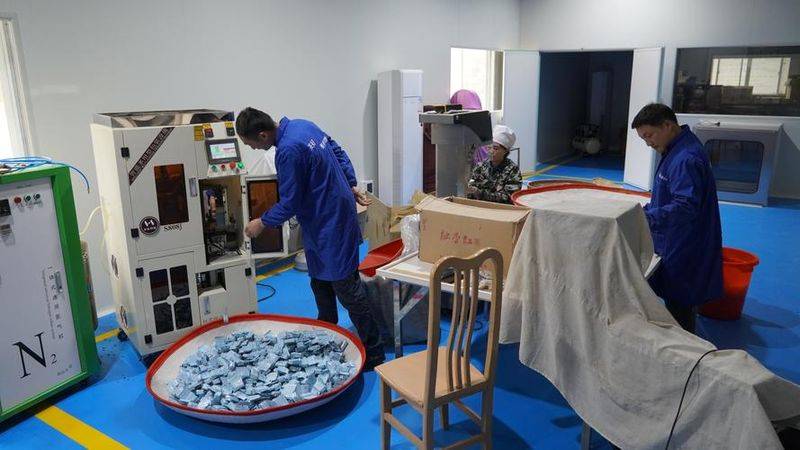
Strict patent protection has also been a “catalyst” in recent years to promote the conversion of university patents. In april 2017, shandong polytechnic university professor bishop-led research and development team patented a new chlorofluorocarbon polyurethane-free chemical blowing agent, which was purchased by shandong new materials technology ltd. For a total of $500 million for 20 years of exclusive licences (except on the united states and canadian markets), creating a new record of shandong patent licences. It is known that this technology is one of the cutting edges of the international environmental industry and one of the high-tech technologies banned from exports in developed countries, and that, in the face of the vagaries of foreign competitors, peiyu was initially worried about patent protection and afraid of conversion. The national intellectual property authority, the department of intellectual property of shandong province, after having discovered this issue in the course of its research, directed the coordination of the intellectual property services team, took the initiative to launch a patent navigation service for the pilgrim research and development team, identifying the technical level and potential market value of the patent through patent retrieval, patent navigation, analytical review and patent layout services, and, in response to this innovation, providing advice and recommendations to strengthen patent protection and application, directing it to prepare, submit, etc., patent application documents, and filling gaps in the patent layout of the project, successfully building up a better patent protection system, which is a miracle of 500 million yen。
“the conversion of patents is an important element of the technological activities of higher education institutions, and the transformation of technological results `last kilometre' requires a combination of institutions, enterprises, finance and government. The quadripartite initiative will better allow the sources of the transformation of scientific and technological results to flourish and provide a continuous stream of high-quality results to sustain the transformational upgrading of economic development.” liu haibo, a researcher at the institute of strategic science and technology consulting of the chinese academy of sciences, said in an interview with the journalist for the newspaper. (intellectual reporter sundy)