As the construction of bridges continues to develop, the detection and reinforcement of bridges is gaining in importance. The strengthening of bridges is a system engineering exercise, and the general construction unit needs to be in-depth about the construction of the bridge maintenance enhancements, ongoing research, innovations in the techniques, practices and so on; and refinement of the bridge enhancements. The fact that bridges have been in an open-air environment for many years of operation, that they have been in a wind-blowing environment for many years, and that, if they are not maintained by the relevant sector, the bridge will also show serious quality problems in its later use requires timely and appropriate approaches to strengthen the bridge. The following reinforcement homes share with you the reinforcement techniques for reinforced concrete bridges。
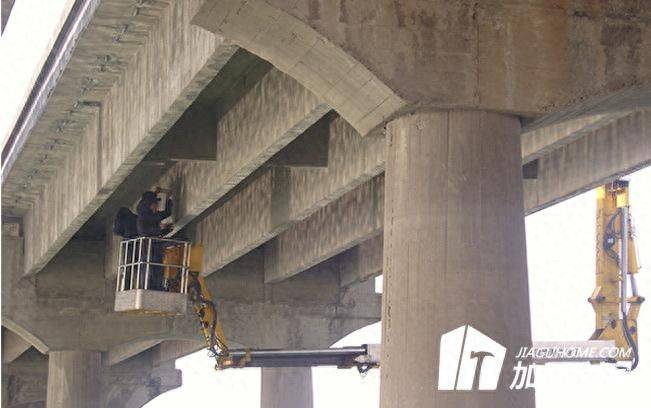
1. Bridge reinforcement
In the event of a breach of the bridge, it is generally possible to remove the original surface and build a layer of concrete with steel and concrete that is fully resilient to the original structure, thereby improving structural stress and horizontal distribution and carrying capacity。
2. Adding arch reinforcements to arch rings
When the main arch of the concrete bridge is a physical arch, and the lower one is in good condition and the lower one is fully empty, a new arch can be built under the main arch, requiring that the arches be tightened up and integrated as much as possible with the arches, so that a new arch can be added to the arches。
3. Change structural stress system reinforcement
When the bridge is self-heavy because of its upper structure or because of insufficient basic carrying capacity, the archeals are prone to rounding and horizontal shifts, changes in the main archeline, which, subject to the conditions, can be made by adjusting the arche structure to change the structure system, thereby improving its resilience and enhancing the carrying capacity。
4. In vitro pre-resilience reinforcement
This method is used to offset the internal capacity caused by some overloads by applying in vitro stress to the structure, thereby increasing the structural carrying capacity. This method is used mostly on the liang bridge, but can also be reinforced by in vitro pre-respondence, in a manner similar to the pre-resilient post-resilient construction, for arches that break horizontally or vertically, scratch below the top and shift the bridge。
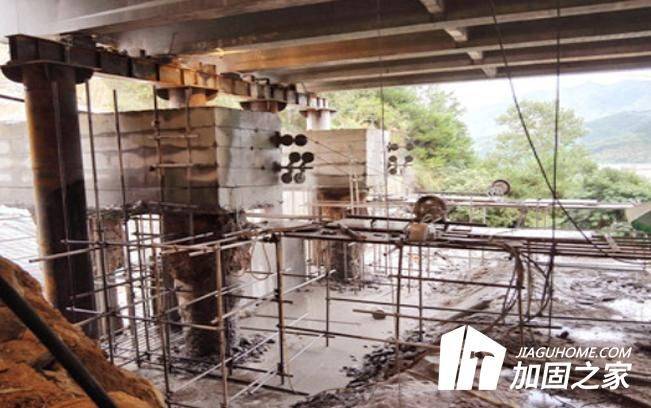
5. Reduce structural weight reinforcement on arches
Most of the existing bridges are arch-top structures, with larger arch structures and a large proportion of constant weight, which can improve structural resilience if reasonable measures are taken to reduce arch-capture. The general modalities used are:
1) the removal of light material for filling on the arch, which reduces the weight of the structure on the arch and has a clear effect when the arch is too large or the arch is too heavy;
2) replace the arch structure with a light plate arch structure;
3) changing the structure to transform the generally simple bridge system into a more complex steel-concrete arch or an arc。
6. Strongening and increasing cross-sections
When structural strength, rigidity, fracking properties or stability do not meet requirements, reinforcements are usually used to increase banding, to increase cross-section dimensions of components and to increase band ratio. The methodology is more mature, less costly and widely applied. This method is commonly used to strengthen the condensed concrete bridge arches, which are reinforced mainly against the back and the abdomen, using an increased cross-section. A bridge with an arch structure or an arch that is naked in the outside environment may be reinforced by epoxy sand or condensed concrete by a week at the lower end of the arch, provided that a support structure is laid beneath the bridge. In the form of an arct strengthening, i. E. The need to build a support frame and possibly equipment such as jets, which increases the cost of construction, the arctal strengthening, i. E., the addition of an additional layer to the arc, is common, and the operational steps are mainly to remove the top of the arc, to show the back, to repair the back, to cut hair and to build new ones。
7. Paste strengthening
When the bridge is not carrying enough capacity, there may be severe horizontal cracks, where sheeting, such as steel or carbon fibre sheets, is generally placed in a position of pull or weakness in order to increase the bridge's carrying capacity, using anchors and glues. The most common adhesive enhancements today are carbon fibre sheeting, steel sheeting, glass steel and aromatic fibre sheeting. The manner in which the carbon fibre sheet is reinforced can be applied in a variety of structural forms, construction is easy and applicable because of the thinness of the carbon fibre material and the small changes in the cross-section size and self-heaviness of the original structure. However, the method requires that the structure surface be particularly flat and that the consolidation costs be higher. Accumulation of steel plates is achieved by the use of adhesives such as epoxy resin, which fixes steel plates in weak parts of structural matter or is subject to pull, so as to combine them with structural stress, enhances structural rigidity, increases the tensile properties of strong structures and limits the development of cracks. The method is highly effective and easy to process, although it is less flexible to use and has higher post-mortem preservation requirements and maintenance costs。
The causes of the illness of the bridge are many and varied, as are the measures to strengthen the repair and treatment, and the good and bad maintenance of the bridge are related to economic loss. The construction unit bridge reinforcement technology, however, requires constant innovation and exploration, upgrading our technological processes and equipment, maximizing the maximum economic value of the bridge strengthening and making our bridge roads more secure。