Growers who grow grapes in the fields that have been rooting for many years have a solid history in their hearts. During the entire year-round growth cycle of grapes, each month has its corresponding management focus, but the most critical and least lazy is in may。

After the month of may, the temperature of the earth has risen steadily, the temperature of the day and the night is slowly rising, and natural precipitation is increasing, meeting the best climatic conditions for grape growth. The grapes of this time are at a critical turning point in terms of new growth, flowering depths, gravitation sequences, preparation of flowering fruit, which is equivalent to laying the foundation for the year-round production and product phase。
Experienced growers are aware of the level of managerial care in may, which directly determines the good harvest in autumn. In may, the fields were prepared, the branches were sturdy, the buds were sprouted, and the fruit was flat, and the fruit was big later, full of grains, and the colour was even. By the harvest season, a string of grapes were covered with vines, which could bend down the whole vine. However, if the month of may is unmanageable, with long branches, no matter how long the order may be, no matter what the field environment may be, it will be easy to follow up on issues such as new longness, thinness of the sequence, severe figs and sores. Even if we invest time and effort later in remedying the situation, it is difficult to reverse the tree and tree base, to lose production, to produce different fruits, to work hard for a year, and to benefit greatly。
A lot of new growers manage grapes, and they like to do everything, but they can't get to the point. In fact, in may, the grapes were prepared without any need to work, but with a deep heart, a steady grasp of the four core management points, finely managed by the natural growth patterns of the grapes, and without blind input or mishandling, the productive base could be firmly established. The following is based on the practical farming experience of the field, the simple words that farmers can understand, and the four points of management that must be captured by the may grapes are broken down, each of which is a dry product that has been accumulated over the years, with no theory of folly and no exaggeration, suitable for all farmers who grow grapes, and a steady harvest every year in accordance with the process。
Point one: control the whole branch, smooth the surface and avoid inefficient nutrient consumption
May is a suitable temperature, the soil is strong, and the most likely problem for grapes is the emergence of new mad elders. The vines crawled along the sides of the shelf, sprawling, long and long, and the layer of leaves folded and folded together, covering the whole of the shelf。
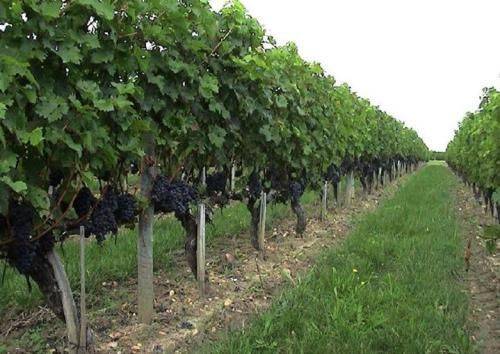
Allowing the branches to grow at will brings with them particularly many disadvantages. The first is that large amounts of nutrients are consumed in vain and that the nutrients that should have been supplied with buds, bouquets and follow-up fruit are taken away by useless branches, which lead to the growth of the buds, their growth and their impotence, which directly affect the quality of flowers and the sitting rate. The second is over-heated, with poor ventilation inside the shelf, and the humidness of the field is not dispersed, which tends to create a small, hot and humid environment, and to place an ambush on all types of fields at a later stage. At the same time, the branches are entangled, and post-treatment and extraction are particularly problematic and detrimental to the smooth growth of trees。
So the top priority for may management is to get the whole thing under control and clean up the face bars in time. First, it is necessary to make sure that the main stem, the weak sprouts on the main chickens, the hidden sprouts and the useless sprouts are eliminated as soon as possible and that the excess sprouts are reduced. Based on the strength of the tree and the surface space, it is reasonable to retain the strong branches of the outcome, to remove the branches, the small branches and the long branches, so that each branch has a reasonable space to grow and is not evenly spread。
Secondly, it is necessary to take care of the new ones, which are too large, to take care of them in the right place, to keep them from growing up indefinitely, to force the nutrients back into the branches, to provide lumbering and ploughing, and to make the flowers grow stronger. It also requires the timely cleaning of surplus swabs and invalid swabs, which are only entangled around the vines, have no practical effect, save nutrients as early as possible, and make the surface better。
After full control, the whole cauldron is organized, the ventilated light is opened, the tree tends to stabilize, the nutrients are no longer wasted, and all of it is concentrated on providing the most solid tree base for subsequent production。
Second point: poaching the ears, keeping them in order, and securing the fruits from the source. Marriage
In mid-may, grapes entered the spiking and current flowering phase, which was a crucial step in determining the volume and quality of nuts. Many growers have a common disease, and it is always felt that the more the flowers are left, the higher the output in the later stages, the more they will not be left behind and the whole sequence will be preserved。
The idea is a big mistake in planting. A grape tree has limited nutrients, leaving too many flowers, which are diluted, each sequence is inadequately nourished and slowly grows thin and thin. In the later stages, even if the fruit is sitting, there will be a situation where the fruit is thin, the size of the grain is uneven and the number of abnormal fruit increases, and when the fruit matures, it will not be sold at a good price. It also increases the burden on trees, which can cause early and late decay and affect normal growth in the coming years。
The second mandatory management focus in may was to pre-empt and learn to trade, not to be blindly greedy. If the tree is to be sown according to its strength, strength and strength, it is appropriate to keep a high-quality bouquet; a small and weak branch of strength, with as little as possible or no blemish, with a view to raising the tree's position, then with regard to the fruit。
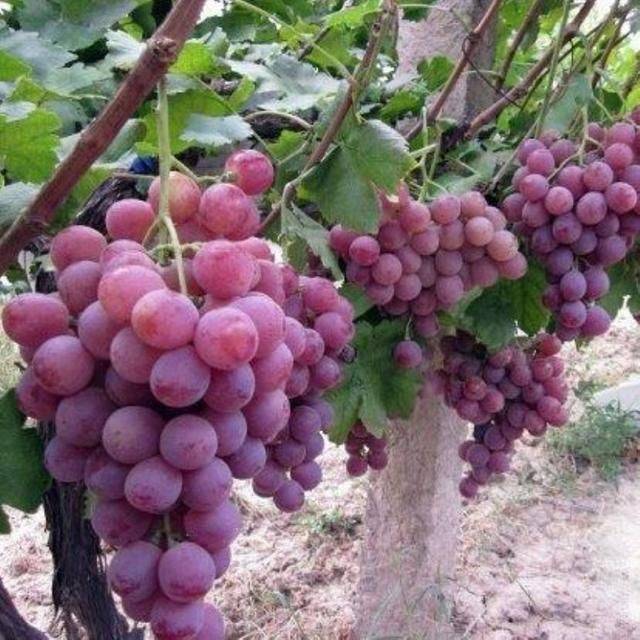
When removed, priority is given to the removal of weak, deformed, overtly condensed grafts, leaving high-quality, well-positioned and well-developed flowers. It is also necessary to make simple adjustments to the lumbers, remove the extra tippings and the small branchings on the side, and keep the lumbers up and running。
Early flowering and early oscillation appear to have reduced the number of poachings, but rather to have concentrated nutrients that provide a high-quality ploughing sequence, which makes the flowers more purified, more evenly balanced, with the later growth of the poignant swaths that are symmetrical and well-structured, increases the value of commodities, avoids over-consumption of nutrients in the tree body, and sustains constant production of tree positions。
Third point: science regulates fattening, supply on demand, and secures the seating fruit
The may grapes grow new and growing branches on one side, and the buds and bouquets are divided, growth is fast and demand for moisture and nutrients has increased significantly. But at this stage of water fertilizer management, which is the most taboo to heavy water fats, can easily stimulate the continued growth of branches once they are not properly operated, exacerbate the flowering fruit phenomenon and disrupt the normal growth rate of grapes。
The management of water fertilizers in the field is guided by the principle of a small, steady supply of water in accordance with the needs of the population. With regard to water distribution, constant attention should be paid to soil erosion, so that the soil is wet and permeable, so that it cannot be too dry and soak its roots. In the event of a continuous cloudy drying, the use of slow water recharge to avoid soil drying and damp and causing physiological fallout; in the event of a rainy season, the field drain canals must be cleaned early, and water must be pumped in time to prevent long-term impregnated oxygen deficiency in the root system and the root causes of the decline。
With regard to the pursuit of fertilizers, it is sufficient to focus on a moderate and balanced supply, rather than on the pursuit of hyperbole, and to meet the basic needs of new growth, budding and flowering fruit. Responsively adapted to the strength and weakness of the tree, the long and weak plant is properly replenished and its position stabilized; the strong and strong plant is properly resupplyed to avoid continued growth. The whole process follows the concept of thinness and diligence, without oversupply at once, and gradually adjusts the course of events to balance the strength of branches, their growth and their nutritional supply。
When water fertilizers are put in place, the tree position will remain strong and the nutrients will be able to flow steadily to all areas, both to meet the growing needs of the branches and to adequately nourish the bouquets, significantly reduce the incidence of unprovoked flowers and early fall of the young and effectively increase the overall sit-in rate。
Fourth point: optimizing the field environment, using ventilation and light to conserve leaves and reduce growth hazards
The increasing heat and humidity in may, combined with the long-term expansion of the grape branch and the proliferation of the side branches, can easily create a closed, wet field climate. If the environment is not managed in a timely manner, the fields are poorly ventilated, ill-lighted and wet, and are prone to growing problems of various kinds, damaging leaves, varnishes and larvae, causing unnecessary losses to the whole year of cultivation。
The core management of this phase is to optimize field access, perform routine field maintenance and protect functional leaves. The frontal wind and lightways have been opened through the frontal swirling, followed by constant patrols, timely defusing of the newer twigs, ensuring that the sun can penetrate the insides of the shelf, free circulation of the air between the lines, lower local humidity in the fields and reduced environmental conditions for the breeding of the hazards。
The day-to-day maintenance of the orchard and the timely clean-up of the debris, leaves and groceries that fall from the ground, preventing the pile from swollen and affecting the small field environment. After the continuous rainy weather, it is important to comb the leaves in a timely manner, to remove the shrouds, to accelerate the evaporation of the leaves and the surface water and to avoid long periods of damp and damp covering of the leaves。
At the same time, priority must be given to the conservation of functional leaves, which are the core organs of grape production and nutrient transmission, and to the robustness and integrity of the leaves, so that they can be used continuously for light cooperation and the supply of nutrients for branches, bouquets and seed fruits. In day-to-day care, artificial damage to the leaves is avoided and the leaves are kept green, and as long as the leaves do not fail early and do not suffer damage, there will be no breakage in the tree's nutrient supply, and the growth of sit-ins and grains will be assured。
The smoothing of the field environment and basic maintenance without additional complexity can steadily avoid many of the most common planting difficulties, the smoothness of the tree and the lack of conditions, and later management can save effort and provide a good basis for the expansion and maturity of the fruits。
Throughout may, grape management has been characterized by few techniques that are difficult to understand. At its core, it has been designed around the four points of whole branch-control, lumbering, science, water fattening, field conservation, and doing, doing, doing, and taking. It does not operate blindly, it does not slacken, it does finely adjust to the growing habits of grapes, and it solidly builds its cultivation base throughout the year。
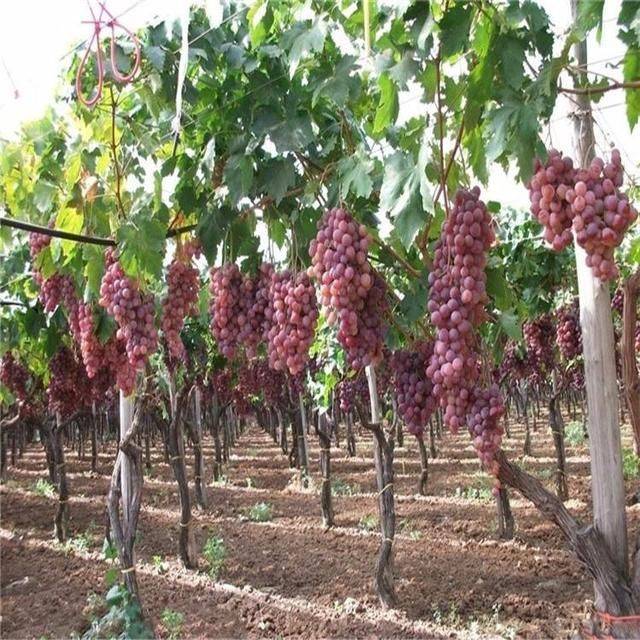
The foundations were laid in may, followed by a steady increase in the number of young children in june, the expansion of the fruit in july and the increase in the colour of sugar in august. The trees were robust, full of fruits and high-quality fruit. And when the harvest is high in the autumn, a grape tree is full of round ears, a layer of piles fall down, and the weight of the sun bends down the branches of the vine, presenting a rich and productive harvest, and the hard work of the grower can be exchanged for real good returns。
Many farmers who grow grapes on a perennial basis have their own experience of may management, with some viewing the whole branch, others focusing on flowers, and others being good at managing water fat. Which of the four points of may, in the management of grapes, do you think is most crucial and cannot be ignored? What are the practical techniques of field piping? Message exchanges in the comment area are welcome to share ideas and learn from progress。
Focus on me by continuously sharing more practical knowledge about the production of dry goods from the three farming species and the livelihood of the people in the countryside, helping farmers to reduce the number of curves and harvests, and not fabricating small news, making up the insides of the industry, not exaggerating the eyes, simply doing real work, making practical work of the goods, making a real story of the people in the countryside。