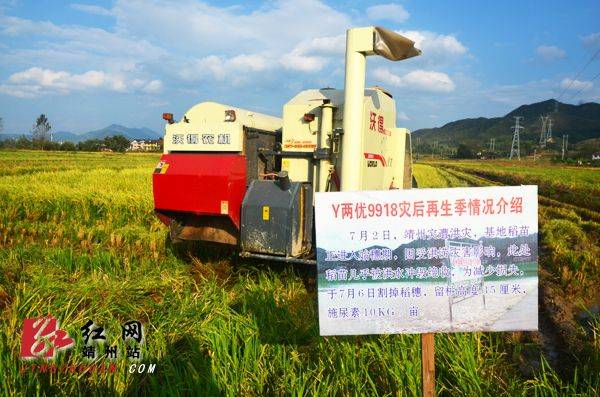
The harvester carries out regenerative rice harvesting in the field. Ta-ta
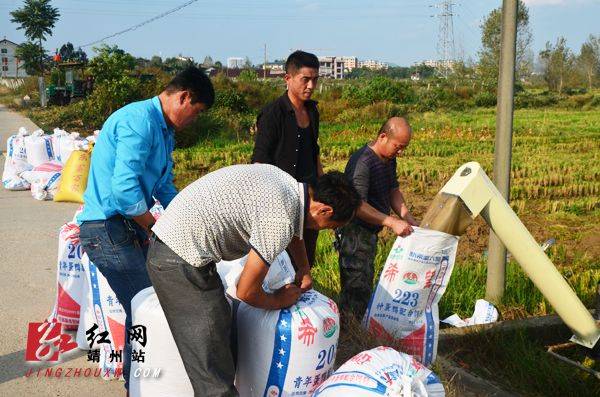
Villagers built rice by the harvester. Ta-ta
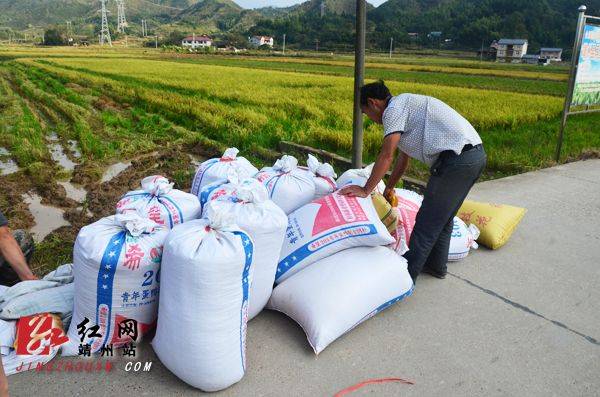
Food bags of drums are piled on the road. Ta-ta
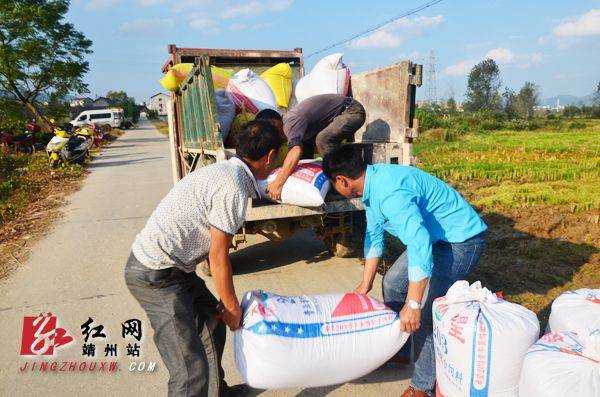
Villagers moved well-packed rice into tractors. Ta-ta
The red net's yangzhou substation (standing journalist) said, "take the bag and beware of the valley." on 27 october, journalists saw in the rice fields of the villager zhang shaolin horticulture demonstration yard in chenyang, yangzhou county, hunan province, the harvester was harvesting rice at speed, the villagers were busy packing bags and transporting them, and the field was busy. More than 100 acres of regenerative rice in the pilot rice demonstration base in yangzhou were harvestable in the season, with an average acre production of 342. 5 kg。
Walking into the fields, journalists saw over 20 bags of paddy bags on the edge of the paddy road. The harvester was parked on the side of the road, and the villagers were using food bags to receive the rice from the harvester. When the bag was filled, chang changed the bag to continue with the rice grain, while the villagers on the side tied their mouths with flax。
The pilot demonstration base for rice regeneratives in the yangtze county is located in the village of the second kiosk, which covers 102 acres and is a national grass-roots extension project for agricultural extension and cultivation of rice of two varieties, y2e 9918 and yellow hua, using a single variety, unified fertilisation, unified field management, unified pest and disease control, specialized green control, and full mechanized harvesting。
"i'm testing seeds for the first time this year, and i feel like it's working. Seeing this year's increase in production, next year i will plan to expand the area under cultivation.” the villagers of zhang zhang spoke with joy: “replanting rice is not only easy to grow but easy to manage, so long as water is poured into the field immediately after the first season of harvest, without any pesticide. And it's much more expensive than normal rice.”
“regenerative rice tends to sow in april each year, to harvest in mid-august, to grow new buds after the first harvest, to grow rice after more than two months, and to harvest again in mid-october. Because replanting rice does not require pesticides, the rice preserves its original ecology, the rice is of high quality, the rice tastes better than the rice in the middle, and the rice market can sell more than $10 a pound.” according to jiangzhou agricultural technology extension station chief hu xiaojin, the average acre production during the first season of regenerative rice could be over 700 kg, while the average acre production during the second season could be over 300 kg and the average acre production could be over 1,000 kg. The quality of rice in the second season is high enough to meet the demands of the high-end rice market, with considerable benefits for farmers. The pilot demonstration of regenerative rice was conducted for the first time in yangzhou county this year under the umbrella of the provincial extension station, which has produced milestones and will continue to be replicated next year。
The lack of labour, the high investment in agricultural resources and the high cost of production in yangzhou county result from the limited role played by agricultural land in most of the rural areas for only one season. According to hu xiaojin, “the promotion of regenerative rice cultivation, which is low-cost, high-yielding, high-quality rice and efficient, not only increases a season's harvest but also contributes to national food security. An integrated application of new technologies for rice cultivation and management, through the establishment of demonstration films, would increase both rice field output and farmers' incomes.”
Statistics show that today we are growing about 200 million acres of rice, of which 50 million are suitable for regenerative rice. There are currently 50 pilot demonstration bases for regenerative rice in hunan province, of which 3 are in huai chou。