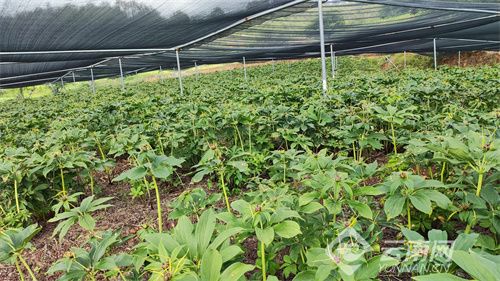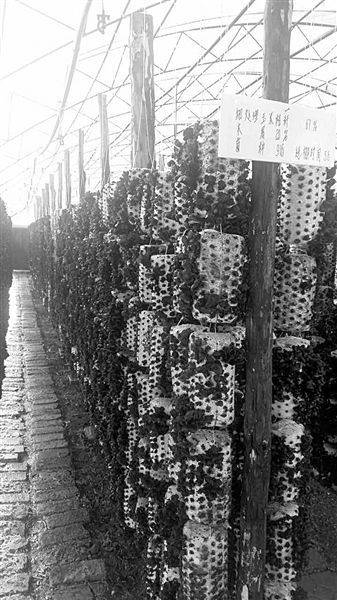
A series of fungi bags are organized in a uniform fashion, and each one of them is fully grown. – the scenes seen in the black-molecular grower sheds of the ichun-friendly institute of fiction bacillus in heilongjiang city, which, more surprisingly, contain not traditional wood crumbs, but corn straw。
“a maximum of 80 per cent can be added to the maize straw, which has been shown to be the best performer in 67 per cent, with the tightness of the bag, the growth rate and the water holding power, replacing three quarters of the wood crumb.” according to zhang qianxian, an expert in black-mujeres cultivation of the national system of technology for the food industry and the director of the microbiology institute of the provincial academy of sciences of heilongjiang。
Black muir has threatened forestry production
According to zhang, in recent years, with the increase in the scale of the production of moo moo, its production has grown from 200,000 tons in 2001 to almost 3 million tons at present, with increasing demand for wood crumbs, which, on the one hand, has led to soaring prices of wood crumbs, seriously affecting the combined benefits of industry, and, on the other hand, has resulted in illegal practices of wood-rustling for the production of wood crumbs. “to some extent, the production of the black muir industry has posed a threat to forest production.” zhang qianc。
“the treatment of crop straws has become a difficult environmental problem.” according to zhang, crop straw used as a rural heating fuel in the two north-eastern haeji provinces was slowly consumed throughout the winter. Now that the rural living environment has improved, there is no longer a need for straw and cooking. Transportation was labour-intensive, so most of it was secretly burned in the autumn, causing great pollution. On the other hand, it is difficult to achieve this because of the cold weather in the north-east, which has affected the on-site return of straws, and the development of biotransformation techniques for straws is necessary。
According to zhang jinxia, the chief scientist of the national system of technology for the food industry, many experiments have been successfully reported on the cultivation of black wood in the new matrix, but the problem of the pre-treatment of the matrix, the encapsulation of the bacteria and the associated management techniques has not been addressed at the root, the problem of the high incidence, low yield and poor quality of the bacteria is common, and many growers are afraid to try, leading to slow, low-level duplication of technological developments and less large-scale applications. There is therefore a need for systematic technological research and development to develop integrated technologies that combine good seed matching, foundational preparation with efficient management techniques, and to promote the widespread application of new foundational techniques。
Black moor can't use wood as a staple
In my country, the black wood ear species, from the initial wood-planting to the late-package cultivation, have been using wood as a raw material and have been applied for decades to date. Faced with the industrial problems of increasing pressure on wood crumb resources and the incendiary burning of straws, edible bacteria researchers have been thinking about whether a new matrix could replace wood crumbs
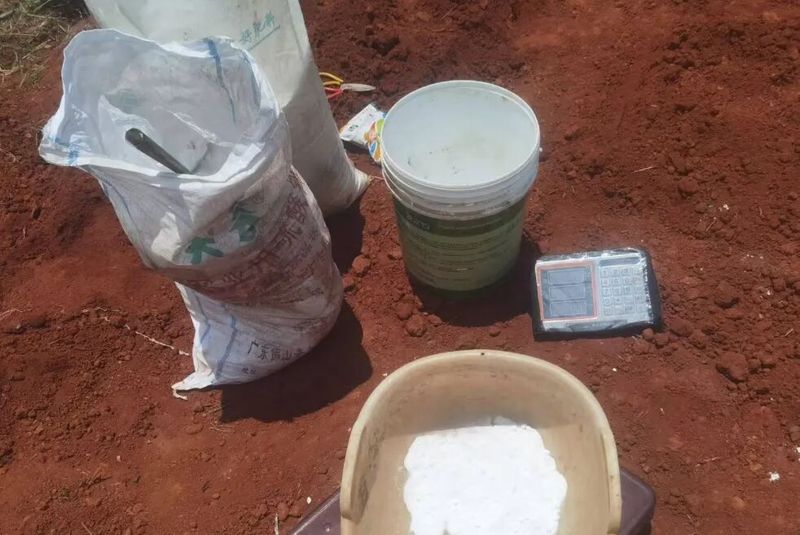
According to zhang jinxia, new foundational planting techniques are mainly crop straws using corn cores, corn straws, soybean straws, straws, cotton, etc. Tethering, which replaces wood crumbs with wood crumbs, such as black molluscs, consists of the selection of new matrices, pre-treatment of the matrix and associated planting management techniques。
The ideal is full, but the reality is so strong. Zhang jinxia states that the relatively lightened soil, weak water holding capacity and high cellulose content characteristics of crop straws compared to wood crumbs have created considerable resistance to their use in black wood ear cultivation: physic laxity and weak water holding capacity lead to poor forming capacity, low weight in traditional-technology-produced fungus bags and failure to meet the moisture requirements of mycinosis, loss of water and severe contraction in post-earbular management bags, combined with high cellulose content, leading to a high incidence of fungi infections, which ultimately seriously affects product quality and single-pack production。
“many technical bottlenecks that are difficult to resolve limit scale applications, and many attempts to use crop straw for black wood ear cultivation have ended with widespread fungus contamination, serious crop failures, abnormal quality and pests, and even with a `totally unfeasible' casket finding.” speaking of which, zhang jinxia was desperate。
In the face of these realities, zhang jinxia team members have struggled with one hard bone after eight years: they have optimized a viable formulation of 45 per cent crop core replacement wood crumb, 75 per cent corn straw replacement wood crumb, 30 per cent rice straw and soybean straw replacement wood crumb; have developed treatment techniques such as maize straw, maize core pre-wetting, etc., and have developed specialized grinding equipment; have resolved the problem of matrix preparation through shredding and pre-treatment coordination, improved plasticity, managed to contain the water content of the matrix, suppressed water loss in the later period, reduced the subsequent pollution rate, raised the success rate of cultivation to more than 90 per cent, and resolved once again the problem of the inconvenient and unstable use of the new matrix。
New products with high proteins clear up doubts
“technology is a good answer to the question of whether the new matrix can be used.” zhang qianxian said。
More importantly, this clarifies consumer misgivings about the quality of black wood products grown by new matrices. The results of the current survey conducted by the institute of microbiology of the provincial academy of sciences of heilongjiang show a change in the levels of coarse fat, proteins, total sugar, coarse fibres and grey fractions, notably the increase of almost 10 per cent in the protein content of maize cores and the decrease in the amount of grey fractions, respectively, while the increase in protein content from 8. 87 per cent to 13. 6 per cent in black wood products using soybean straw matrices is significant. At the same time, the results showed that black wood ears, such as maize cores, maize straws, etc., produced as a matrix, that the heavy metal content and pesticide residues were not abnormal compared to the traditional matrix and met national criteria。
“long-term cultivation practices have shown that safety levels, nutritional efficacy and appearance patterns of black wood products are influenced by planting matrix and management techniques, and that safety levels and nutrient components of inputs, such as matrices, inevitably affect product quality. Cultivation management methods have a greater impact, with the same matrices and production areas, and products at different levels of management vary greatly. Therefore, whether new or traditional matrices are adopted, they should be put off in terms of the safety of the product matrix, environmental safety, and the safety of inputs, and should be put to work to improve management.” zhang jinxia stressed。
It's cheap to grow wood ears on a straw
“the use of crop straws as a new matrix to plant black wood, as compared to traditional technologies, as wood bands or wood crumbs, has characteristics such as wide availability of materials, high ecological conservation effects and easy use of bacterial sludge, while reducing the cost of raw materials, and has significant economic and social benefits.” zhang is quoted。
According to zhang, maize cores, maize straws, straws, soybean straws, etc., are the main crop by-products, which are widely sourced and easily accessible, can effectively reduce woodcrumb stress and can significantly reduce environmental pollution from the burning of straw. At the same time, the relatively low amount of slag molybdenum-like material produced from the cultivation of the straw matrix is easily absorbed by microbial decomposition and digestion, suitable for use as feed or fertilizer and of high nutritional value。
“more crucial is the lower cost of a straw matrix compared to the traditional wood crumb matrix, and this low-cost advantage will become more evident as the ecological consciousness of society increases.”。
Indeed, the words of the villagers of the old montenegrin town of donning, heilongjiang province, zipujiang, are true: “i grow 150,000 bags of black wood each year, using about 100,000 pounds of wood; if i use my corn core and that of my relatives, almost 20,000 dollars is saved for wood chips.” in the north-east region, where nearly 8 billion bags of black wood are cultivated each year, the use of crop straw to replace some of the wood crumbs could save raw materials nearly $1 billion。
According to li yu, a member of the chinese engineering college and vice-president of the chinese association of fulfilling bacillus, the remaining rice fields, such as straw, are currently the main source of air pollution, such as fog, using crop straw as the basis for the production of molybdenum, and the problem of environmental pollution can be solved by consuming a substantial portion of the straw. Moreover, the fact that ichun, as a forest man, does not lack wood and that he has also been the first to implement the new substrate of black muir, has greatly contributed to the development of the national edible bacteria industry. (reporter pays lily)