At the beginning of april, early rice planting has begun in many places. With regard to rice cultivation, there are many management elements that require special attention, such as land preparation, seed handling, seeding methods, seedlings, manure management, pest control, etc., and so on. Only with the relevant management skills can we produce strong seedlings that will ensure a high yield of rice。
I. Rice planting time
Depending on the timing of planting, the rice fraction can be divided into three types of early, medium and late rice. In general, early rice tends to sow between the end of march and the beginning of april or before dawn, to plant between the end of april and the beginning of may, to harvest in mid-july for about 90-120 days; medium rice tends to sow between the beginning of april and the end of may, to plant between the end of june and the end of july, to harvest between 120 and 150 days; and late rice tends to sow between mid-june and early autumn, to harvest between mid-october, to produce about 150 and 170 days. In addition, there are three seasons of rice in the south of the sea, but there are fewer crops available and no more specific descriptions。
As the climatic conditions vary widely, so do the timing of harvests for specific plantings, which should be adapted to local conditions. In general, the local average daily temperature is stabilized at more than 12 degrees per day for three to five consecutive days, and no rice can be sowed below 10 degrees per day. Rice sowing at too low temperatures or at too early a time to sow, can easily lead to seedlings, pollinating flowers, disabling ears and even scavengering trees due to the effects of low-temperature weather, thereby significantly increasing the shell rate of rice and reducing rice production。
Seed treatment before rice planting
In order to ensure proper seed production, strong seedlings and reduced pest and pest hazards, rice generally requires four treatments before seeding. The relevant approach is described below。
1. Sunburn
The purpose of tan is to further reduce the moisture content of the seed and to eliminate the disease that remains on the seed scale, to promote faster and more absorbent water in the seed, and also to have the effect of breaking seed hibernation, increasing the gerontology and sprouts, thereby making the seeding of rice faster and better organized。
Method of operation: before planting rice, choose between 10 a. M. And 3 p. M. On the morning of the sun and leave the seeds in the sun for two to three days。
2. Selection
Good varieties are fundamental to achieving high yields of rice. Thus, when selecting seeds, one chooses the most appropriate species in the context of the local natural climate, while the other selects the best varieties that are highly resistant to disease, are resilient, have a high purity, have a high gestation rate, have a good productivity, have a strong gestation, are full of seed grains and enrich health。
For tanned seeds, saline (or mud, etc.) etc. Are also used for weight selection to remove bad seeds and impurities such as dry, empty, sick and sick. This is done by placing seeds in about 12 per cent of salt water and removing the scavenging, thinning, larvae and empty species floating on the surface。
It is important to note that saline species are selected and prone to damage to the surface of the seeds, so that the seeds are washed repeatedly with water as soon as they are selected, so as not to affect the seeding process。
3. Leaching
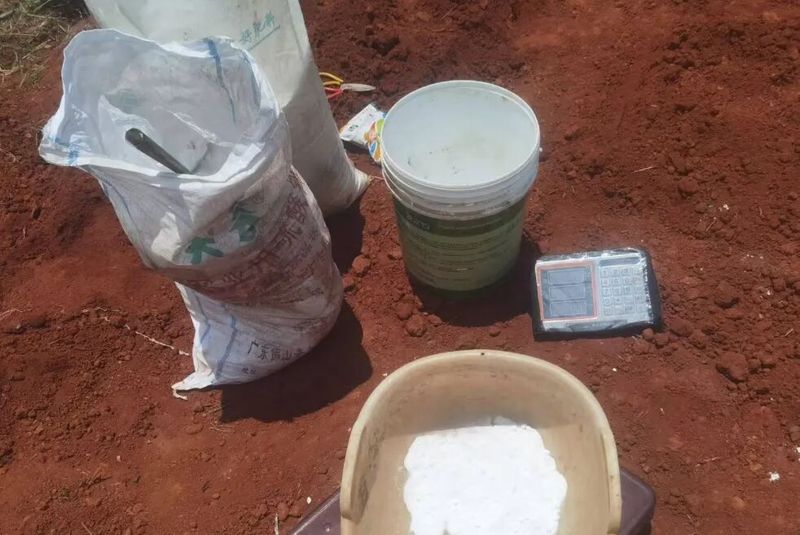
Leaching is designed to eliminate the disease from the surface of the seed, reduce post-mortem conditions, and can also allow the seed to fully absorb water, increase the gerontization rate at the time of seedlings and ensure that the seed is strong。
The method of leaching is as follows: seeds selected with salt water (or mud water) are leached in constant water or 1 per cent of the lime water solution or mimeamine solution, and water levels are sufficient to cover the surface of the plant by two to three centimetres. When seeds absorb about 30 to 40 per cent of their weight, they generally reach saturation levels, which are most conducive to seed buds。
Since leaching requires cumulative temperature of about 100 degrees, the duration of leaching is based on water temperature, which normally takes 10 days for water at 10 degrees, 7 days for water at 15 degrees and 5 days for water at 20 degrees. In the case of early rice, it is common to use warm water of around 20 degrees for continuous impregnation for three to five days, which would minimize the duration of leaching。
4 - drumb
Seed seed sprouts are also an important part of pre-plant management, the most important part of which is to manage the pre-sprune temperature。
Operating methods: preserve the temperature of the impregnated rice species by using approximately 50 degrees of warm water and then wrap them up, then cover them with straw, sack or cotton, and then seed them in an environment of 30-32 degrees。
During sprouts, attention is paid to the frequent spraying of water to keep the water wet and to protect against high temperatures. The temperature should be around 25 to 28 degrees when 80% of the seeds are exposed to white and broken chests, and the temperature should be maintained at 35 to 40 degrees
After two to three days of seeding, seeds can be planted in the indoor shade for about six hours when they grow in length and root to about 0. 2-0. 3 centimetres。
In general, low temperatures during early rice seeding allow for the appropriate length of root sprouts, high temperatures during medium rice sow, suitable for short sprouts, and high temperatures during late rice seeding generally allow seeding to take place once the seed has been sprung to the chest。
Iii. Paddy seeding methods
1. Rational sowing
Rice sowing must be flexible in terms of the timing and age of seeding, and use must be based on the principle of “better-than-sweet”, precision or semi-precision, which is conducive to the development of strong seedlings. If the sowing is too large or too dense, it not only causes malnourishment after the seeding of rice, but it also causes poor seedlings to take root and to stunt their roots, and it also causes problems of thin and thin rice because of poor ventilation and poor conditions, which are detrimental to the development of strong seedlings。
In general, long-term and long-lived varieties, with high and rapid nursery temperatures, should be broadcast early and thin, while short-lived and short-age varieties with low-temperature and slow-growing periods should be broadcast late and broadcast in the air. In addition, artificial insulations should be soaked, machine insulations soak, field seedlings sows should be soaked, seedlings should be so multi-spectrum, leaves wide should be so thin and leaves narrow should be soaked。
2. Methods of seeding
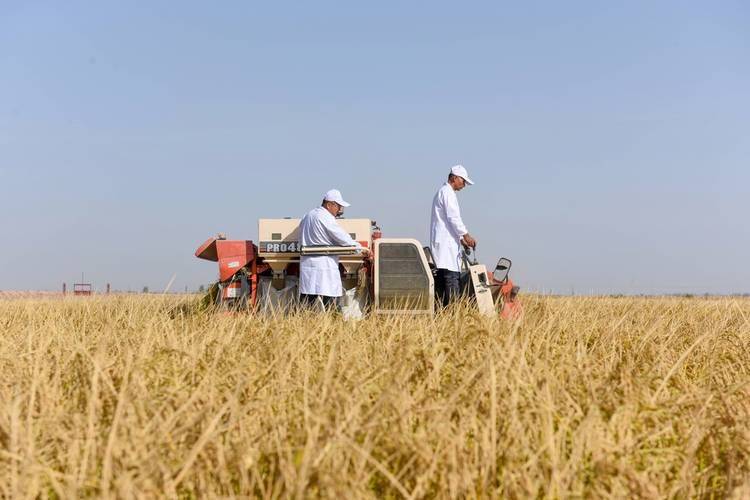
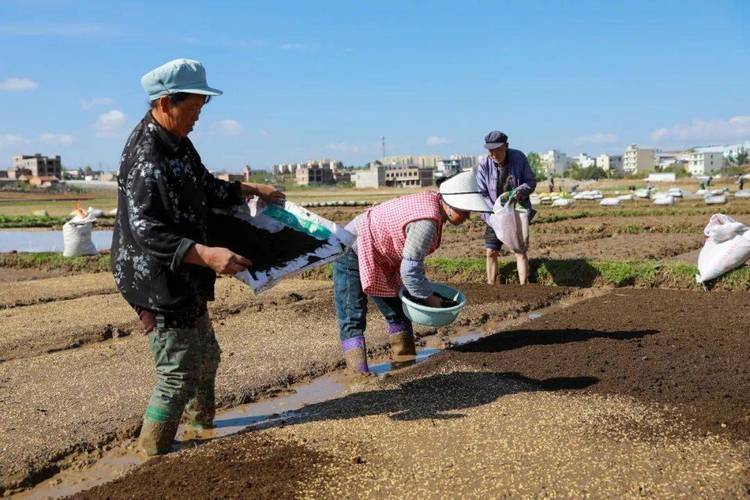
Before seeding, the seedbed should be draught two days in advance, until the water has fully infiltrated the surface, then seeded to the wet soil, in accordance with the principles of “square seeding, even seeding, shallow convergence, earth-porning”, and then covered on the surface of the seed with a layer of thin ground or faeces around a centimetre, thereby increasing the wetting, cooling and ventilation of the seed bed and ensuring that the seed has a smooth roots. Care should also be taken to capture the favourable timing of the warm and clear day for the current planting of early rice。
Iv. Corrections of pyaco lands
Soils are the basis for the survival and growth of rice, and precision management of plantations is necessary to ensure healthy and robust growth and development of rice seedlings and to achieve high later yields。
1. Land improvement
Rice plantations should have 15-25 centimetres of deep dredges ahead of schedule, requiring the principles of deep cultivation, soft and soft soil penetration, and fine ground levelling as a means of creating a good root environment for rice growth and development。
2. Fulfilling foot fattening
In managing the use of bottom fertilizers, the principles of nitrogen supplementation, phosphorus stabilization and potassium enrichment should be applied. Bottom fertilizers are applied in a long-acting manner, with low levels of decomposed organic fertilizers, can be used at a ratio of 2:1:3, bottom fertilizers can be used at 60-70 percentage points of annual fertilisation, and bottom fertilizers can be blended with soil in a combination of the ground when applied evenly, each acre can be used to apply 1,500 kg of corroded organic +20 kg of potassium + 10 kg of nitrogen + 10 kg of potassium fertilizer. Low-yielding fields need to be sensitive to nitrogen filling, high-yielding fields need to be sensitive to potassium recharge, and phosphorous-deficit plots need to be sensitive to phosphorus recharge。
V. Cultivation of seedlings, scientific transfer
1. Cultivation of seedlings
In carrying out paddy breeding, care should be taken to maintain a low-temperature, low-temperature environment of the nursery, which is based on the principle of “no-low-no-no-dry-no-wet”; temperature can be kept at about 28 degrees until the paddy is fully grown, and control at 24-25 degrees for the 2-3 leaf period at 21-23 degrees for the 1-2 period, with a temperature of around 20 degrees thereafter; low-temperature seedling, moderate ventilation should be carried out three to five days before the paddy seedling takes place, so long as the humidity of 0. 5 centimetres of the soil under the bed's top soil is maintained, thus contributing to the development of strong roots and seedlings, increasing the activity rate after the transfer and reducing the slow planting period。
However, when water drops are found at the tip of the morning leaf and the atrophy occurs at noon, it is clear that the soil is short of water and small water should be immersed in the morning and evening。
Scientific transfer
The average daily temperature remained stable at more than 15 degrees per day, allowing for transplantation. The criteria for planting seedlings at the appropriate age are that they are suitable for 3-3. 5 leaves (suitable for machine implantation), 4-4. 5 leaves (suitable for manual interpolation) in dry breeding, or that they occur at a height of about 8 centimetres, requiring roots that are white, thick, green, suitable for age and consistent, so as to facilitate the early rooting, early recovery, early separation and growth of the paddy following its transfer。
In terms of displacement density, flexibility should be determined on the basis of the characteristics of the species, the climatic conditions of the day, the high fertility of the soil and the age of the seedling. In general, early rice is suitable for moderate dense cultivation, late rice is suitable for rare cultivation, and medium rice is generally between early and late rice. In addition, the soil is highly fertile, well-loved, well-slender and well-separated and well-separated, and the soil is thin, poorly developed, poorly slender and poorly slender。
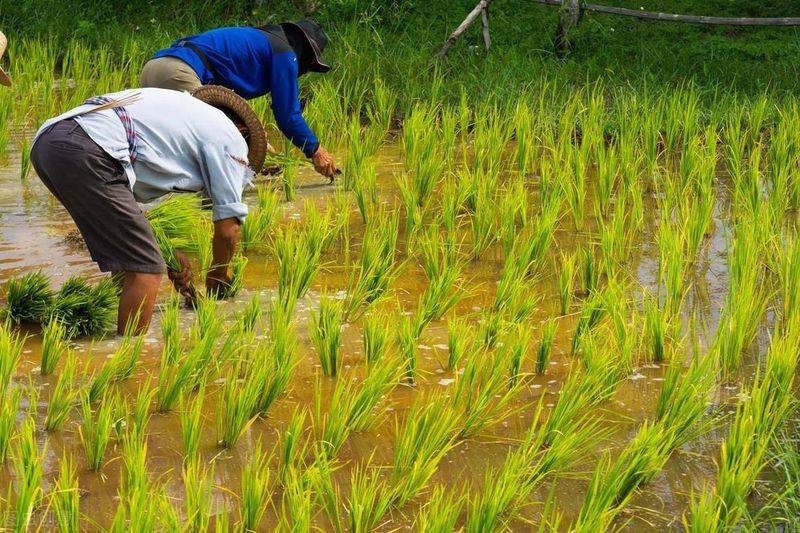
Before plugging, the field water layer should be adjusted to about one centimetre in advance, with due regard to early plug-in, integrity-in, depth-soft balance-building and consistency. Particular attention is paid to the depth of the plugs, which are generally divided into 1. 5 inches and 2 inches of machines, and smallness, which should be moderately shallow and large, and moderately deep. If it is less than 1 centimetre, it is prone to drifting, falling, small end-stage, inverted, and if it is more than 3 centimetres, it can lead to slow post-plugs, late periods, increased heights and small rice。
In addition, following the completion of the plug, the field should be replenished in a timely manner to facilitate its return, with an upper water depth of about three to five centimetres, with a water level to two thirds of the size of the plant and no perusal leaves。
Rice fertilizer management
Water-water management
Rice should be watered on the basis of the principle of “foreground, sun and damp”, with the following water being suitable for shallow water not to be drenched, with two to three centimetres suitable for periods of draught, with a view to increasing to five centimetres after sunbath, 8 to 10 centimetres suitable for periods of dysentery, 2 to 3 days of dysentery to fill oxygen, sufficient water during the raising period, appropriate rest during zhiso's run-off, and timely drainage should take place when rice enters the yellow season。
2. Fertilizer management
In the management of paddy pursuits, this can be done in accordance with the principles of “early scoring of fertilizers (for the promotion of splitting), concretization of fertilizers (for the preservation of flowers), appropriate application of fertilizers (for the prevention of early decay, for the increase of the particle weight and for the reduction of shell pellets)。
1-moderate fertiliser: the estuarine fertilizer can be applied 7-10 days after rice migration and 6-8 kg of nitrogen fertilization per acre. Land with low fertility, poor affection and weak seedlings should be duly ploughed early, multi-spreaded, high fertility, well-loved and strong, and should be ploughed at appropriate late hours and less。
2 fluenium: episode fertilizer is usually applied during the thawing of rice, with 5-6 kg + 2-3 kg phosphate fertilizer per acre in pursuit of the velocity of nitrogen fertilizer. Land with high fertility, good affection, large divisions and strong seedlings, which can be less or less applied, low fertility, poor affection, low splits and low seedlings, should be applied early and much more. It should be pursued in the light of the sun and in the rainy weather。
3 particle fertilizer, as appropriate: paddy fattening is generally applied after the poaching of the ear, and leaves are generally applied primarily to supplementation in the application method, thereby increasing the function of the blades and enhancing their photocosynthesis in order to prevent early decay, promote their saturation and increase their weight. In the pursuit of particulate fertilizers, spraying can generally be carried out using 0. 5-1% urea + 0. 2-0. 3% potassium phosphate solution, with approximately 50 kg of water per acre。
Vii. Strengthening in china
Rice should normally be cultivated for the first time between 7 and 10 days after planting; in the case of larger weeds, herbicides can be sprayed in the field between 7 and 10 days before planting or between 3 and 5 days after planting. The most common herbicide types are herbicides, e. G., paraphylloxins, e. G., e. G., e. G., e. G., e. S., e. G., e. S., e. G., e. S., e. S., e. G., e. G., e. S., e. S., e. G., e., e. S., e. S., e. S., e. S., e. S., e. S., e. S., e. S., e. S., e. S. S. S., e. S. S., e. S. S., e. S. S., e. S. S. S., e. S., e. S. S., e. S. S., e. S. S., e. S. S. S. S。
Viii. Strengthening pest control
Pests such as adrenaline diseases, smoulders, tattoos, rice plagues, insects, rice rolls, boreal worms, rice trachea, rice ticks and other pests, which are frequent and more dangerous types of rice, should be stepped up in the field and targeted at the onset of the disease。